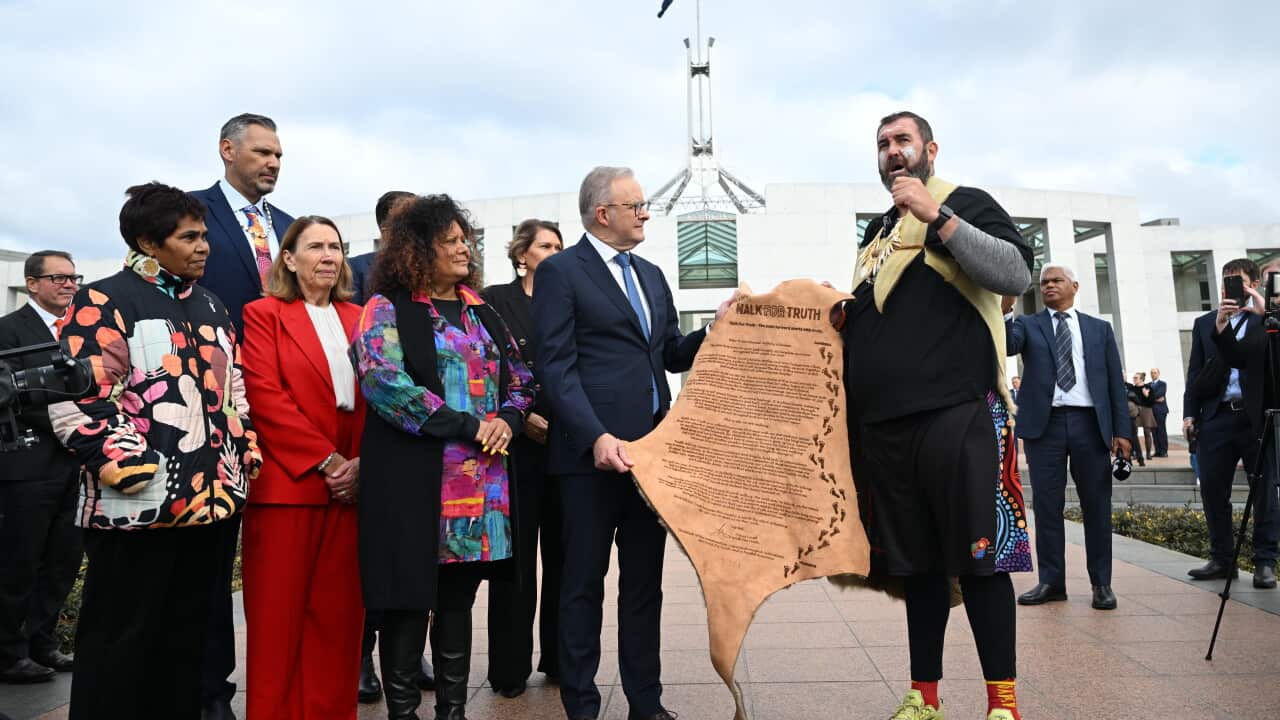
After an epic journey, Travis Lovett's Walk for Truth has culminated at the nation's capital with the prime minister himself receiving the Kerrupmara and Gunditjmara man on the steps of Parliament House on Wednesday.
Anthony Albanese also accepted the message sticks asking for a national truth-telling process which Lovett carried with him on his more than 900 kilometre walk.
Following his 500 kilometre Victorian Walk for Truth last year, the completion of Mr Lovett's new journey, from Victoria's parliament building in Naarm, Melbourne, to Canberra coincides with National Reconciliation Week.
Bearing a kangaroo hide emblazoned with the words 'Truth is not about blame, it’s about healing', the former Yoorrook Justice Commissioner said he wants truth-telling to be taken seriously on a national level.
"Reconciliation has to be founded in the process of truth-telling and that's how we move forward", he said.
"There is no reconciliation without the truth being shared, without justice, and then we can heal and move forward to a more hopeful, shared and equitable future together."
Mr Lovett's walk comes after his tenure as deputy chair of the landmark Yoorrook Justice Commission, the nation's very first truth-telling inquiry.
The Commission ran for four years, hearing evidence from First Nations people, politicians and government officials, and community members.
It its final report it created a public record of the state's true history, and making more than 100 urgent recommendations for change.
'We'll continue to walk with you': PM
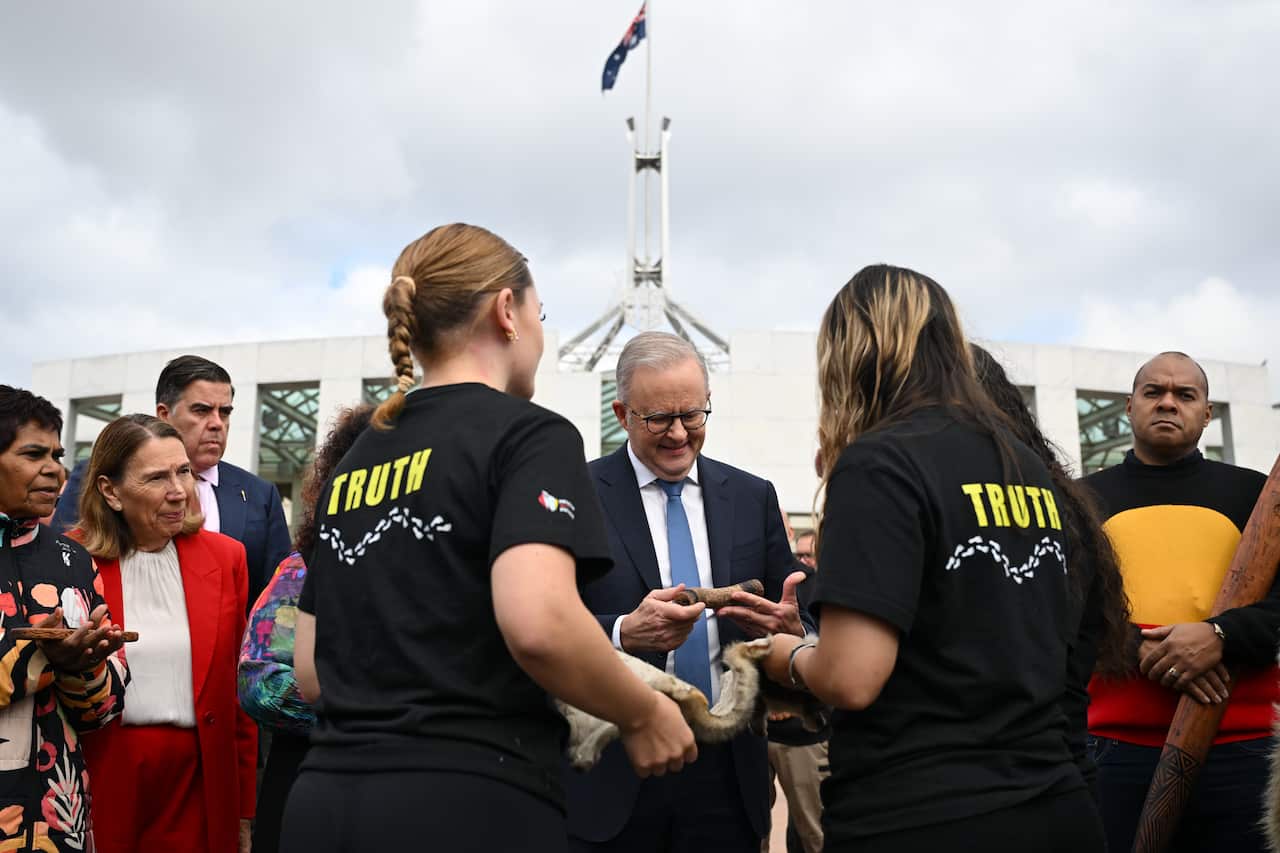
Hundreds gathered to welcome and support Mr Lovett.
Flanked by Mr Lovett and Indigenous Australians minister Malarndirri McCarthy, Mr Albanese addressed the crowd, saying that while "there are bumps in the road" to reconciliation it will "advance".
"We will continue to have engagement and dialogue with you on how we continue to walk towards that objective, which is in the interest not just of First Nations people, but in the interests of uplifting all Australians as well," he said.
Janet Hunt, a board member with national First Nations justice advocacy group ANTaR, said that truth-telling is an opportunity to "bring the community together, it does not divide".
"Really get to understand the history which has been hidden from a lot of us," she said.
"There's so many stories that keep coming out that we didn't know and it was a deliberate process of denying us the truth."
Katie Kiss, the Aboriginal and Torres Strait Islander Justice Commissioner, said the next step following the Walk from Truth is to demand accountability from the federal government.
"We've been calling on government to stay true to those three pillars of the Uluru Statement from the Heart," she said.
"We've asked government to stay true to the establishment of the Makaratta Commission, which will deal with truth-telling."
Focus on outcomes, not 'what makes people feel good': Liddle
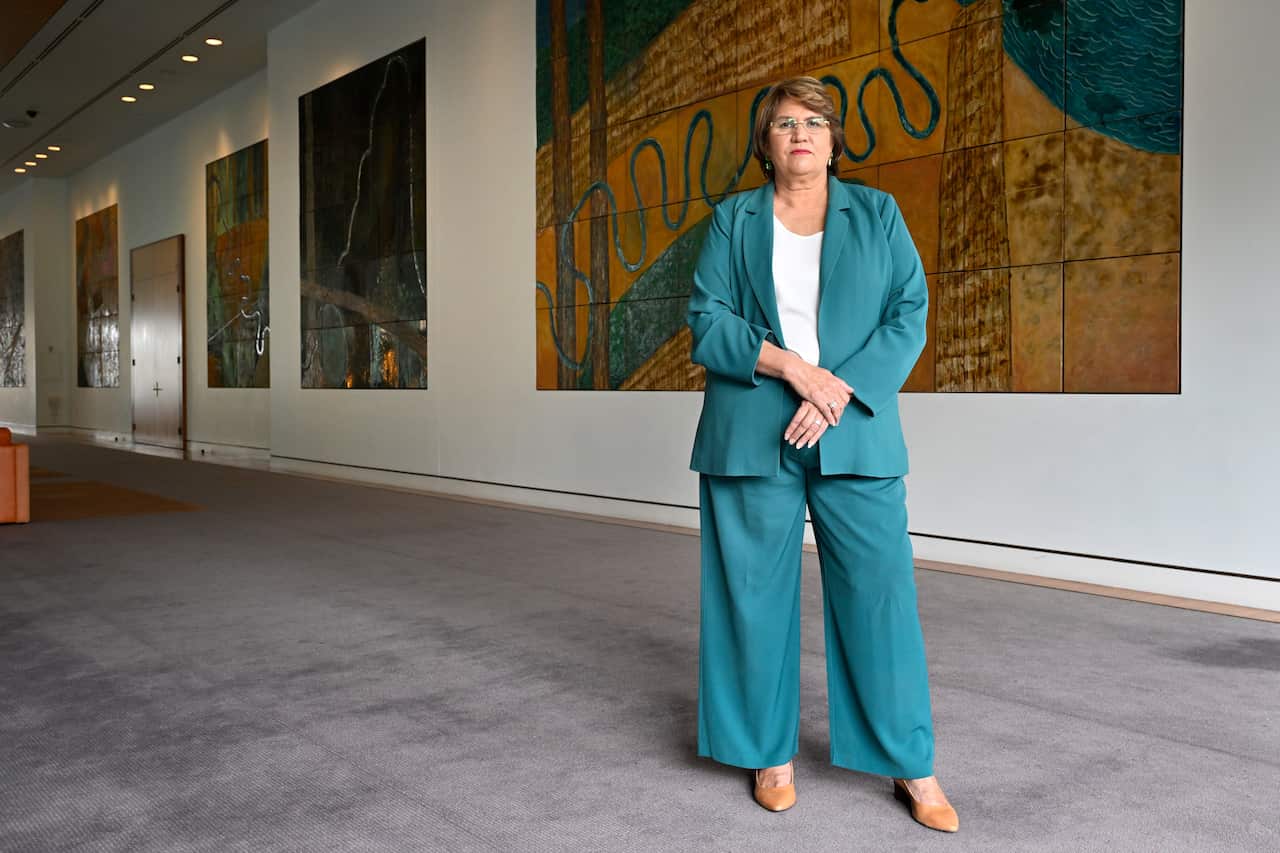
Arrernte woman and coalition frontbencher senator Kerrynne Liddle did not agree that a formal truth-telling process would address First Nations disadvantage.
"[Parliament] need to be focused on practical outcomes that make a difference to people's lives, not that make people feel good,' she said.
However Lovett found support elsewhere in the Upper House, with Greens senator Steph Hodgins-May saying that truth-telling will need to be backed by "concrete actions".
"That's our job in this place. It is our job to ensure that we are properly closing the gap, that we are funding those crucial programs."