4 min read
Explainer
EXPLAINER: What is truth telling?
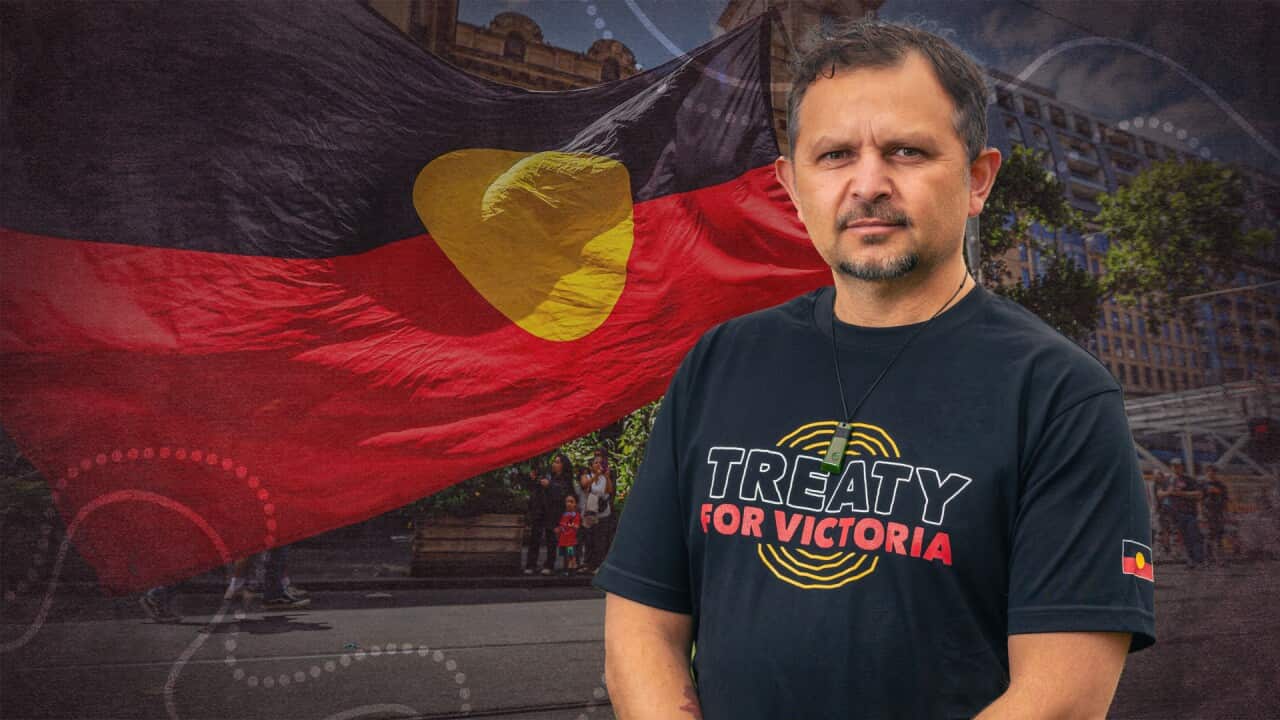
Barry Firebrace-Briggs has dedicated his life to truth-telling.
The Yorta Yorta, Wemba Wemba and Dja Dja Wurrung man is a Metropolitan member for the First Peoples' Assembly of Victoria and has spent years working with and for his people.
For Barry, truth telling is the simple act of talking.
"It's talking about the lived experiences and the injustices of Aboriginal and Torres Strait Islander people across Victoria, past and present," he told NITV.
'Real experiences of real people'

Barry has delivered cultural awareness training. He says most people have no understanding of Australian history.
"I've had people walk out of a session in tears, they're upset and crying because they didn't know ... I remind them that it isn't shameful, the system has been created to actually do this," he said.
"But once they know, once they understand it, that's how we can help community reconcile what happened in the past."
A continual barrier for Barry is the misunderstanding that Aboriginal experiences aren't fiction, they're truth.
People think they're just made up stories. But these are truths, these are the real experiences of real people.
"Non-Indigenous people and people who are uneducated need to realise that these things happened in Australia, and they happened around them, in their local communities."
'Bearing witness' to the truth
Much like Barry, Karen Mundine has dedicated her life to her people.
As Reconciliation Australia's CEO, truth telling is central to her work.
"Being able to tell stories about a place ... whether they were good things or whether they were awful things, that helps communities understand who they are and make decisions about who they want to be," she told NITV.
"We've got to try to find a place where we can talk about terrible things that happened, not to make people feel guilty but to bear witness to those things, validating that they happened and that we're going to do things differently because of that."
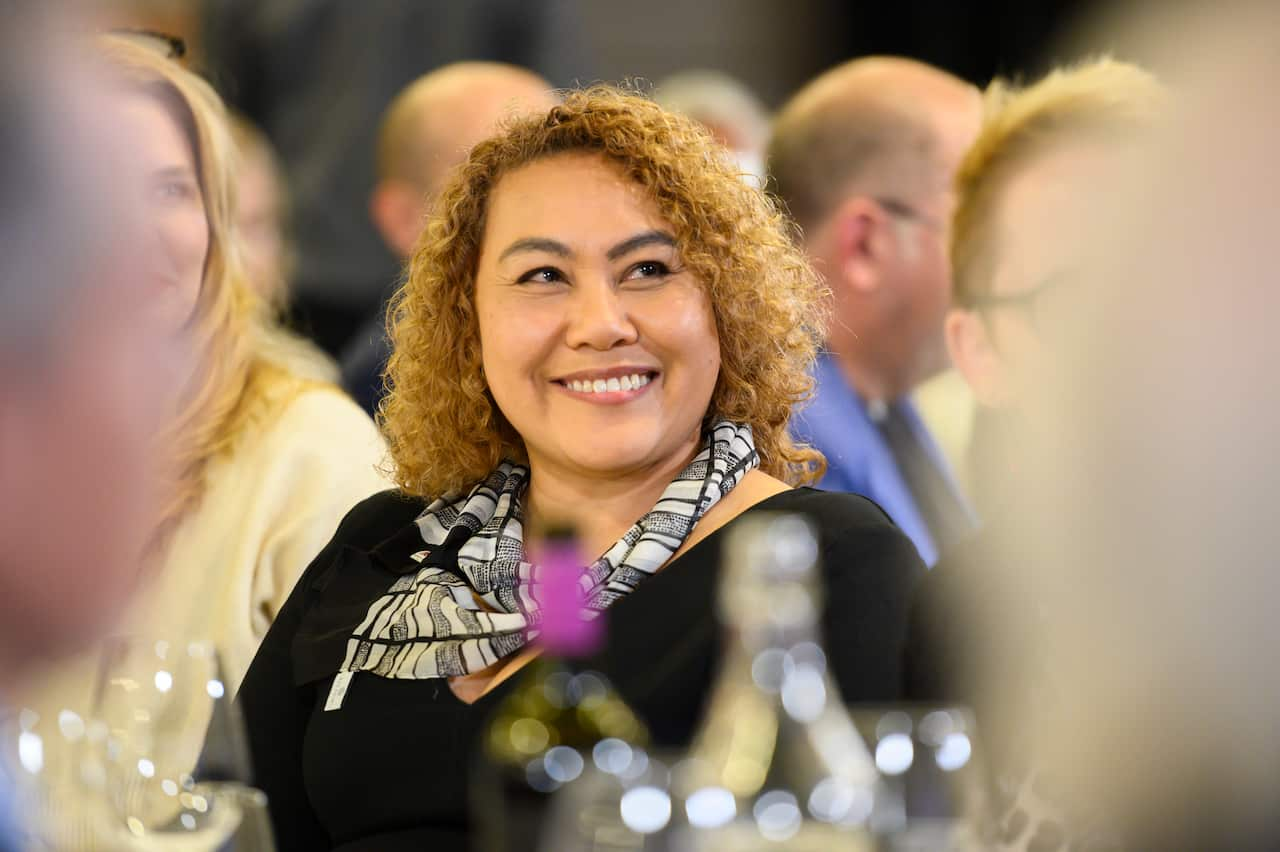
Mundine remembers a period of her career where she worked with Stolen Generations survivors in preparation for the National Apology.
"What really stuck with me was them articulating why telling their stories was so important, and it was about being heard and being believed," she explained.
"All of the terrible things that they endured ... were real. Their pain and their hurt was real."
This cemented her belief that truth telling is about "bearing witness".
"When I think about truth telling in all of its different forms, it is about ... bearing witnesses and hearing those stories," she said.
"It's accepting that that happened but then understanding that there are consequences to what happened and questioning how does that continue to play out today?
"We see it all the time in our institutions, in the relationships, the way certain people or groups are platformed over others. So, understanding that helps us then make decisions about how can we change things to get better outcomes or different outcomes."
It begins in the classroom
Victoria has seen a mammoth progress with the establishment of a state Treaty in 2025, a reality made possible by the work of the Yoorrook Justice Commission - the nation's first formal truth telling process.
In July of 2025, the Commission delivered its final reports, Yoorrook for Transformation and Yoorrook Truth Be Told which issued 100 recommendations to government.
Among those were requested changes to education, including embedding Aboriginal-authored content in school curriculum and mandatory anti-racism training for educators.
"Whitewashing has been here in Victoria since 1834 and it's been passed on through education ... that's where it started and it continues," Barry said.
He said teaching the "real history" is how "real change" will happen.
This change will ripple through workplaces, institutions and communities.
For the future generations
While the work continues, the significance of truth telling and what it has achieved for his people will remain with Barry.
"The most beautiful thing is my daughters will not grow up knowing a life without Treaty," he said.
"They'll have opportunities I never had, my grandparents never had. They can walk into an interview and not be judged ... my daughters will have the same opportunities, not only as men, but they'll have them as Aboriginal women."