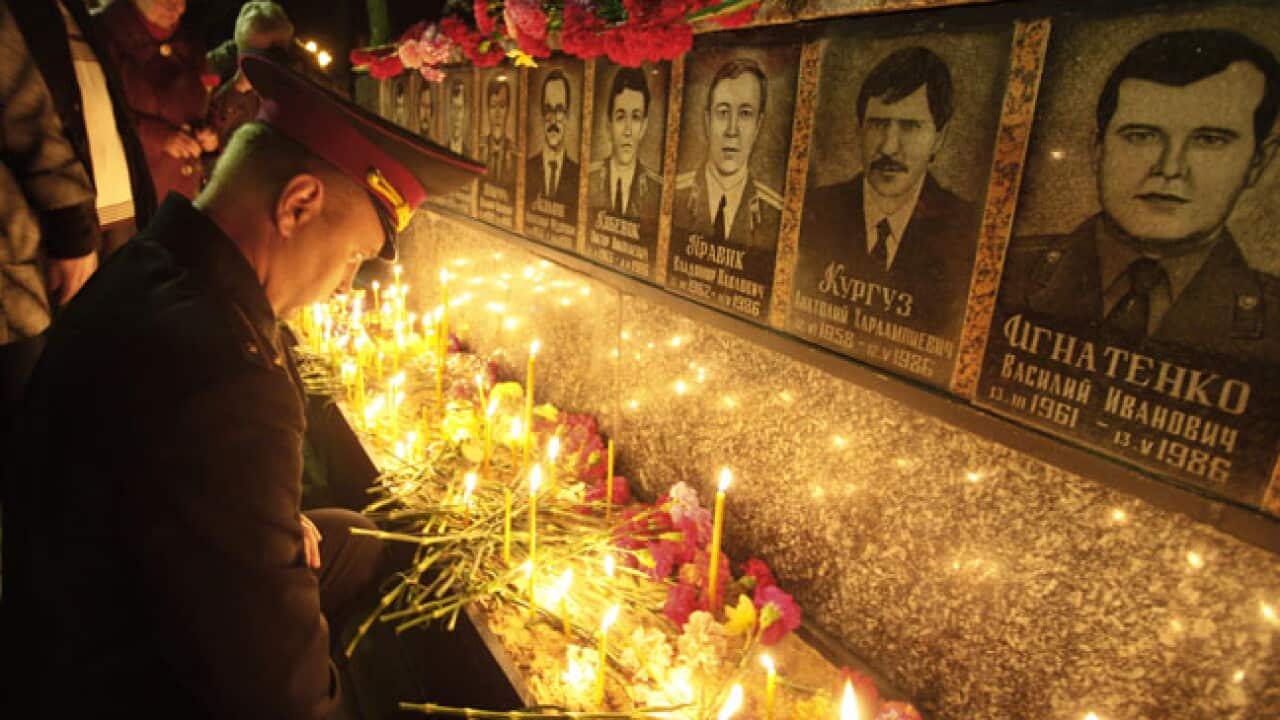
Still considered the world's worst nuclear disaster, it began on April 26, 1986 when a nuclear reactor at the Chernobyl power plant exploded. A reactor crew had been conducting a stress test on its power system.
The situation worsened as the Soviet Union's secretive government mismanaged the response.
News that makes sense
Your trusted source for staying up-to-date with the world around you. Get free daily news updates and analysis, straight to your inbox.
Long after the collapse of the Soviet Union, it remains difficult to ascertain the number of deaths and illnesses caused by the disaster.
Estimates of the death toll range from 4 000 up to as high as one million.
In the weeks following the explosion, tonnes of radioactive particles were spread across thousands of kilometres, affecting the Soviet Union and parts of western Europe.
People most affected by the disaster at the time had little clue what was happening.
Mr Sergi Mirnyi, one of several hundred thousand workers sent in to deal with the disaster, says people first learnt about the Chernobyl explosion from newspapers.
“It was the 29th of April, three days later. There was an announcement you know, two inches by two, in the Soviet newspaper,” he said.
Citizens living in nearby towns were forced out of their homes and moved to other parts of Ukraine with little explanation.
Their former homes are now ghost towns.
Slow response
The Soviet Union's government failed to act quickly, underestimating or denying the scale of the disaster, taking several days to order the evacuation of affected towns.
As a result the residents of towns like Pripyat were not given the life-saving iodine prophylactic that could have prevented radiation sickness if it had been administered in the first few hours.
The government did not admit to the outside world that there was a problem until several days later, when nuclear scientists in Sweden detected high levels of radioactivity.
Twenty-five years on, radiation levels are still high at the site of reactor Number Four, about 350 microroentgens per hour, over ten times levels regarded as acceptable.
Today small numbers of visitors are permitted at Chernobyl.
80 000 people live and work in the Chernobyl exclusion zone - an area with a radius of 30 kilometres.
The authorities say the zone is safe, as long as radiation exposure is managed.
Workers are closely monitored and their food and water are brought in from outside.
But Ms Olga Pilipenko, like other residents, has moved into the exclusion zone despite the dangers. She and her husband Ivan returned to this area four years ago.
“It's just a fairytale. The air is clear and there is a river nearby. There is no traffic fumes. You can live and enjoy. All the flowers smell in spring. Birds sing. It's great for my soul,” she says.
Many of the houses around Ms Pilipenko's are derelict and she has few neighbours.
While Chernobyl is not everyone's idea of a beautiful place, most people who visit this area are greatly affected.
Anna Korolevska, director of the Chernobyl museum in the Ukrainian capital, Kiev, says her life was turned upside down when she first visited Pripyat.
She has been visiting the exclusion zone since 1992, collecting artefacts.
“When Ukrainians come to this Chernobyl road they remember April 26th, 1986 - because everyone went through it. In Kiev and in other parts of the country."
Ukraine has suffered greatly from the Chernobyl disaster.
But little is acknowledged officially or publicly, even now, twenty years after Ukraine separated from the Soviet Union.
Few up-to-date statistics are available, but researchers report that thyroid cancer is still prevalent, while many Ukrainians suffer from suppressed immune systems.
Charitable groups report high levels of birth defects and blood disorders amongst babies, while mental and psychological problems are also common.







