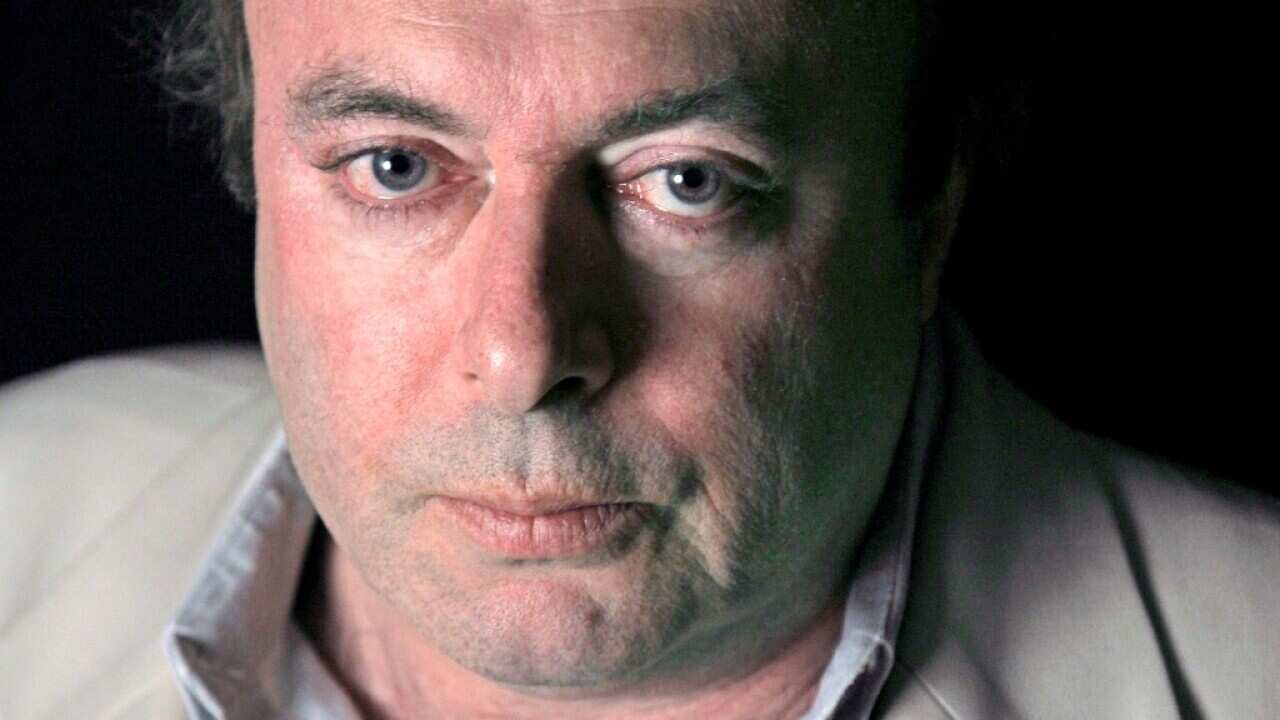
The last e-mail exchange I ever had with Christopher Hitchens was not, on the face of it, all that different from the others. I had sent him a link to a news story about an attack on the Paris offices of Charlie Hedbo, which had occurred in the wake of the satirical magazine's latest elbow to the ribs of Islamic fundamentalism. A long-time defender of such magazines and their right to publish whatever they like, he responded with a characteristically short message of thanks. “Most interesting,” he wrote, “and alarming, too. Thank you for thinking of me.” “I hope the pneumonia has passed," I wrote back. It hadn’t and he died within the month, three years ago today.
About six months later some half-wit tweeted: "I wonder what Christopher Hitchens would have written about recent events, asked no one ever." In fact, I had been asking myself that question regularly, and I find that I continue to ask it still. What I wouldn’t have given for a Hitchens-penned obituary of Kim Jong-il, Hugo Chávez or Jean-Claude “Baby Doc” Duvalier. To have read him on the anti-Putin protests that erupted on the eve of his death, on Joseph Ratzinger’s resignation or the Egyptian coup d'état. (Hitchens was one of the earliest to counsel caution on the Arab Spring and wouldn’t at all have been surprised by the situation in which the region now finds itself.) From the French intervention in Mali to North Korea’s nuclear tests, the past three years have presented countless moments at which a little Hitch would have gone a long way.
This is arguably truer of the year we have just endured than of any other since his death. Hitchens would have been in his element these past twelve months, at once both horrified and “exhilarated”—to borrow the word he controversially used to describe his feelings about September 11, 2001—by the events of what by any measure has been a geopolitical annus horribilis. There are few events one can name that one cannot imagine him spilling at least a little ink on: the Russia-Ukraine conflagration (Putin’s “undisguised plan for the forcible restoration of Russian hegemony all around his empire's periphery” came in for criticism back in 2008), the Chibok schoolgirls' kidnapping (“The empowerment of women is the only cure for poverty we know”), the latest Israel-Gaza stoush (“To read Benny Morris is to be quite able—and quite free—to doubt that there should ever have been an Israeli state to begin with. But to see Hamas at work is to resolve that whatever replaces or follows Zionism, it must not be the wasteland of Islamic theocracy.”) He’d have made sure the world knew why neither Pope John XXIII or Pope John Paul II should have been canonised—indeed, the whole idea of canonisation would have come in for rebuke—and would have heaped scorn upon home-grown lone-wolf terrorists of the kind becoming increasingly common in Western democracies.
Others have written eloquently about these issues, of course, and many have done so with a degree of analytical nuance that Hitchens’ love of polarising invective and journalistic street-fighting occasionally precluded. But few have done what he would have done and turned their pens on all of them. I was reading Hitchens’ final collection, Arguably, at the time of his death and for all its shortcomings—his Slate articles often felt a little last-minute and his Vanity Fair ones, when they weren’t dispatches from elsewhere, were rarely more than novelty items—I was always impressed by the range of his interests, the surprising angles from which he would approach them and the uncommon depths to which he would penetrate once he reached them. This is what made him a great critic of non-fiction and also what I miss most about seeing his by-line atop an article: the interpenetration of pamphleteering punditry and literary criticism, of deep-seated historical knowledge and first-hand experience, the lateral thrust of his thinking and practice, his specialisation in non-specialisation. Hitchens’ aim was never to stake out a niche—though he came close towards the end with his atheism—but rather to think and write his way through a much broader range of political and intellectual experience.
He would have had a good deal to say about last week’s Senate Intelligence Committee report on CIA torture for this reason. While never recanting his support for the 2003 invasion of Iraq—that singular, rupturing instance of apostasy that led so many to oppose him even on unrelated matters—he remained deeply critical of its prosecution. That he had to be waterboarded to determine that waterboarding was torture was perhaps a point against some of his earlier assumptions. But who among his supporters or critics was ever as willing to test their assumptions so directly, so physically? Few of his positions were not grounded in this kind of first-hand experience, little of his encyclopaedic reading not buttressed by time spent on the ground, on the frontlines.
News that makes sense
Your trusted source for staying up-to-date with the world around you. Get free daily news updates and analysis, straight to your inbox.
His critics could learn something from him here. Visiting Iraq may not necessarily change one’s mind about the events of last decade but it certainly throws the invasion—which many Iraqi Kurds refer to without irony as the liberation—into a more complicated light. (Whatever people say about the assuredness with which Hitchens’ made his arguments, it always by such dappled light that he wrote.) It wouldn’t at all have surprised me to have found Hitchens in Iraqi Kurdistan when I was there in August, Kurdish flag pinned, as it ever was, to his lapel, insisting upon the West’s historical debts to the Kurds and railing against Turkish-engineered inaction in Kobane and elsewhere. He would have leaped upon the Islamic State’s push into what he called “Free Iraq” as the moral litmus test that it is and would have done so with a ferocity that few others could hope to muster. Where the world media have slowly but surely come around to the view that the Kurds are worthy of our time and support—that they are, in effect, our natural allies in the region—Hitchens had been making that argument for the better part of twenty years. He would have been cheered that the international community has finally stepped up to the plate for these people. Then again, it might have stepped up to it sooner had he still been around to agitate for it.
Matthew Clayfield is as a freelance foreign correspondent.







