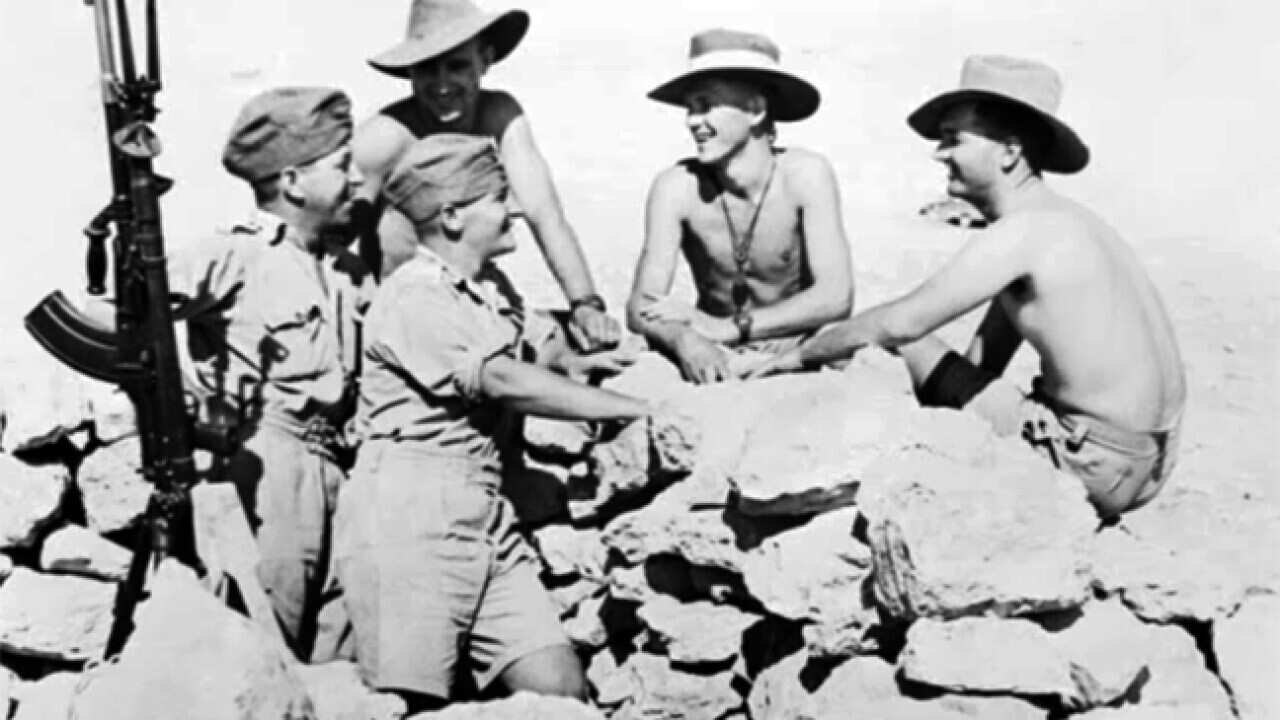
Harry Ross Sutherland, from the 18th Brigade of the Australian 7th Division, recounts his experience while deployed in the Libyan port of Tobruk in 1941.
“Living conditions were terrible. We dug a hole in the ground to live in. That was also to protect us from the bombing raids and the hole was full of flies and once again a dust storm would come in and that's how we used to have to live," Mr Sutherland told SBS.
"The food was terrible and we had very little water".
News that makes sense
Your trusted source for staying up-to-date with the world around you. Get free daily news updates and analysis, straight to your inbox.
“The reason we were there was that Germany declared war against England and if the Germans weren't stopped I don't know how far they would have gone”.
“Tobruk was the 1st time they were eve stopped in their advances”.
Australian troops of the Australian 9th Division and the 18th Brigade of the Australian 7th Division under Lieutenant General Leslie Morshead made up more than half of the Allied presence in Tobruk with a total strength of over 14,000 men.
They held the Libyan port of Tobruk against the Afrika Corps, during the Siege of Tobruk in World War II.
The siege started on 10 April 1941 and was finally relieved at the end of November.
The rest of the garrison was made up of 12,000 British (the 3rd Armoured Brigade, 4 artillery regiments) and Indian (the 18th King Edward's Own Cavalry) troops.
During the three moonless periods between August and October the Australian troops and Indian cavalry were withdrawn by sea and replaced by British 70th Infantry Division and the Polish Independent Carpathian Brigade with the Czechoslovak 11th Infantry Battalion under command.







