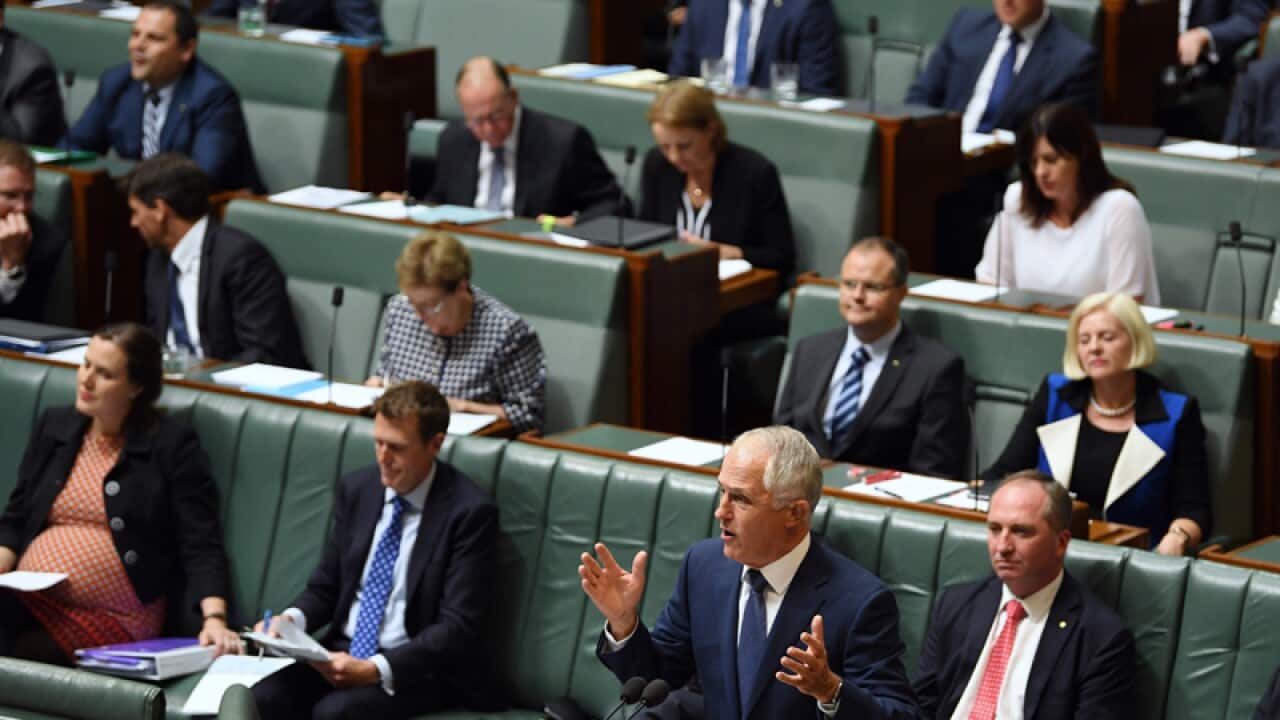
A Turnbull government backbencher has prepared a draft bill to introduce fixed four-year terms in a bid to mend a "glaringly weak" aspect of Australia's political system.
Federal Liberal MP David Coleman, who holds the NSW seat of Banks, said overhauling the electoral cycle by pursuing his private bill would deliver businesses and consumers much greater certainty.
"A fixed four-year term reduces the impact of short-term political drama and allows for a more strategic approach to decision making," he wrote in an opinion piece published by Fairfax Media on Tuesday.
"Economic activity would increase. Business and consumers tend to hold off on investment during election periods and the phoney war that precedes them."
Senior Labor frontbencher Penny Wong said she was concerned by the prospect of senators being elected for two four-year terms, which would flow from the changes under existing conventions.
News that makes sense
Your trusted source for staying up-to-date with the world around you. Get free daily news updates and analysis, straight to your inbox.
"It leads to an eight-year term without facing the people and I think we should face them a bit more often than that," she told ABC radio.
Labor supports constitutional change to allow simultaneous, fixed four-year terms for both the House of Representatives and the Senate.
"I think that many of the longer-term decisions governments have to make - some of the challenges governments have to meet - would benefit from a longer time frame," Ms Wong said.
Mr Coleman said Australia's unfixed three-year terms - which usually ran for about 2.5 years at the discretion of the prime minister - were out of step with the rest of the world.
Overhauling the cycles would also deliver greater consistency with most states that have fixed terms.
Under the changes, an election could only be held outside the four-year cycle through a double dissolution of both houses of parliament or a successful motion of no confidence against the government in the lower house.
Mr Coleman has consulted with constitutional expects and wants the bill to be legislated before a referendum is held at the next election.
"Constitutional change is a tough road to go down, but when the benefits are so great, we should pursue it with all vigour," he said.
Senior Labor figure Anthony Albanese said three-year terms were out of step with the rest of the world, and most state and territory parliaments.
New governments spend their first year getting used to the job and soon after, speculation about the timing of the next election begins.
"Four-year terms would be certainly in the national interest," he told ABC radio.
"We have a lot of wasted time and that undermines confidence in the community, in the economy."







