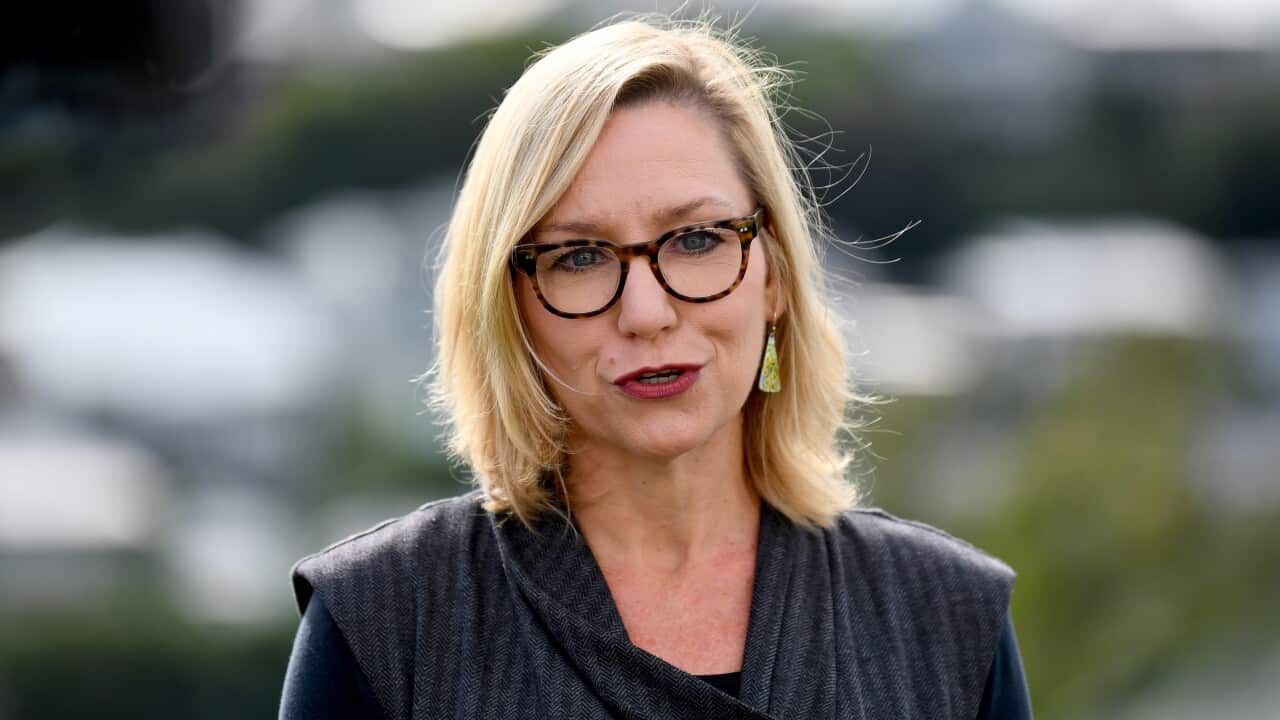
Greens leader Larissa Waters is adamant the party is not directionless, despite appearing to lose traction with Australian voters and accusations the party has a messaging issue.
Disillusioned with the rising cost of groceries, energy bills and housing affordability, many voters have been seeking out alternatives to the major parties.
Pauline Hanson's One Nation party has seemingly tapped into the discontent and surged to its highest ever support, sitting at 17 per cent, according to Redbridge, Roy Morgan and Essential polls.
But traditionally progressive young voters are not flocking to the left of the Labor party.
After losing three seats in the lower house at the May election, the Greens managed to hold on to their primary vote of 12 per cent, a figure that Redbridge analysts say has since dropped to as low as nine per cent.
News that makes sense
Your trusted source for staying up-to-date with the world around you. Get free daily news updates and analysis, straight to your inbox.
Redbridge Director Simon Welsh says the Greens have "retreated in public consciousness", including on issues of concern, like cost of living and housing.
Internally, it's reportedly frustrated volunteers too. In the previous term of parliament former Queensland MP Max Chandler-Mather championed rent freezes and housing reform, to the forefront of voters' minds. But when he lost his seat, the party was accused of switching off on the issue.
Waters, who says her leadership style is more collaborative than the presidential style amplified in the media, and a departure from that of her predecessor, Adam Bandt, doesn't feel "chastened" by the shift in the polls.
"Maybe my style is a bit different, but we still represent the same values, and we will still fight as hard as ever to help people and help nature," Waters told SBS News.
Greens not taking a 'step backwards on housing'
When prodded about perceptions that the Greens have gone quiet on issues like housing since the election, she disagrees.
"Absolutely not. I think what's happened in the last six months is we've seen the government, who obviously sets the agenda, ram through some pretty shitty climate targets and then focus on environmental law reform," Waters said.
"So we've been responding to that, but we have not taken a step backwards on housing. We are still of the view that we need rent caps."
"You will hear us in the New Year refocusing on those economic issues," she added.
Despite the noise, about waning influence, the Greens have been able to wield power within the chambers of parliament.
The party held onto balance-of-power in the Senate, which they utilised to secure a deal with Labor to reform outdated environmental laws on the final sitting day of the year in November.
After weeks of negotiations, Greens wins included ending exemptions for forestry destruction in 18 months, tightening land clearing ban laws and closing a loophole to prevent the fast tracking of coal and gas.
Waters, an environmental lawyer, admits it wasn't everything the Greens hoped for but "the best we could get".
"We fought and fought and tried every which way. I came up with a million different suggestions for how we could take steps forward on climate, and the government just rebuffed every single one of them," she said.
Greens' communication challenge
The 48-year-old is no stranger to paving an alternate pathway, rising to prominence when she became the first woman in Australian history to breastfeed a baby on the Senate floor in 2017.
If you scroll through her social media, where she's posted daily since the election, a range of issues are present, from videos outside gas plants, snippets of speeches about corporate tax to explainers about health issues like perimenopause.
However, Welsh says the message isn't breaking through in focus groups, with the Greens suffering from a "messaging, communication challenge" that sees them largely "invisible" to voters.
"We know cutting through is becoming the biggest problem for parties at the moment, particularly as people are moving towards news avoidance and just sort of disengagement again this time of the electoral cycle," he said.
"But if you're a party that's trying to sort of reposition itself, learn from lessons learned in the election, that just makes it doubly hard."
Waters, who says she doesn't listen to the polls, is undeterred.
"Look, we're a smaller party. We don't take those corporate donations, and so we can't afford those glossy TV ads that, you know, blare down people's screens, or those robo call messages," she said.
"So that is a challenge for us, to give people some hope, to reach them and then to say, look, we're in here fighting for you, but we're up for the task."
For the latest from SBS News, download our app and subscribe to our newsletter.







