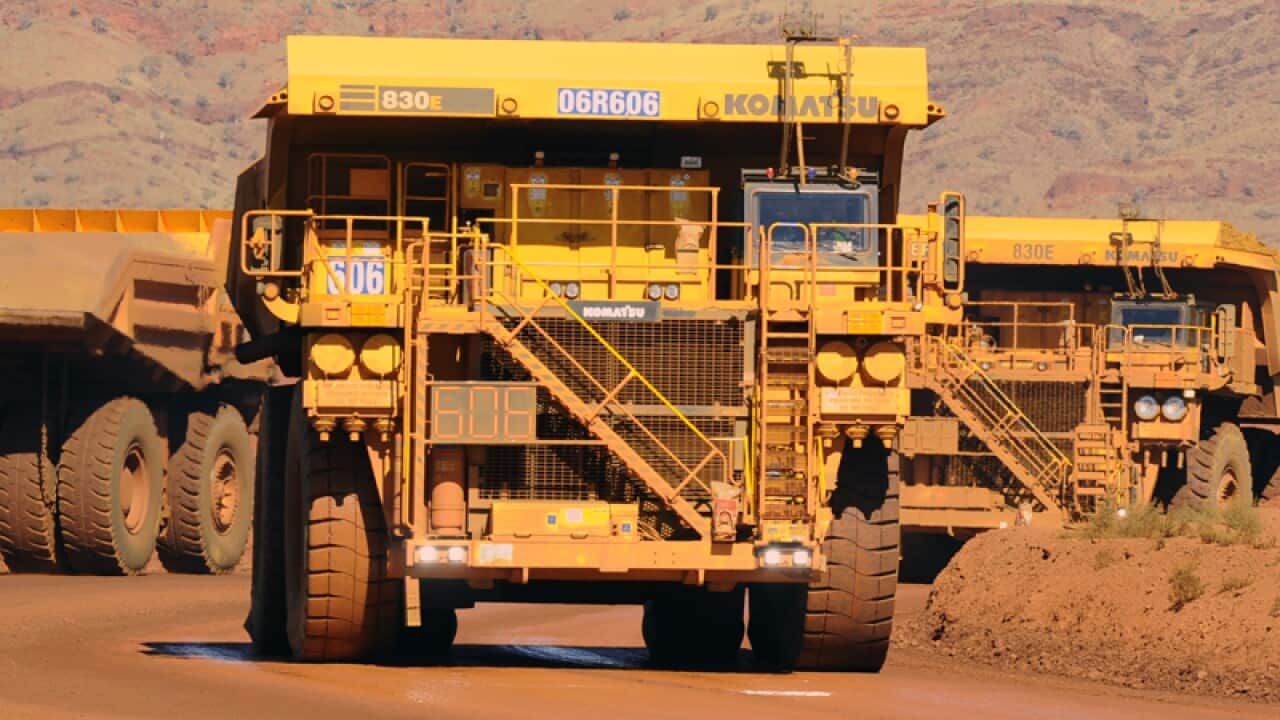
Mining giant Rio Tinto is cutting more costs from its iron ore operations and maintaining its forecasts for Chinese steel demand despite growth concerns.
Rio expects Chinese steel production to reach around one billion tonnes by 2030, in contrast to rival BHP Billiton, which recently lowered its expectations to between 935 million tonnes and 985 million tonnes in the mid 2020s.
Rio's chief executive of iron ore Andrew Harding said the company had achieved productivity gains amid falling prices and market volatility.
"We are clearly going through a period of adjustment as China moves towards a more consumer-led economy but we see continued growth in global iron ore demand over the long term," he told investors during a presentation in Sydney.
"We are confident in our ability to build value through the cycle."
Mr Harding said Rio's iron ore business was robust, and there are opportunities to maximise productivity and efficiency following a reduction in cash costs to just above $US15 a tonne.
Maintenance costs will be cut by $200 million a year over the next three years, Rio said.
The company's iron ore operating costs have already been reduced by $US1 billion over three years, and it has about 400 initiatives underway to identify further savings and ways to lift productivity.
Still, Rio expects slower growth in Chinese steel demand over the next 15 years, with GDP growth tipped to fall from around seven per cent each year to between four and five per cent by 2030.
"Although growth is slowing off its peak, this is off a much larger base," Rio's head of economics Vivek Tulpule said.
Chinese steel production is set to grow 2.5 per cent a year over the next 15 years, the company said.
Rio is also tipping around 120 million tonnes of marginal iron ore supply will exit the market in 2015.
It says 220 million Chinese people are expected to move into an urban environment in the next 15 years, compared with 320 million between 2000 and 2015.
Emerging markets are also expected to increase their share of the global iron ore market, with Rio predicting non-Chinese steel demand to lift to 65 per cent by 2030.
Share


