
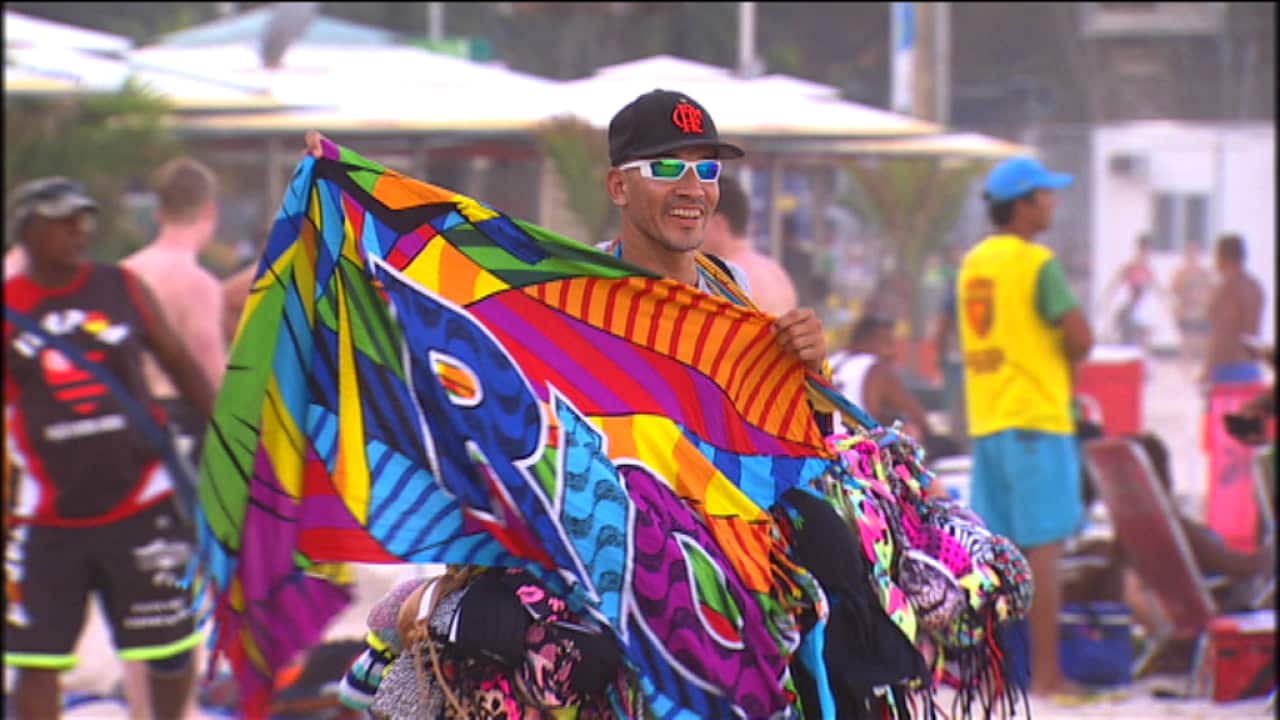
The sands of Copacabana beach are crawling with tourists.
Real estate for a beach towel is scarce, as tourists flock in to experience a day in the sun on one of Rio's most iconic seaside locations.
Weaving through the bodies is the 25-year-old Cariocanamed Prince, selling bikinis from a display hung around his neck.
A Copa regular for the last five years, he's veritable royalty among the other beach vendors.
And after making yet another transaction, he said the ladies can't resist his charms.
"I call them Madonna, I say you look like a millionaire and a very beautiful woman. I take a photo and they buy a lot. The tourists are very friendly."
"I call them Madonna, I say you look like a millionaire and a very beautiful woman"
The Olympics will attract an estimated 500,000 visitors from all over the world.
"It's very good, there are many tourists. A lot of people from Australia, France, Switzerland, Argentina," Prince said.
And they're spending money.
On Copacabana beach the merchandise includes everything from keyrings to fried cheese.
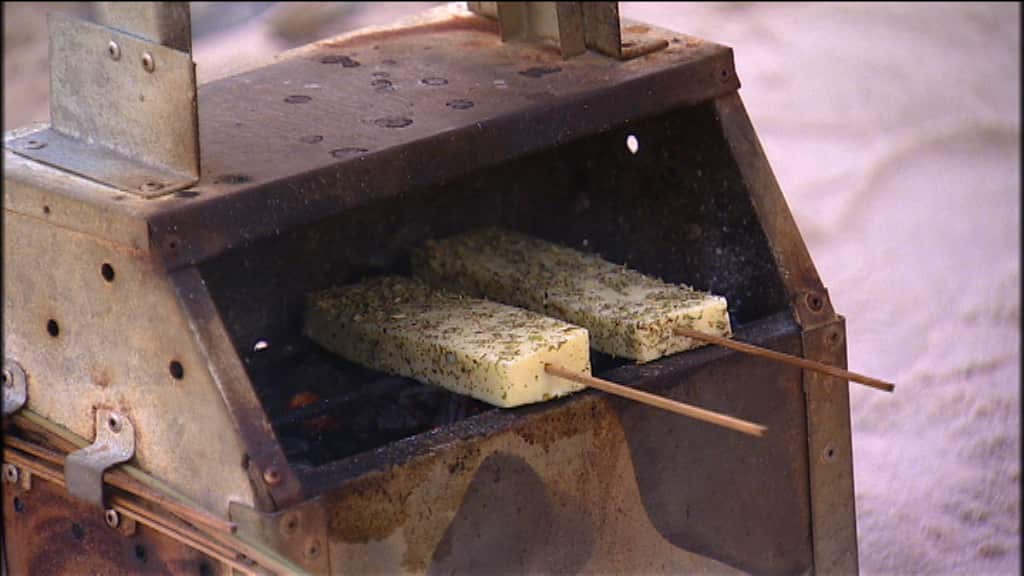
Carlos Enrique carries around a small metal box, that holds smoldering coals and a small grill inside.
When he finds an obliging customer, he takes a piece of hard white cheese, rolls it in oregano and bakes it on a skewer in the mini oven.
"My cheese is the best on the beach," he said. "I have many customers and they all say my cheese is the best."
The burgeoning business opportunities sparked by the Olympic crowds are attracting others to the seaside retail trade.
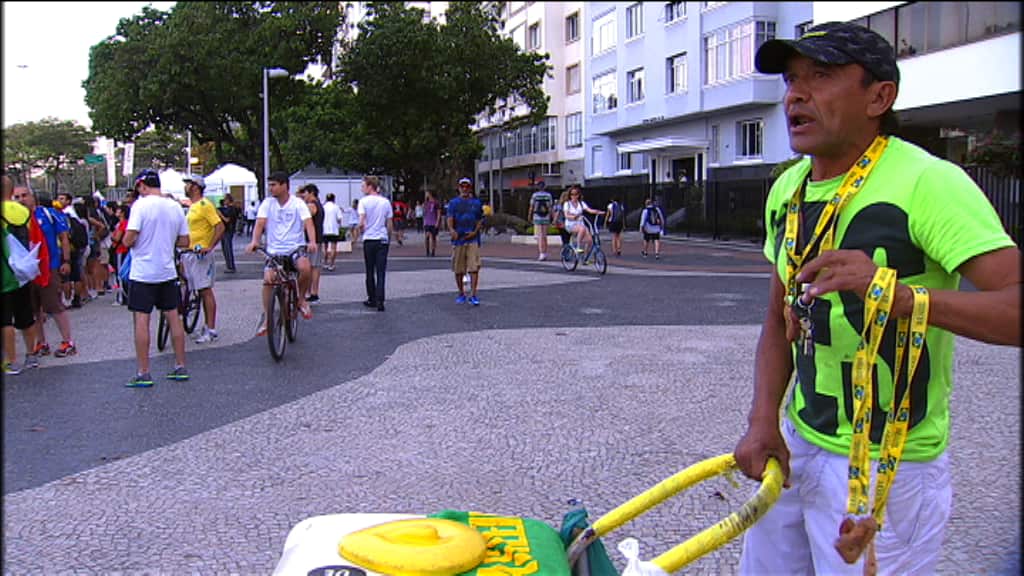
Darci Olegário sells icecream and whistles on Copa.
He began a few weeks before the Olympics and now he's now earning enough to leave his other job as a labourer.
"I can get by. It's possible to make about 200 or 150 Reais per day. It's busy, it's good for everyone," he said.
That equates to about 80 Australian dollars, and it is enough for him to live well.
But while business is booming now for Rio's street vendors, many fear a sharp decline in their incomes after the Olympics ends.
With a wife and two children to support, Roberto Vieira works the beach from sun up to sun down selling fairy floss in plastic packets that hang from a large pole he carries on his shoulder.
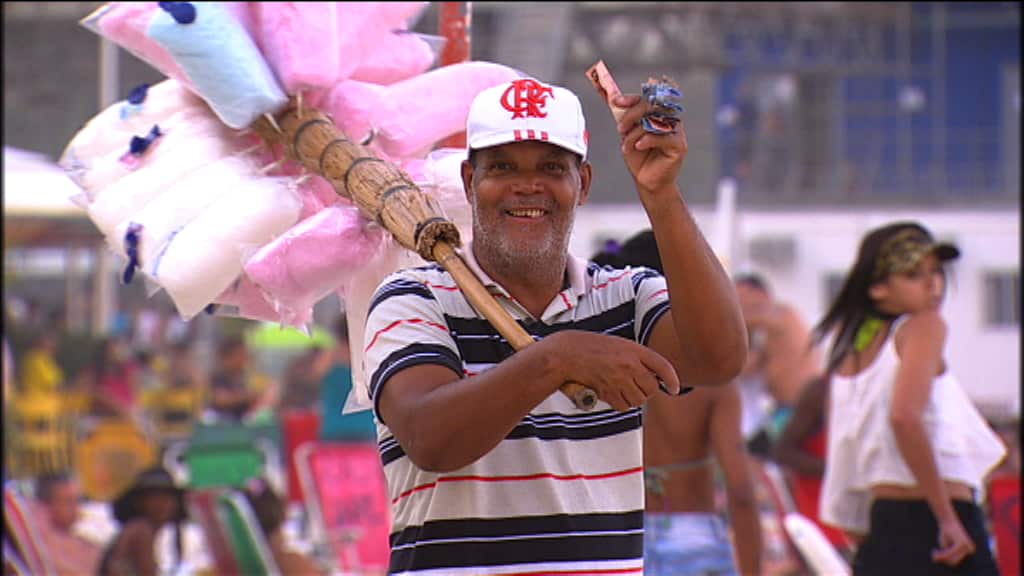
If he sells all of his inventory, he'll have enough to pay his rent.
"Sometimes it is enough. I can pay the bills," he said. "Yesterday I came with 80 [packets of fairy floss] and I returned with 60, I had 20 left. But today is better."
While many Olympic tourists wave off the beach vendors, some like Sabine Kruythoff have witnessed their struggle.
Visiting from the Netherlands she said many of the beach vendors return home to shacks in Rio's favelas.
She said she'd rather give her souvenir dollars to them than the tourist shops.
"It's good for them, good for Brazil, good for Rio and we have great souvenirs"
"People from their favelas come to the beach to sell their stuff so we'd rather help them," she said.
"It's good for them, good for Brazil, good for Rio and we have great souvenirs."
While Brazil is yet to see if the costs of hosting the Olympic will yield dividends, beachside vendors like Prince are content to enjoy the windfall for now.





