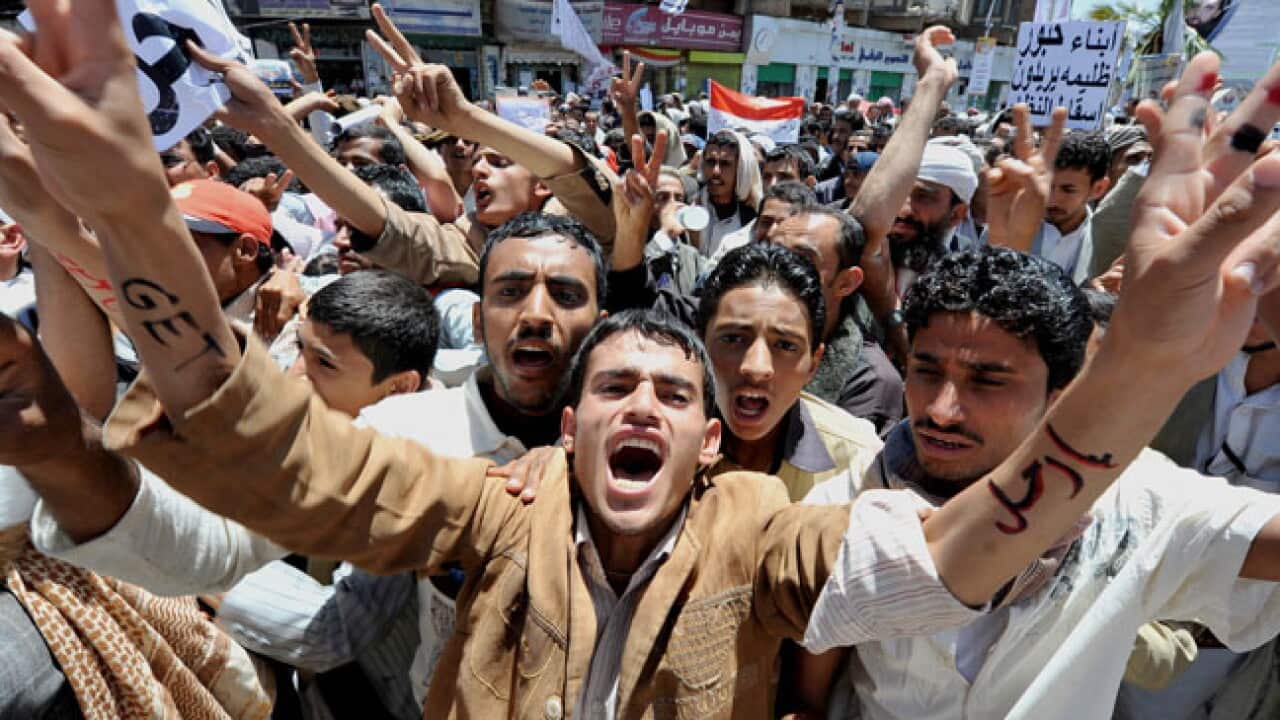
Six people died in clashes in Sanaa between police and backers of a powerful opposition tribal chief on Monday, tribal sources and state media said, as tensions rose after Yemen's president refused to step down.
The US State Department, meanwhile, urged President Ali Abdullah Saleh to sign a Gulf-based initiative for him to leave power in order to "break this deadlock."
The gunbattle came a day after Saleh refused to ink the accord brokered by the Gulf Cooperation Council (GCC) under which he would cede power within 30 days in exchange for immunity from prosecution for himself and his aides.
News that makes sense
Your trusted source for staying up-to-date with the world around you. Get free daily news updates and analysis, straight to your inbox.
Five supporters of Sheikh Sadiq al-Ahmar were killed and 35 others wounded during clashes with police, the sheikh's office said in a statement, updating an earlier toll from medical officials.
The defence ministry's 26sep.net news website, meanwhile, said that one citizen was killed and two wounded by gunfire from Ahmar supporters.
The official Saba news agency, citing an interior ministry official, said Ahmar supporters "opened fire on and assaulted Al-Rumah school in Al-Hasaba neighbourhood" and Saba's headquarters.
And Al-Yemen state TV said more than 200 journalists were trapped inside the Saba building, including two who were wounded.
A Yemeni official, speaking on condition of anonymity, also told AFP that Ahmar loyalists had taken over the trade and industry ministry.
The accounts could not be independently verified as the area was cordoned off.
Witnesses had said earlier that machine guns were fired and grenades thrown during fighting between police and tribesmen near Ahmar's home in Sanaa.
Sources close to Ahmar said the fighting erupted after security forces tried to deploy around the tribal leader's residence and that loyalist gunmen had retaliated.
The fighting wound down by Monday evening, an AFP correspondent reported.
Ahmar, who heads the Hashid tribal federation, the largest in deeply tribal Yemen and a former crucial source of Saleh's power, in March pledged his support for the opposition.
Yemen's opposition vowed earlier on Monday to step up street protests, while insisting on efforts to avoid violence.
"Our only option is to intensify the peaceful revolt and continue to choke the regime, then finish it," said Mohammed al-Qahtan, a spokesman for the Common Forum coalition of parliamentary opposition parties.
Saleh on Sunday explicitly warned of civil war as he refused to sign the transition plan brokered by impoverished Yemen's oil-rich Arab neighbours in the Gulf unless the opposition agreed to witness the signing at his palace.
"If they don't bow, and want to take the country into a civil war, let them be responsible for it and for the blood that was shed and that will be shed if they insist on their stupidity," he said.
The GCC has said it was suspending its mediation efforts, while US Secretary of State Hillary Clinton accused Saleh of "turning his back on his commitments and disregarding the legitimate aspirations of the Yemeni people."
The United States said on Monday that Saleh can still sign the Gulf initiative and "urged him to take action."
"We believe President Saleh still has the opportunity to sign this initiative and break this deadlock," State Department spokesman Mark Toner told reporters in Washington.
In Sanaa, the US embassy said on its website that consular services to the public would be suspended on Tuesday and Wednesday because of the security situation in the capital.
The European Union said it would review its policies towards Yemen and the French foreign ministry branded Saleh "irresponsible" for refusing to sign the GCC deal and warned of "consequences."
Since late January, security forces and armed Saleh supporters have mounted a bloody crackdown on protests demanding his ouster, killing at least 181 people, according to a toll compiled from reports by activists and medics.
Under the terms of the GCC plan, Saleh would hand power to the vice president 30 days after it is signed, and he and his aides would be granted immunity from prosecution by parliament.
A national unity government led by a prime minister from the opposition would be formed, and a presidential election would follow 60 days after Saleh's departure.







