Disputes over territories and North Korea's actions are putting the region's stability at risk and underline the need for Australia to boost its defence spending.
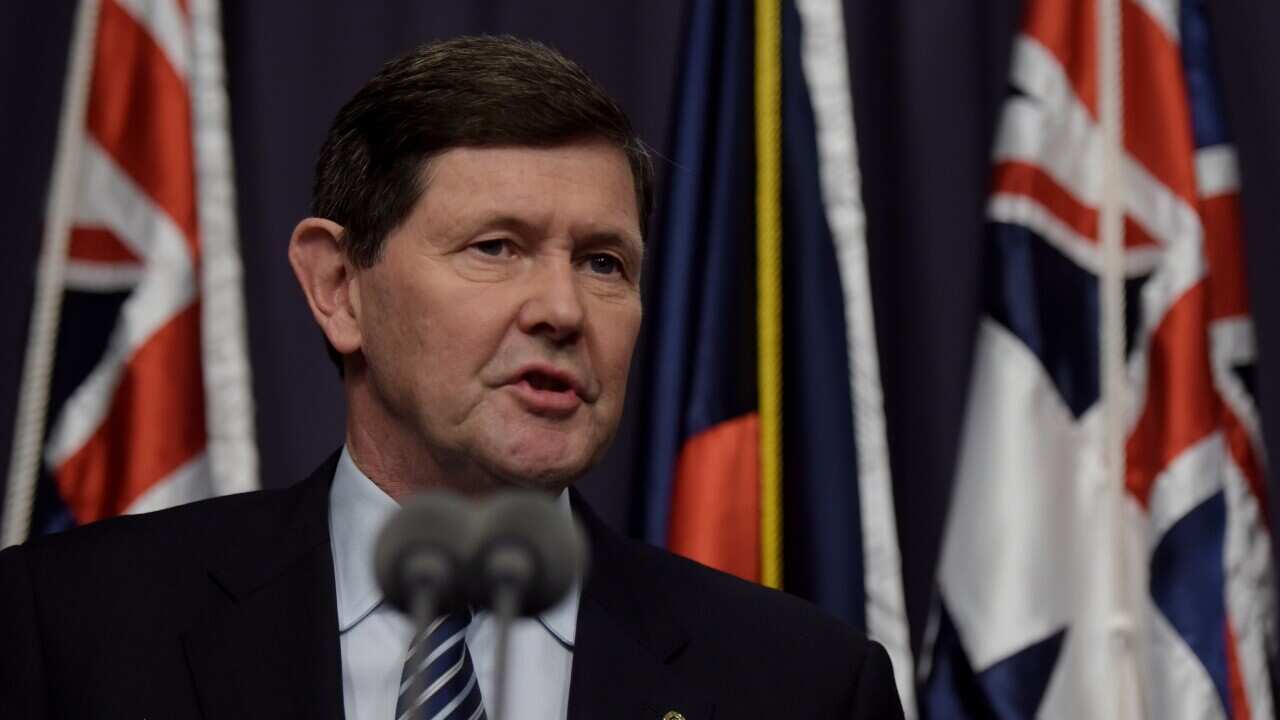
That's the view of Defence Minister Kevin Andrews who has outlined his approach to growing tensions in the Indo-Pacific region.
Australia's top five trading partners are in the region and almost all of the nation's international trade comes by sea, mostly through the South China Sea.
Mr Andrews told a forum in Melbourne on Friday some tensions in the region were becoming more acute.
"Territorial disputes in the South and East China Seas, as well as North Korea's destabilising actions on the Korean Peninsula, continue to risk regional stability and create uncertainty," he said.
Disputes needed to be resolved peacefully and no "coercive or unilateral action" should be taken to change the status quo in the South or East China Seas.
The modernising of militaries across the region is seen most sharply in China's military spending which has grown more than 160 per cent over the decade.
Among the top five global importers of weaponry are India, China and Pakistan.
The minister said the China-US relationship would be crucial not only for the region but Australia's future defence planning and policy-making.
This year, 1150 US Marines will rotate through Darwin for training and exercises with Australia and regional partners.
"Further strengthening our cooperation with the United States, including in intelligence, capability and technology ... will remain key objectives for us," Mr Andrews said.
Over the next two decades, Australia will have up to 40 new submarines and surface ships, as well as the Joint Strike Fighter and a new land vehicle fleet.
Mr Andrews said the Defence white paper, to be released later this year, will provide full costings on how defence spending will be raised to two per cent of GDP by 2023/24.
"The future ADF will be the most capable that Australia has ever seen."
Share


