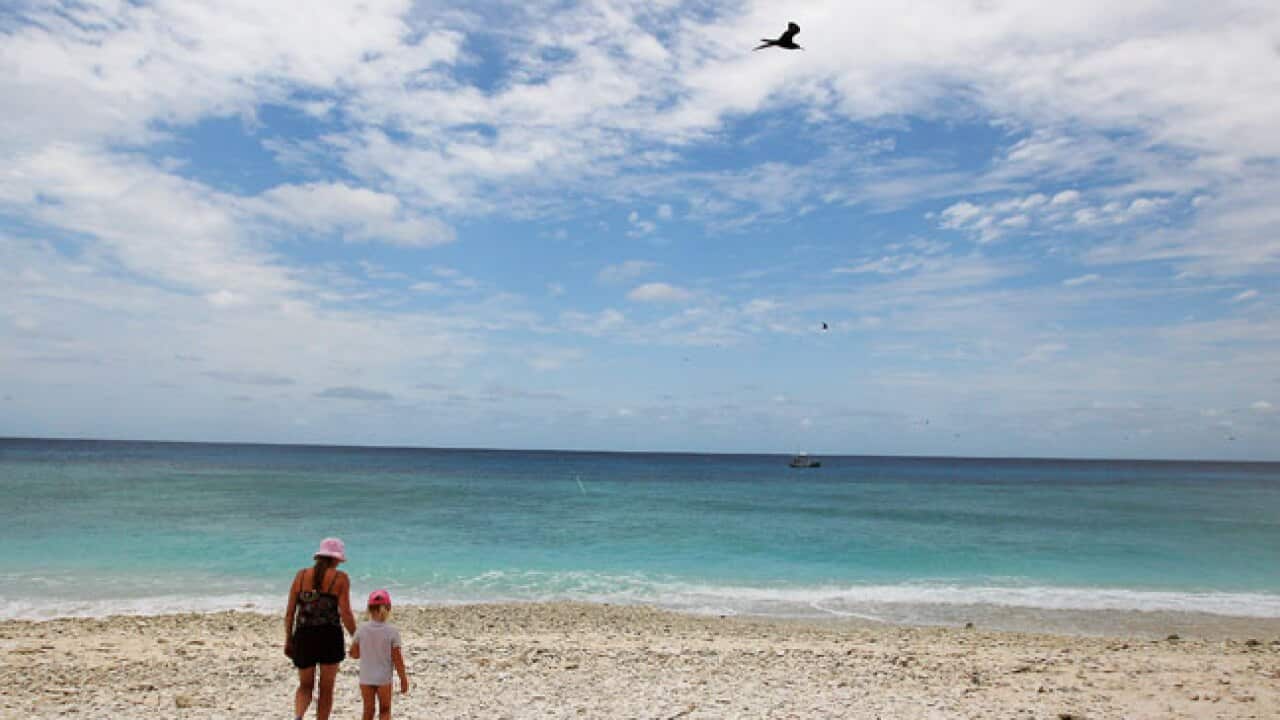
Each year about 67 million tonnes of debris washes onto Australian shores from the Great Pacific Garbage Patch, a mass of floating debris about the size of South Australia.
"A lot of stuff that ends up on our shore ... basically [comes] directly from overseas on our water line and that's how we collect it on our shores," said Djunbunji Ranger Victor Bulmer.
News that makes sense
Your trusted source for staying up-to-date with the world around you. Get free daily news updates and analysis, straight to your inbox.
Rubbish from as far away as California and Japan is directed there by ocean currents. In some places, the floating rubbish cluster is estimated to be almost 30 metres deep.
Not for profit organisation Tangaroa Blue is working with local rangers to coordinate the marine debris clean-up. The rangers use GPS technology to record the location and origin of the washed-up rubbish.
"We identify it by name and there's a lot of bottles and discarded remnants and that has their country's name on it. So we basically identify it through reading what's on there" said Mr Bulmer.
Floating debris is a global phenomenon which threatens marine species and coastal ecosystems.
Marine life can become entangled in food packaging and fishing gear, or mistake the rubbish for food - a problem whose effects can be passed on to humans.
"If an animal or a fish eats that toxic pellet they're also absorbing the toxins in their tissue. The big problem comes when we're eating the fish because we're eating those toxins as well, so it's a huge risk to the environment and to our health as well," said Heidi Taylor from Tangaroa Blue.
The next step for the Djunbunji Rangers is to start a junior program and have children learn the importance of clean oceans through hands-on experience. Ranger Larissa Mundraby already has her children, nieces and nephews helping out.
"At the end of the day this is their heritage. This is their inheritance and I'm really keen for them to come back on country and do what we do for them to learn why it's so important."







