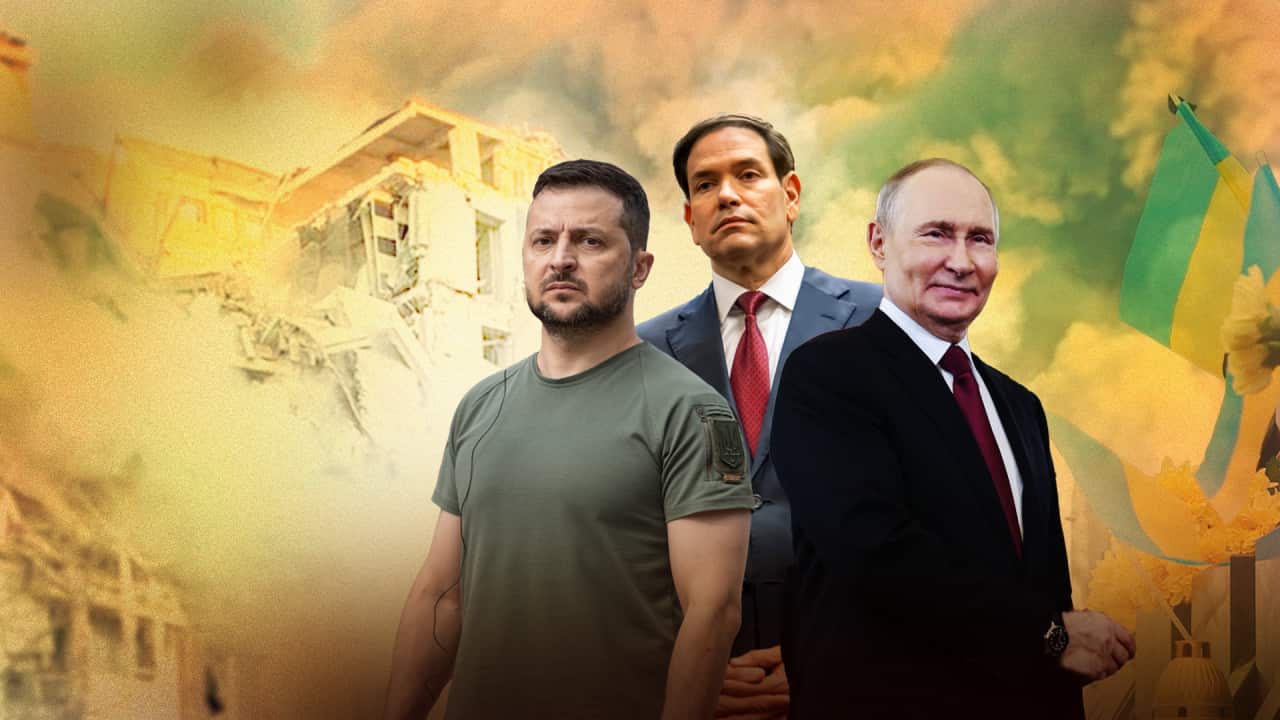
Three and a half years since Russia launched its full-scale invasion of Ukraine, there is hope that a plan to end the war could finally be within reach.
Officials from the United States, Ukraine and other European countries are in Geneva, Switzerland, to discuss a 28-point proposal being pushed by the US as a way to bring the conflict to a close.
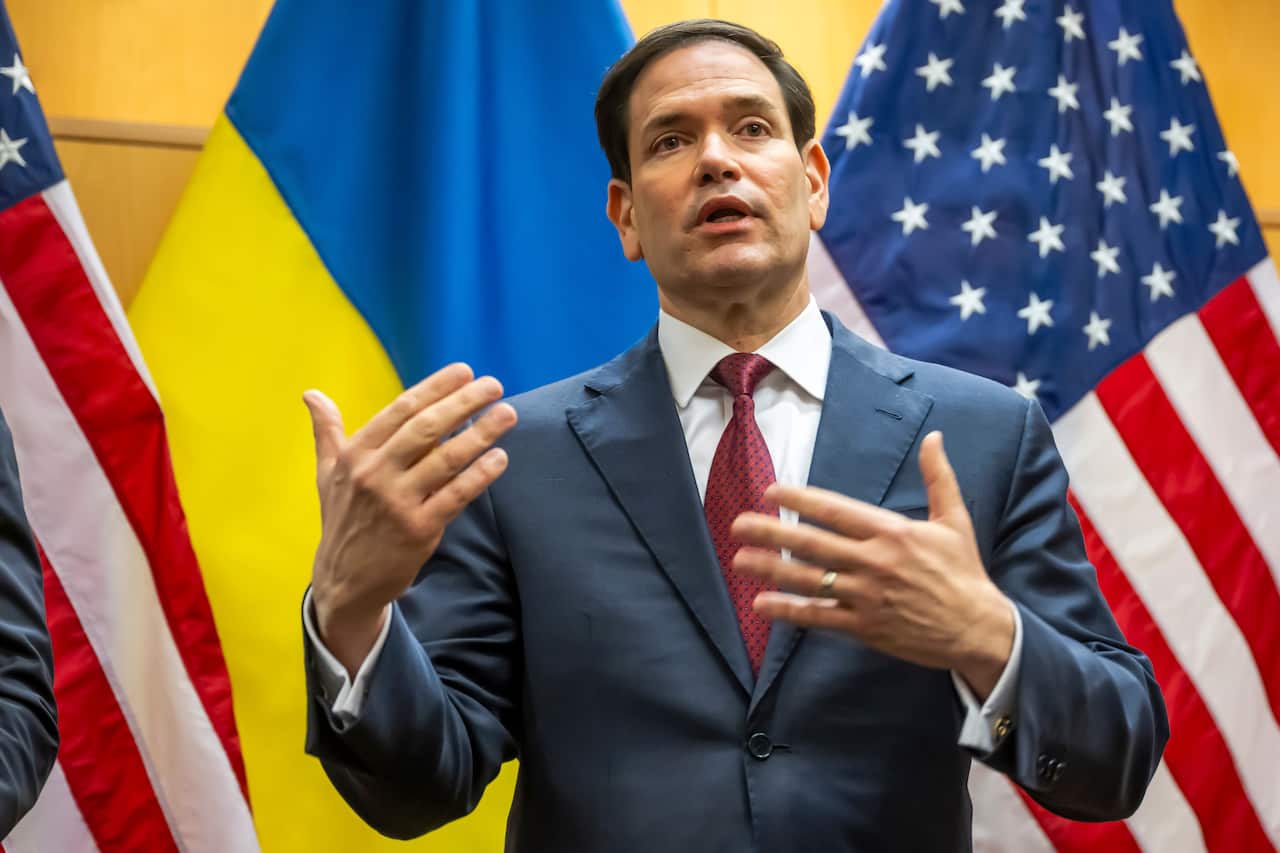
US secretary of state Marco Rubio, who is in Geneva, boasted of "tremendous" progress after a day of talks between delegations, saying it was likely the "best meeting" US officials have had since US President Donald Trump returned to power in January.
Andriy Yermak, the head of Ukraine's delegation, similarly told reporters that the sides had made "very good progress".
But it's been a fraught couple of days, with questions around who authored the plan, Europe pushing back on several points, and an angry social media post from Trump.
News that makes sense
Your trusted source for staying up-to-date with the world around you. Get free daily news updates and analysis, straight to your inbox.
Here's what we know — and what's still unresolved.
What's in the US-proposed plan to end the war?
The original 28-point plan being pushed by the US includes a confirmation of Ukrainian sovereignty and a non-aggression agreement between Russia, Ukraine and Europe.
There's an expectation that Russia will not invade neighbouring countries, and enshrine in law a policy of non-aggression towards Europe and Ukraine.
But the plan also proposes many concessions to Russia, some of which Ukrainian President Volodymyr Zelenskyy has long ruled out.
For one, Ukraine would agree to give up parts of its territory where Russia has made battleground gains: Donetsk, Luhansk, and parts of Kherson and Zaporizhzhia.
Donetsk and Luhansk — collectively known as the Donbas — would be "recognised as de facto Russian", including by the US, as would Crimea — which Russia invaded and then annexed in 2014.
Russia would not be given full control of Kherson and Zaporizhzhia. Instead, the current frontline would be frozen, with de facto recognition on either side.
Ukraine would have to withdraw from the parts of Donetsk it currently controls — with it becoming a neutral demilitarised zone controlled by Russia.
The plan also requires Zelenskyy to drop his long-held ambition for Ukraine to join the US-led NATO military alliance.
Both Ukraine and NATO would have to formally mandate that Ukraine never be admitted, and NATO would agree not to station troops there.
Instead, in a vague, one-sentence point, it's said that Ukraine would be given "reliable security guarantees". It would also agree to limit the size of its army to 600,000 troops.
Russia would also be reintegrated into the global economy, with the potential for sanctions to be gradually lifted, and Russia would be invited to rejoin the Group of Eight (G8). The grouping of the US, UK, Canada, France, Italy, Germany and Japan has operated as a G7 since Russia was first suspended in 2014 following its annexation of Crimea and then announced its withdrawal in 2017.
Zelenskyy, responding to the plan in a solemn speech to his people on Friday, said that he would "present arguments" and "propose alternatives" to the plan in its current form.
As discussions began in Geneva, Trump said in a post on social media that Ukraine had shown "zero gratitude" for US efforts to end the conflict, prompting Zelenskyy to stress that he was grateful.
Russian President Vladimir Putin, responding to the US proposal, earlier said it could form the basis of a resolution to the conflict.
Who wrote the plan?
Concerns over conditions that are favourable to Russia escalated over the weekend, when Rubio insisted that the proposal had been authored by the US.
That came after a group of US senators, including Republican Mike Rounds and independent Angus King, suggested otherwise.
Both Rounds and King alleged that Rubio had told them the plan was not the administration's position, but instead a "wish list of the Russians".
The US state department called their accounts "blatantly false", while Rubio posted on X that the "peace proposal was authored by the US".
"It is offered as a strong framework for ongoing negotiations," he said.
"It is based on input from the Russian side. But it is also based on previous and ongoing input from Ukraine."
What's in Europe's counter-proposal?
The US plan was drafted without European input, and, ahead of the talks in Geneva, a counter-proposal drafted by the UK, France and Germany was prepared.
The counter-proposal goes through each of the US plan's 28 points, with suggested changes.
On territory, there would be "negotiations on territorial swaps" that would start from the line of contact in each region, rather than pre-determining that certain areas should be recognised as "de facto Russian".
Ukraine's military would be capped at 800,000 personnel during peacetime rather than the blanket 600,000 in the US proposal.
Ukraine would also receive a security guarantee from the US similar to NATO's Article 5 clause, which considers an attack on one member's territory an attack on all, obligating other countries to respond. That's only been invoked one time — after the September 11 attacks in 2001.
The counter-proposal also pushes back on the US' plan for how Russian assets frozen in the West are used.
"Ukraine will be fully reconstructed and compensated financially, including through Russian sovereign assets that will remain frozen until Russia compensates damage to Ukraine," the European proposal reads.
In contrast, the US plan proposed that US$100 billion ($154 billion) of frozen Russian funds be reinvested in a "US-led effort to reconstruct and reinvest in Ukraine", with the US receiving 50 per cent of the "profits from that venture".
Under the US plan, frozen Russian funds in Europe would be unfrozen, and the remainder of the frozen Russian funds would be "invested in a separate US-Russian investment vehicle".
The US proposal also essentially blocks Ukraine from seeking reparations from Russia for the conflict by making both parties agree "not to make any claims or consider any complaints in the future".
In place of this point, the counter-proposal says "provision will be made to address the suffering of victims of the conflict".
What happens next?
A joint US-Ukraine statement released by the White House on Monday said that "as a result of the discussions, the parties drafted an updated and refined peace framework", suggesting changes had been made.
"The discussions showed meaningful progress toward aligning positions and identifying clear next steps. They reaffirmed that any future agreement must fully uphold Ukraine’s sovereignty and deliver a sustainable and just peace," the joint statement said.
Both sides pledged to keep working on joint proposals "in the coming days".
Trump had originally given Zelenskyy a deadline of this Thursday to accept the deal.
— With additional reporting by Reuters and Agence France-Presse.
For the latest from SBS News, download our app and subscribe to our newsletter.







