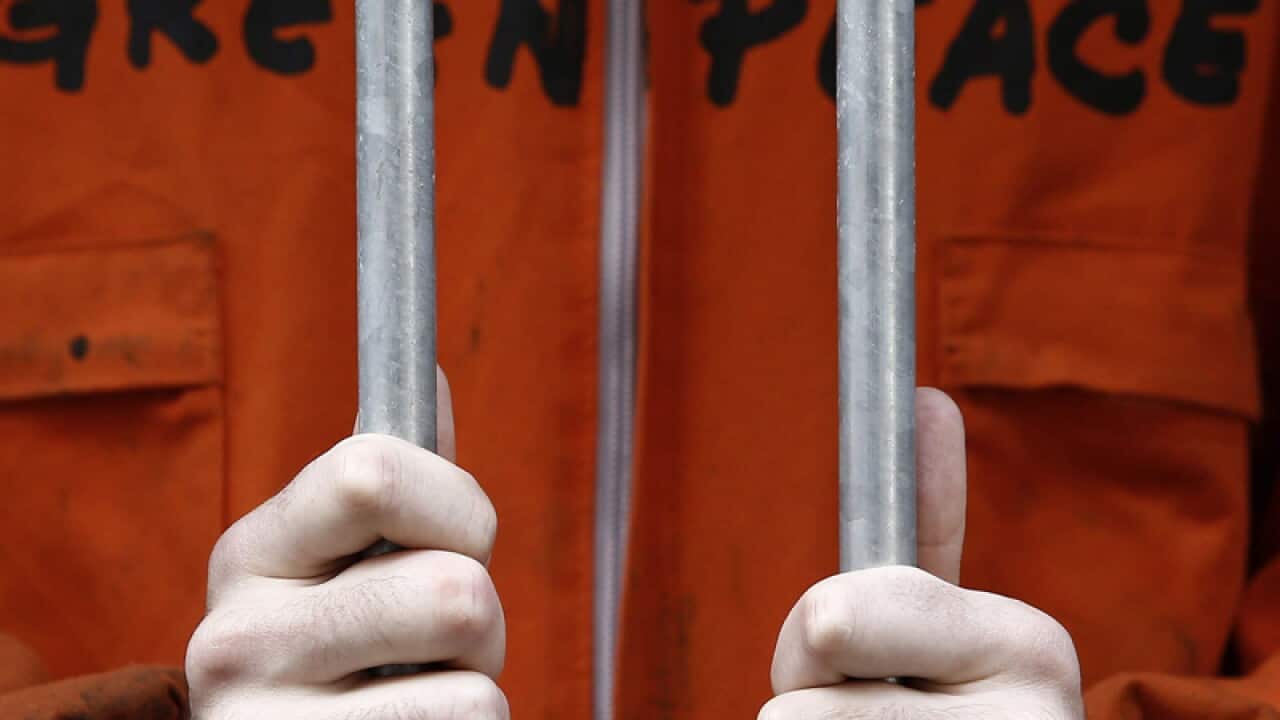
Russia has moved the crew of a Greenpeace Arctic protest ship from the northern port of Murmansk and put them on a train to St Petersburg, the organisation says.
The 28 activists and two reporters, arrested in September after protesting against oil exploration in the Barents Sea, left their detention centre at 5.00am (1200 AEDT) on Monday and are now on a train, Greenpeace spokeswoman Dannielle Taaffe said.
The arrested crew of the ship Arctic Sunrise includes 26 foreigners from 18 countries, including Australia. They have been held for nearly two months on charges of piracy and hooliganism after an attempt to scale an oil platform operated by Russia's energy giant Gazprom.
Greenpeace said that "persistent rumours" from diplomatic sources indicate that all 30 are being transferred to St Petersburg, a journey of about 1500 kilometres.
One of Russia's northernmost cities, Murmansk endures polar nights in the winter, with temperatures often dropping to below minus 30C.
News that makes sense
Your trusted source for staying up-to-date with the world around you. Get free daily news updates and analysis, straight to your inbox.
Several activists in mid-September attempted to scale Gazprom oil platform in the Pechora Sea, part of the Barents Sea, in protest at the firm's exploration in the Arctic.
Russian authorities boarded the ship on September 19 and towed it to Murmansk. Greenpeace says the authorities had no right to detain the Dutch-flagged ship in international waters.
Russian authorities initially accused the activists of carrying out illegal research, then charged them with piracy. They then changed the piracy charge to hooliganism, an offence that can be punished by a maximum of seven years in prison.
But Greenpeace said the piracy charge was never officially lifted.
Last month, Russian authorities also said the ship carried illegal drugs such as poppy straw and morphine, which Greenpeace denies.
The platform is located in Russia's exclusive economic zone on the Arctic shelf, which means that most Russian laws do not apply there.
"The decision has been made to transfer all 30 of the accused to detention centres in Saint Petersburg," the Investigative Committee said in a statement, saying that their charges "do not fall under the jurisdiction of courts in the Murmansk region".







