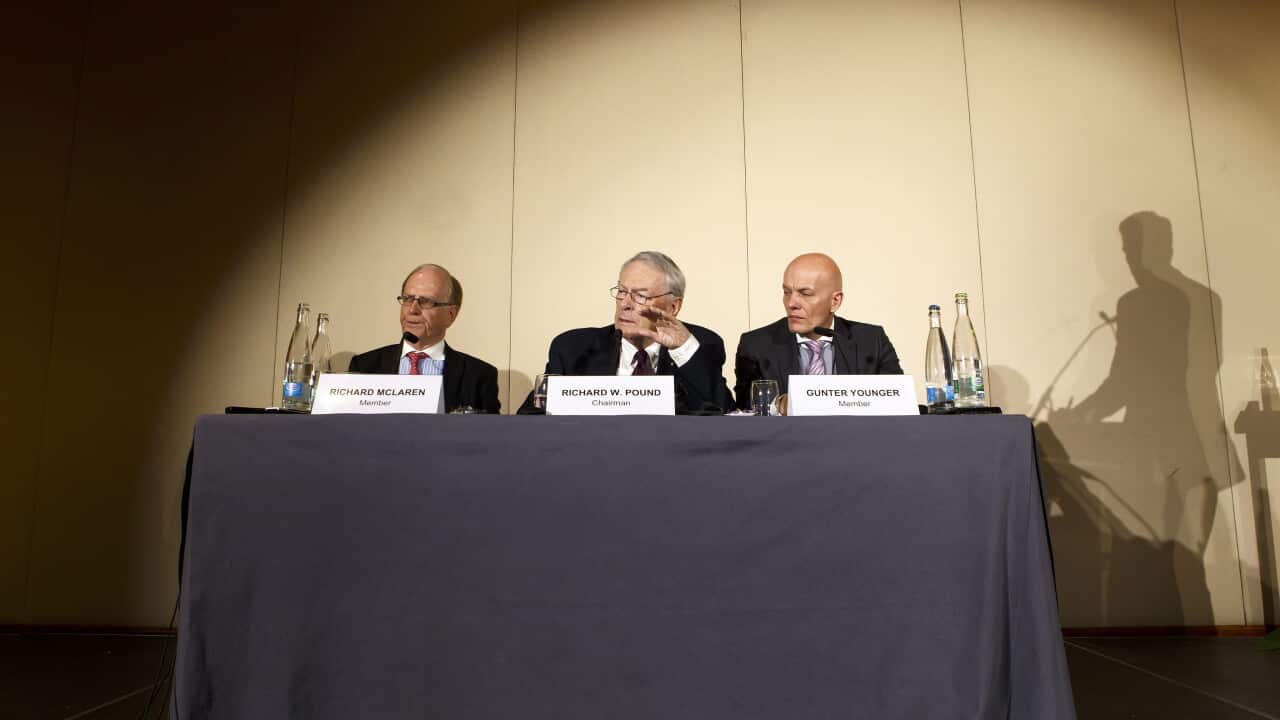
The international drugs in sport monitoring body has released a report containing a series of scathing accusations of widespread and systemic doping offences.
But Russia could still face suspension, potentially endangering its participation in next year's Olympic games and European tournaments.
Commission chairman and former head of the World Anti-Doping Agency, Dick Pound, has outlined some of the main findings of the inquest.
"We have identified possible criminal violations, we've identified a number of suspicious cases and brought the facts and the identities of the persons involved to the attention of the proper authorities. We have reported on interference with doping controls on many occasions. We found cover-ups, we found destruction of samples in the laboratories, we found payments of money in order to conceal the results doping tests among others."
News that makes sense
Your trusted source for staying up-to-date with the world around you. Get free daily news updates and analysis, straight to your inbox.
The Commission's report, released in Geneva, accuses Russia of fostering a state-sponsored doping culture that, it says, has "prevented or diminished the possibility of an effective anti-doping program".
It goes on to recommend that the Russian Athletics Federation be suspended from all international competition.
The Commission also calls for specific sanctions against five Russian athletes, four coaches and one doctor.
The world athletics governing body, the International Association of Athletics Foundations (IAAF), will convene on the matter on Friday.
President Sebastian Coe has told Sky News Russian sporting authorities are entitled to be given the opportunity to respond.
"I've given the Russian Federation until the end of the week to answer those allegations and to give my council a full and comprehensive response. I've asked the council to convene on Friday -- which we will -- to then review that response and then look at [the] next steps. But, sanctions could follow -- yes."
The findings which Russia is required to address appear damning for a nation with a strong and proud sporting history, particularly in the track and field disciplines.
Over a period of 11 months, WADA's investigation has produced claims of multiple offences involving prohibited substances, allegedly spanning several years, and encouraged by top officials.
It implicates testing laboratories, government and security officials in the destruction of anti-doping samples.
But Russia's sports minister, Vitaly Mutko, says it's merely an attempt to cast a shadow over all Russian sport which, he maintains, remains a global leader in fighting doping, and in competition.
Mr Mutko, whose ministry is accused of ordering the cover-up of doping violations, says the foundations of the report are vague.
"No, there is no serious objective evidence. Speaking about what you have said about the role of the state, this looks approximately this way: 'According to some information by certain sources the Russian state influences this work. But there is no official direct evidence. But at the same time we think that it does have an influence.' So they have no evidence, but one is still guilty. So they largely use polls, anonymous polls, some wiretaps that were made during sportsmen's training process. Many facts like that."
Vitaly Mutko further argues that Russia is not the only country to be affected by doping and, similarly, athletics is not the only sport.
It's a conclusion supported by WADA's findings, which also allege the London 2012 Olympics were sabotaged by what's been characterised as widespread inaction of international and national anti-doping authorities.
The Agency also points to systemic failures within the athletics global governing body.
Its allegations closely follow the launch of an investigation into the former president of the International Association of Athletics Federations, Lamine Diack, on suspicion of corruption and money laundering.
But it was a documentary film by German investigative journalist Hajo Seppelt that revealed serious new allegations of corruption in Russian athletics and prompted the World Anti-Doping Agency's investigation.
Mr Seppelt believes WADA's work could be made more effective.
"The World Anti-Doping Agency should have way more power. They should have much more money, they should be more independent from the international sports organisations because there is a clear conflict of interest, as you could see in this example. I think if you invest more money in the fight against doping and, also, the sports federations are much more transparent and if they do a proper job against doping, then I think we can, at least, reduce the problem. We will never solve the problem. Doping is a part of sports - we will never eradicate it completely. But, I think we can reduce the problem if federations are really working reliably and credibly."







