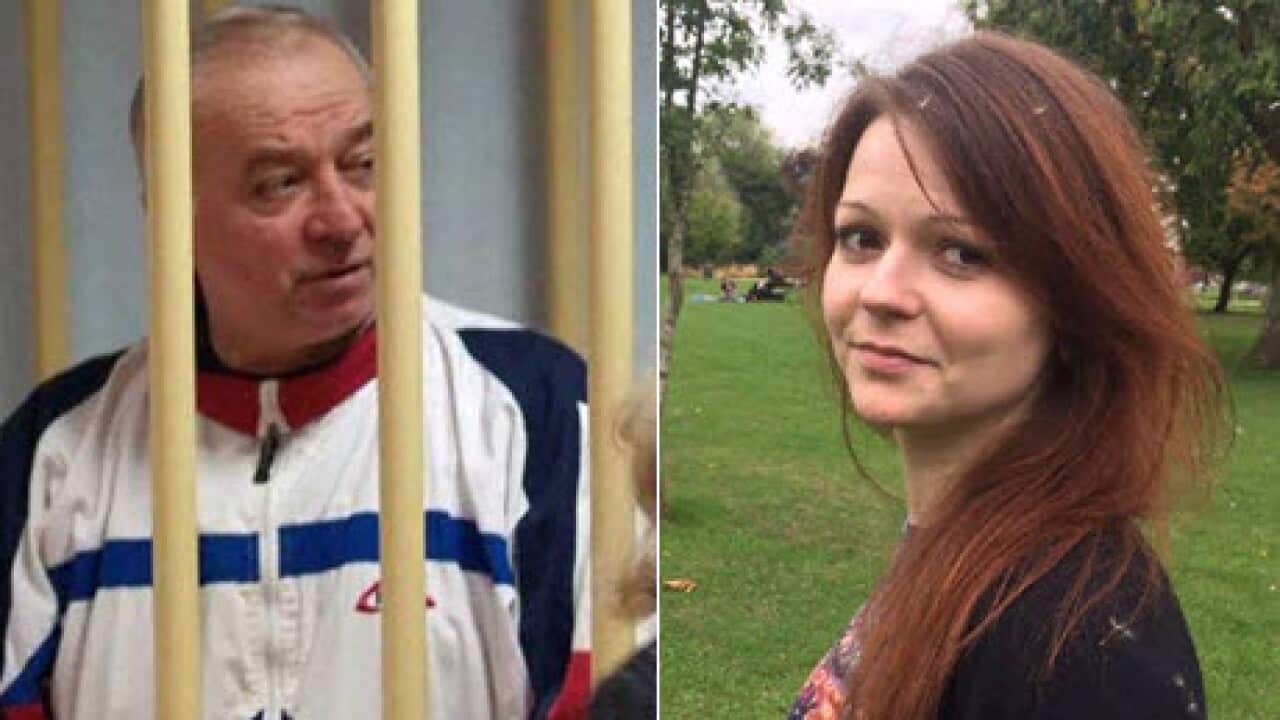
The same Russian military intelligence service now accused of disrupting the 2016 presidential election in the United States may also be responsible for the nerve agent attack in Britain against a former Russian spy — an audacious poisoning that led to a geopolitical confrontation this spring between Moscow and the West.
British investigators believe the March 4 attack on the former spy, Sergei Skripal, and his daughter, Yulia, was most probably carried out by current or former agents of the service, known as the GRU, who were sent to his home in southern England, according to one British official, one US official and one former US official familiar with the inquiry, speaking on the condition of anonymity to discuss intelligence.
British officials are closing in on identifying the individuals they believe carried out the operation, said the former US official. At the same time, investigators have not ruled out the possibility that another Russian intelligence agency, or a privatised spinoff, could be responsible.
President Donald Trump and President Vladimir Putin of Russia are to hold a much-scrutinised meeting Monday in Helsinki, Finland. For months, Trump has angrily belittled the special counsel investigation into Russian meddling in the 2016 election. But on Friday, the Justice Department announced a bombshell indictment of 12 GRU officers in the hacking of internal communications of the Democratic National Committee and the Clinton presidential campaign.
News that makes sense
Your trusted source for staying up-to-date with the world around you. Get free daily news updates and analysis, straight to your inbox.
The indictment detailed a sophisticated operation, intended to disrupt the United States’ democratic process, carried out by a Russian military intelligence service few Americans know about. But analysts and government officials say the GRU, now known as the Main Directorate of the General Staff, serves as an undercover strike force for the Kremlin in conflicts around the world.
The agency has been linked to Russia’s hybrid war in Ukraine, as well as the annexation of Crimea in 2014. It has been involved in the seizing of Syrian cities on behalf of President Bashar Assad. In more peaceful regions, the GRU is accused of creating political turmoil, mobilising Slavic nationalists in Montenegro and funding protests to try to prevent Macedonia’s recent name change.
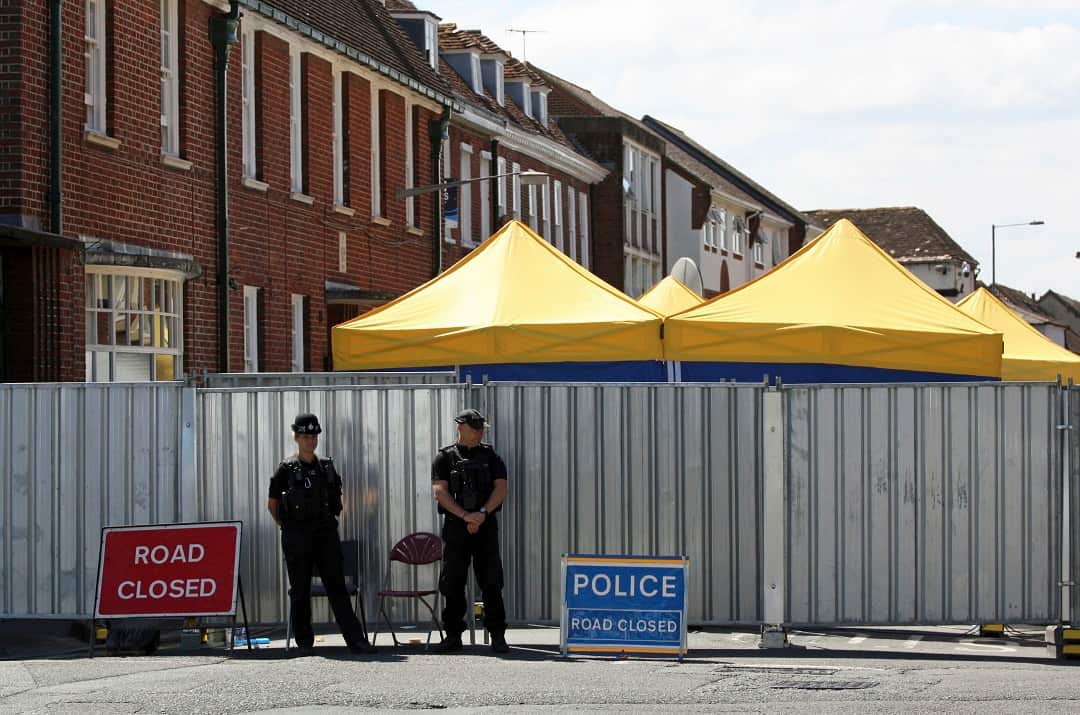
The poisoning of Skripal and his daughter with a military grade nerve agent is a different type of operation, one that falls into the tradition of Russian and Soviet intelligence practices toward traitors. Skripal served in the GRU for about 15 years but also worked as an informant for MI6, Britain’s foreign intelligence service — a rare betrayal among GRU officers, and one that most likely required laborious effort to mitigate damage to the agency’s networks.
Russian officials have denied their country’s involvement in the poisoning of the Skripals, even as their British counterparts have accused the Kremlin of ordering the attack.
On Sunday, Dmitry Peskov, a spokesman for Putin, dismissed the involvement of the GRU. “Russia is in no way involved in this episode," he said. “We consider this whole thing a major provocation.”
The investigation seems to be progressing steadily, said Mark Galeotti, an expert on Russian intelligence services at the Institute of International Relations Prague.
“They have a pretty good sense of when these people travelled, they’re going to be doing the full thing of checking the face of everyone on the plane, given that this is the land of CCTV,” Galeotti said, referring to Britain. “At the very least, they have grainy photographs from CCTV of the people they assume were involved.”
He added that the conclusions of the inquiry would have little impact on the military intelligence service.
“From the GRU point of view, what really matters is the opinion of one man,” he said, “and he already knows what they did or didn’t do.”
Relations between Britain and Russia are now deeply strained. In April, Britain and many of its allies, including the United States, expelled more than 150 Russian diplomats — many of them officers with the GRU — as a protest against the poisoning. Russia retaliated with its own expulsions.
Before ordering the expulsions, Britain privately presented its case against Russia to other governments, including evidence that GRU cyber specialists had hacked the email accounts of Skripal’s daughter in 2013. Skripal and his daughter were under surveillance before the attack, her phone possibly infected with malware to track her whereabouts, the BBC reported this month.

Skripal’s final post with the GRU was as a high-level personnel administrator, providing him with extensive knowledge of operations and individual agents. He was arrested in Russia in 2004 and later pleaded guilty to espionage, serving six years of a 13-year sentence before he was released in 2010 as part of a spy swap with the United States.
Skripal was living in Salisbury, England, before the poisoning attack. He and his daughter, who was visiting him from Russia at the time, have since recovered and are in hiding. The crime’s repercussions continued last week with the death of a 44-year-old British citizen, Dawn Sturgess, who, the police say, most likely accidentally touched residue of the nerve agent used in the attack.
From the earliest days of the Skripal investigation, the GRU was a suspect, in part because harsh punishment for traitors is part of the agency’s doctrine.
Viktor B. Suvorov, a GRU officer who defected to Britain in 1978, wrote in a memoir that inductees were shown a gruesome film of a defector, strapped to a stretcher, being slowly rolled into a furnace and burned alive. Though his account was disputed by some of his countrymen, it is beyond doubt that GRU defections were rare.
“Once you’re a member of an elite military force like the GRU, there is no leaving it,” said Nigel West, a British intelligence historian who has chronicled the lives of many defectors. “They do not defect. GRU are a military, disciplined elite. They know the consequences.”
In interviews, several former Russian intelligence agents were sceptical that the GRU was behind the attack on the Skripals, in part because of its audacity.
In Soviet times, their more cosmopolitan KGB colleagues referred to GRU officers as “sapogi,” or boots, suggesting that they were tough and rugged but not sophisticated in their methods, said Yuri B. Shvets, a former KGB agent posted to Washington in the 1980s.
“The GRU took its officers from the trenches,” he said, unlike the KGB, which recruited from top universities.
Irek Murtazin, who worked closely with the GRU and now covers military affairs for Novaya Gazeta, said that the agency’s assassinations tended to be unshowy affairs.
“He would have died from a heart attack or a stroke, a car would have run him over or a bum would have beat him up,” Murtazin said. “There wouldn’t have been any Novichok.”
Assassinations, nonetheless, have long been part of Russian and Soviet intelligence practice, Galeotti said.
“That the GRU kills people abroad has been amply demonstrated in a variety of other cases,” he said. “The GRU tends to be more of a kinetic agency — more a bullet in the head rather than an exotic poison. The ultimate point is, from the GRU point of view, it’s the outcomes that matter.”







