
Labor has joined the Abbott government in criticising Russia's decision to impose sanctions on Australia and other countries who oppose Moscow's support of rebels in Ukraine.
But foreign affairs spokeswoman Tanya Plibersek says it doesn't mean Russian president Vladimir Putin should be banned from the G20 leaders meeting in Brisbane in November.
"Sometimes the best way to do that is to have someone in the room to say it to their face," she told the Nine Network on Friday.
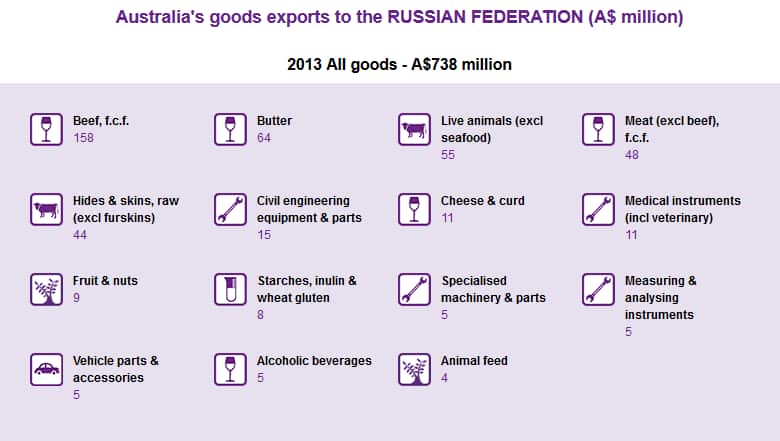
Russia on Thursday introduced an embargo on agricultural products from Australia, the European Union, the United States, Canada and others - countries that have imposed their own sanctions against Moscow over its policy in Ukraine.
News that makes sense
Your trusted source for staying up-to-date with the world around you. Get free daily news updates and analysis, straight to your inbox.
Ms Plibersek said it was important for the world community to tell Russia its support of rebels in eastern Ukraine was unacceptable, even though Australia hadn't imposed a second round of sanctions against Russia.
"It's a punishing of our primary production sector and farmers at a time when it seems the Russians have backed separatists and armed them, and those armed separatists have shot down a plane with Australians on it," she said.
"It's extraordinary behaviour."
Cabinet minister Malcolm Turnbull said it was important the world stand up to Russia.
"Putin is reacting against the firm response from the rest of the world and his country, his citizens will lose out of this," he told Nine.
Foreign Minister Julie Bishop on Thursday night said it was disappointing that Russia had retaliated rather than adhere to international concern and stop the flow of weapons to Russian-backed separatists in Ukraine.
Beef, pork, fruit and vegetable produce, poultry, fish, cheese, milk and dairy products are on the Russian-imposed sanctions list.
The announcement was made on the same day Australia held a national day of mourning for the 38 Australians killed in the downing of MH17 three weeks ago.
Agriculture Minister Barnaby Joyce admits the year-long ban will hurt farmers but the government will try to minimise the impact.
"I know this is something that's going to cause hardship in the country for rural producers," he told ABC radio on Friday.
"But we will try and work around it and find alternate markets."
The government was not ruling out financial assistance for affected producers.
"I would hope we're able to manage it without assistance," Mr Joyce said.
The minister said it was important to keep all lines of contact open and cancelling Mr Putin's invitation to the G20 would not help matters.
"You can't resolve an issue with someone you're not talking to."







