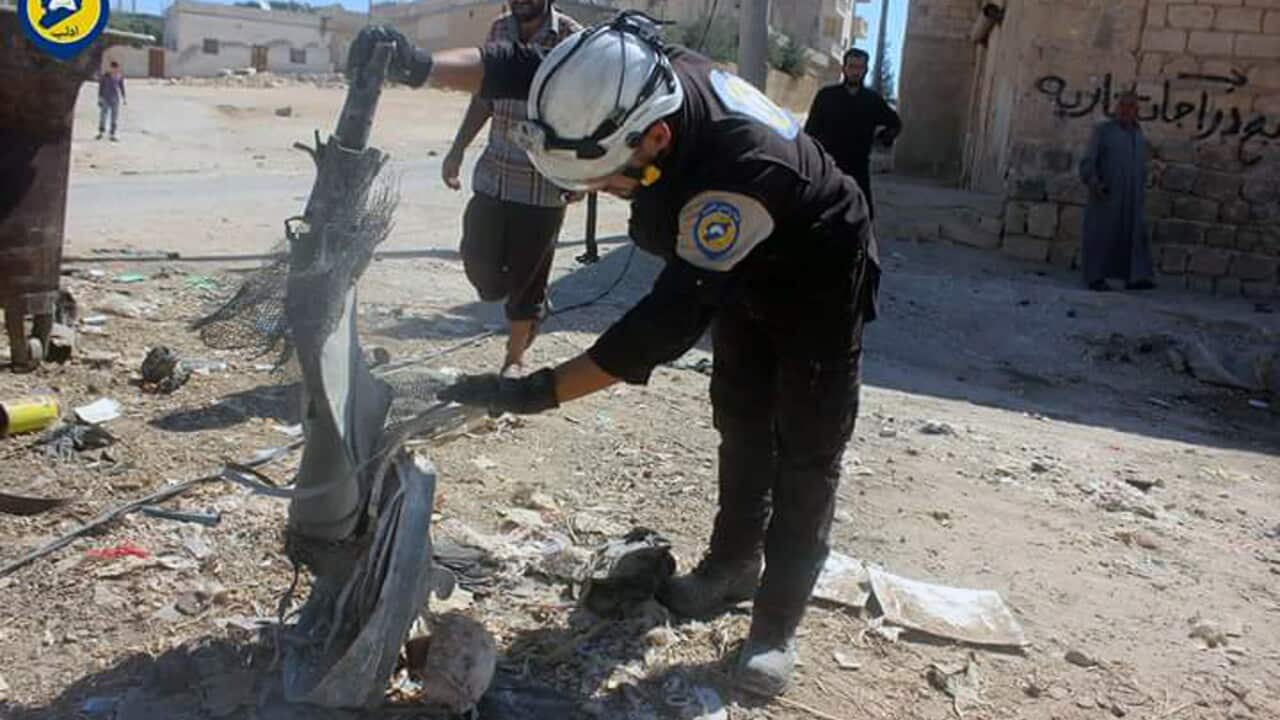
An investigation by the international chemical weapons watchdog has confirmed that sarin nerve gas was used in a deadly April 4 attack on a Syrian town, the latest confirmation of chemical weapons use in Syria's civil war.
The attack on Khan Sheikhoun in Syria's Idlib province left more than 90 people dead, including women and children, and sparked outrage around the world as photos and video of the aftermath, including quivering children dying on camera, were widely broadcast.
"I strongly condemn this atrocity, which wholly contradicts the norms enshrined in the Chemical Weapons Convention," Organisation for the Prohibition of Chemical Weapons Director-General Ahmet Uzumcu said in a statement. "The perpetrators of this horrific attack must be held accountable for their crimes."
The investigation did not apportion blame. Its findings will be used by a joint United Nations-OPCW investigation team to assess who was responsible.
President Donald Trump cited images of the aftermath of the Khan Sheikhoun attack when he launched a punitive strike days later, firing cruise missiles on a Syrian government-controlled air base from where US officials said the Syrian military had launched the chemical attack.
News that makes sense
Your trusted source for staying up-to-date with the world around you. Get free daily news updates and analysis, straight to your inbox.
It was the first direct American assault on the Syrian government and Trump's most dramatic military order since becoming president months before.
Syrian President Bashar Assad has denied using chemical weapons. His staunch ally, Russian President Vladimir Putin, said earlier this month that he believed the attack was "a provocation" staged "by people who wanted to blame him (Assad) for that."







