
As protests erupt in Bangladesh after two teenagers were killed by a speeding bus, anger around the South Asian country's road safety crisis has spilt into the streets of Australia.
More than 100 people have been injured in Bangladesh's capital Dhaka as police fired rubber bullets at demonstrators protesting the transport sector, widely seen as corrupt and dangerous.
Across the ocean, Bangladeshi-Australians held peaceful demonstrations in several capital cities over the weekend, with more action to come.
Akhter Hossain from Melbourne told SBS News that members of his community are urging the Bangladesh government to get to grips with the country's lethal roads.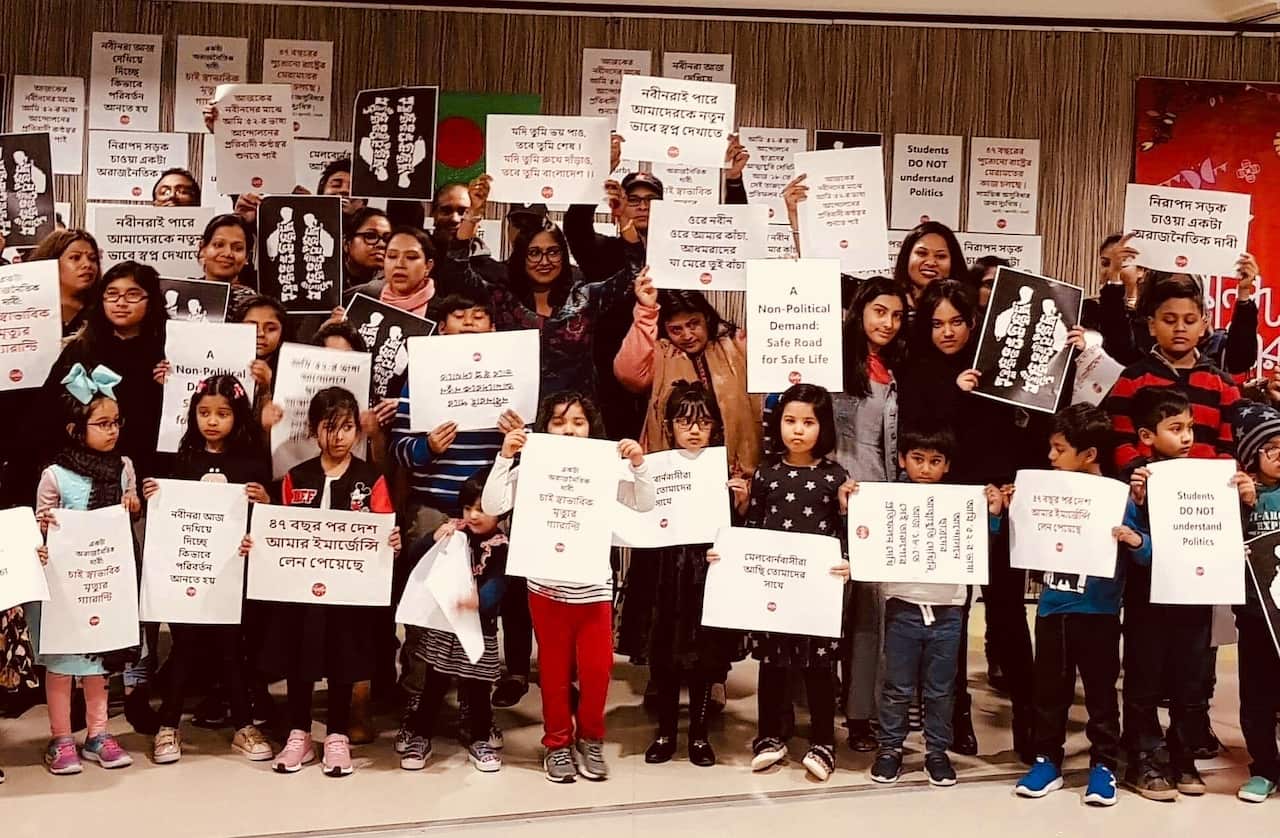
Bangladeshi-Australians held demonstrations over the weekend. Source: Facebook
"We are very fortunate that we live in a country where road safety is of a high standard. Our children are very safe," he said.
"But for students going to school [in Bangladesh], there is no guarantee they will come home."
Mr Hossain called the death of the two teens on July 29, "a catalyst for the outpouring of anger against the government".
"We must do something to save our kids ... The government is not taking action against road deaths."
We must do something to save our kids Akhter Hossain
And on Monday, Bangladesh police said they arrested a prize-winning photographer Shahidul Alam for "provocative comments" in an Al Jazeera interview about the protests, seen by some as a free-speech crackdown.
But Bangladeshi-Australians are determined to have their voices heard.
"Many of us know people killed on the roads there," Mr Hossain said.
Ashraf Rahman is one such person. He lost a cousin in a road accident in Bangladesh and joined a protest in the Sydney suburb of Lakemba on Saturday.
"This is a personal issue, but this is a national issue as well ... It's an issue for all of us. We all know that in Bangladesh, you are not safe on the streets."
According to Reuters, more than 4,000 people die in road accidents in Bangladesh each year, one of the world's highest rates.
"Regardless of political or religious values, we wanted to show solidarity with those students in Bangladesh," Mr Rahman said.
"All of us living here, we are concerned about our family, friends, relatives living in Bangladesh. We don't want people to die on the streets."
Violence in Dhaka
The local demonstrations come as protests in Bangladesh turned violent over the weekend.
Witnesses said police fired rubber bullets and tear gas at demonstrators and that alleged pro-government activists attacked youngsters, including some of those rushing to nearby hospitals for treatment.
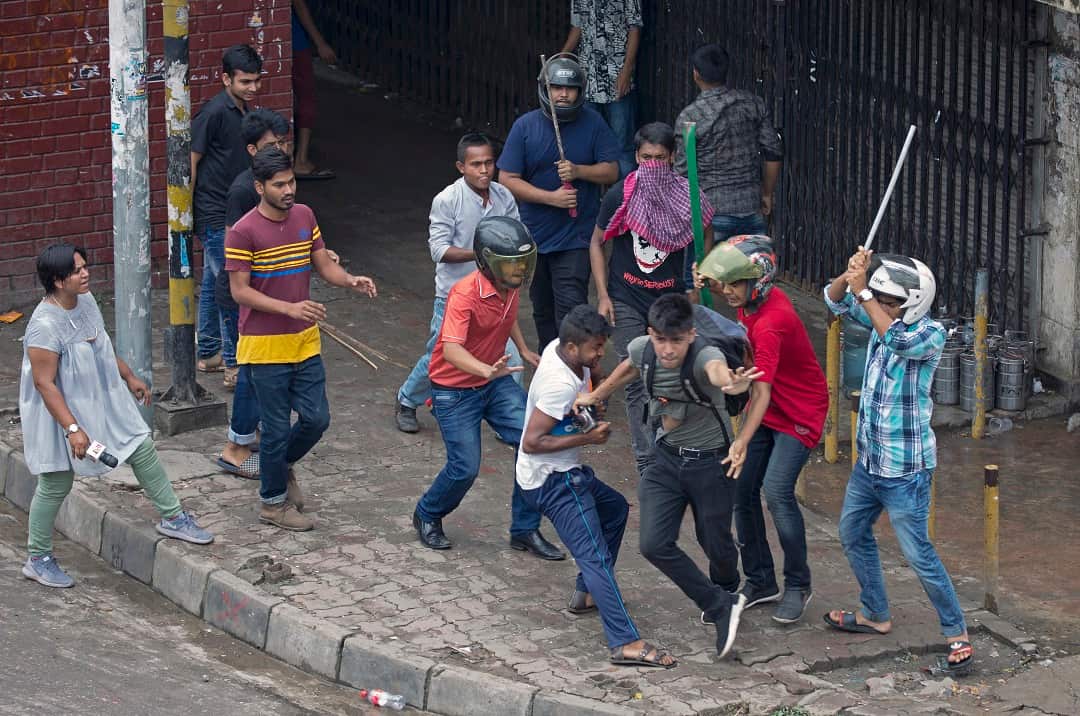
A photojournalist runs as a group of unidentified men attack him during the protests. Source: AAP
Hospital staff said dozens of people had been injured, some seriously.
"We have treated more than 115 injured students so far ... A few of them were in very bad condition," emergency ward doctor Abdus Shabbir said, adding some sported injuries consistent with rubber bullets.
Mr Hossain said: "The situation is very bad at this moment".
But police denied they fired rubber bullets or tear gas at the protesters.
"It's not true," Dhaka police spokesman Masudur Rahman said.
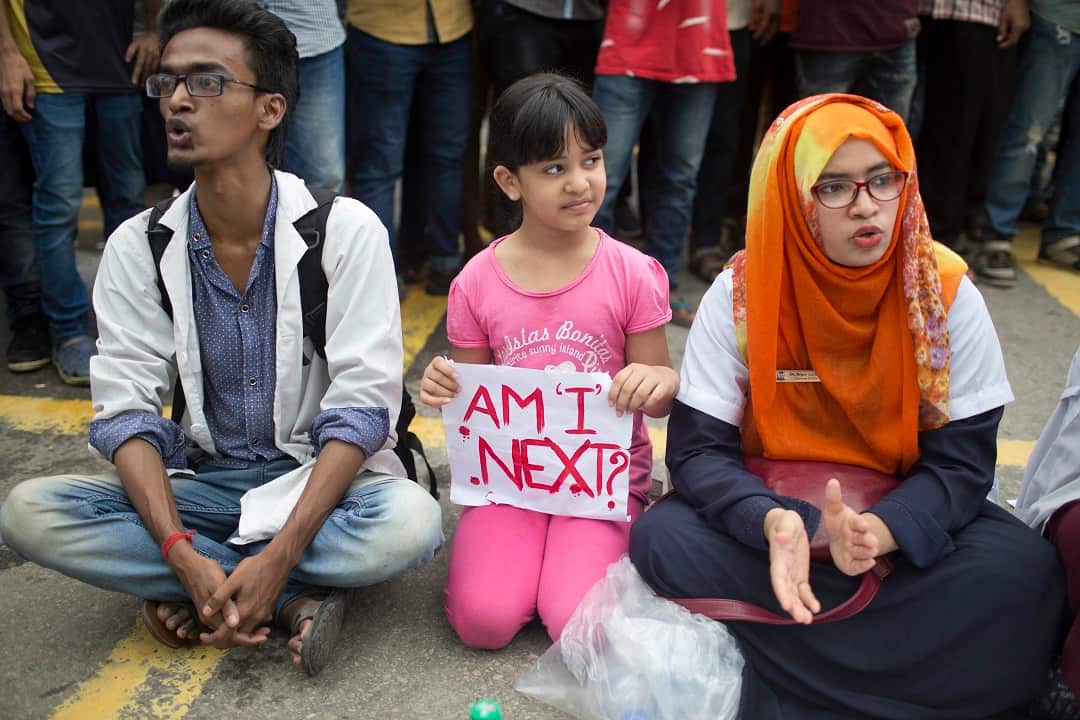
A Bangladeshi child holds a placard, as she participates with protesting students in Dhaka. Source: AAP
And road transport minister Obaidul Quader rejected allegations that party cadres from the ruling Awami League party had attacked the students.
The United Nations said it was "deeply concerned about the reports of violence" and that concerns about road safety were "legitimate".
The embassies of the US and Australia warned of significant delays and disruptions as a result of the protests across Dhaka and elsewhere in the country.
Share


