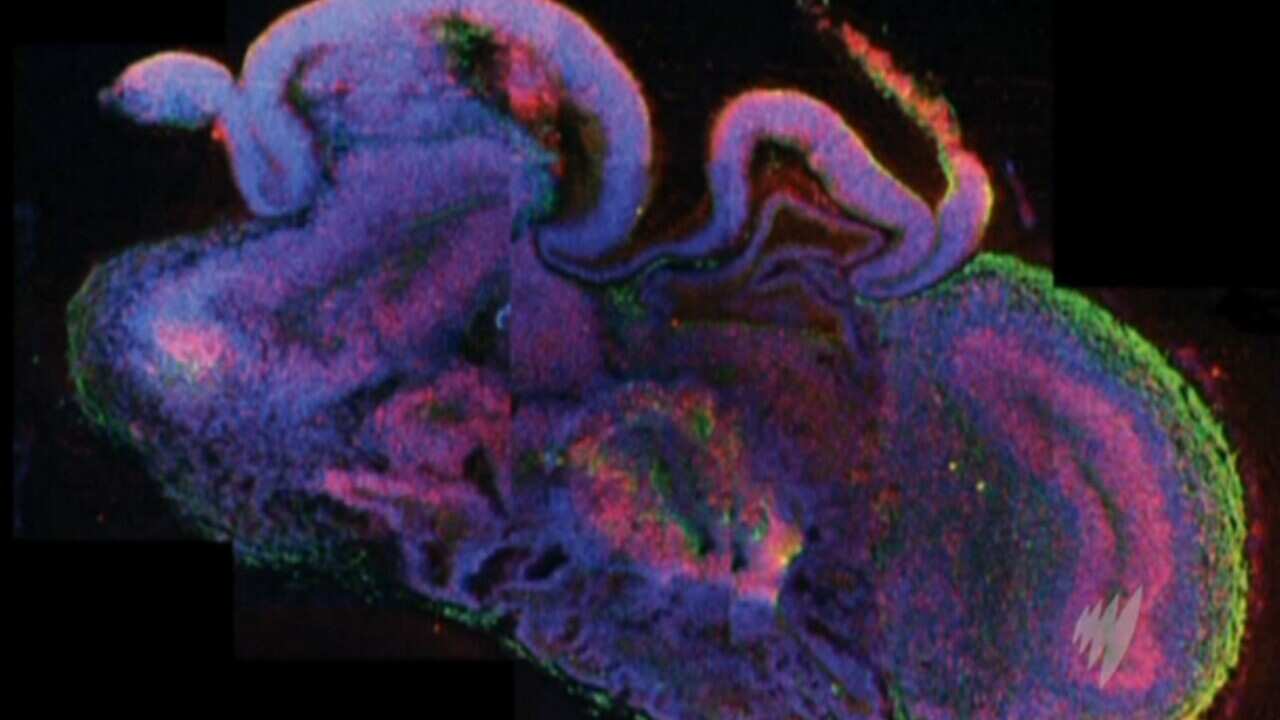
European scientistshave used stem cells to grow a 3D ‘brain-like’ organ.
The aptly named “cerebral organoids” are the closest scientists have come to reconstructing a human brain, but are not a whole brain themselves. Rather, the pea-sized blobs of tissue are fragments of a brain that are capable of influencing one another.
The researchers in Vienna took induced pluripotent stem cells – or IPS cells –from the skin of patients with a brain disorder. Like all stem cells, the IPS cells were reprogrammed, in this case from skin cells to brain cells.
From there, study coordinator Juergen Knoblich of the Austrian Academy of Sciences explained, the cells were put into a spinning bio reactor where they formed 3D structures with layers.
"The 3D culture system... develops a variety of brain regions that are capable of influencing one another," said a summary of the study.
"The tissues form in layers and display an organisation similar to the developing human brain at early stages."
The neural cells were "active", according to Knoblich.
Researchers say they won’t be using the technology to re-create human organs, instead the development will reduce scientists’ reliance on the mouse brain, which is difficult to use when studying brain development disorders.
“Although animal models have enhanced our understanding of various human diseases, they do not always recapitulate human disease pathology faithfully,” said Associate Professor Kuldip Sidhu from the Centre for Healthy Brain Ageing at the University of New South Wales.
“Developing humanised models for brain diseases using human stem cells is not only essential but pertinent to developing effective therapies down the track.”


