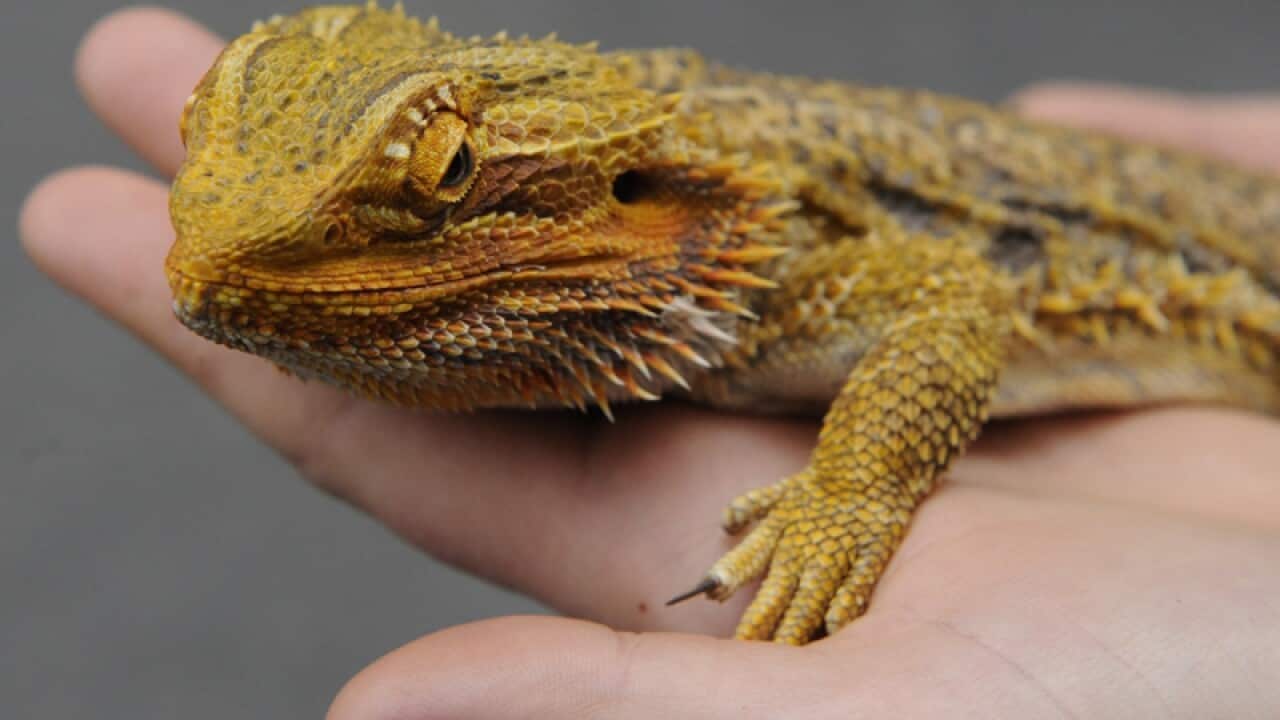
Research in a German laboratory involving five lizards called Australian bearded dragons indicates these reptiles may dream and could prompt a fundamental reassessment of the evolution of sleep.
Scientists said on Thursday they had documented for the first time that reptiles, like people, experience rapid eye movement, or REM, sleep and another sleep stage called slow-wave sleep.
Until now, only mammals and birds were known to experience these.
Because REM sleep is when dreaming occurs in people, the findings suggest that these lizards dream, too. But, what would bearded dragons dream about?
"If you forced me to speculate and to use a loose definition of dreaming, I'd speculate that those dreams are about recent notable events: insects, maybe a place where there are good insects, an aggressive male in the next terrarium, et cetera," said neuroscientist Gilles Laurent, director of the Max Planck Institute for Brain Research in Germany.
News that makes sense
Your trusted source for staying up-to-date with the world around you. Get free daily news updates and analysis, straight to your inbox.
"If I were an Australian dragon living in Frankfurt, I'd be dreaming of a warm day in the sun."
When REM and slow-wave sleep first evolved has remained a mystery. The discovery that reptiles share these important sleep stages with mammals and birds, sister groups among the land vertebrates, suggests the sleep traits emerged far earlier than previously suspected in the common evolutionary ancestors of the three groups.
In human REM sleep, the eyes move rapidly, the heart rate and blood pressure rise, limb muscles become incapacitated and dreams flourish.
Slow-wave sleep, also called deep sleep, is the most restful sleep period, marked by slow brainwaves and little dreaming.
These stages are thought to be useful for consolidation, storage and erasure of memories and other purposes.
Some scientists had hypothesised REM and slow-wave sleep might be linked to warm-bloodedness and evolved independently in birds and mammals.
Laurent said the findings suggest these sleep traits probably evolved at least as long ago as in the common ancestor of reptiles, birds and mammals: small lizard-like animals that lived between 300 million and 320 million years ago.
The research was published in the journal Science.







