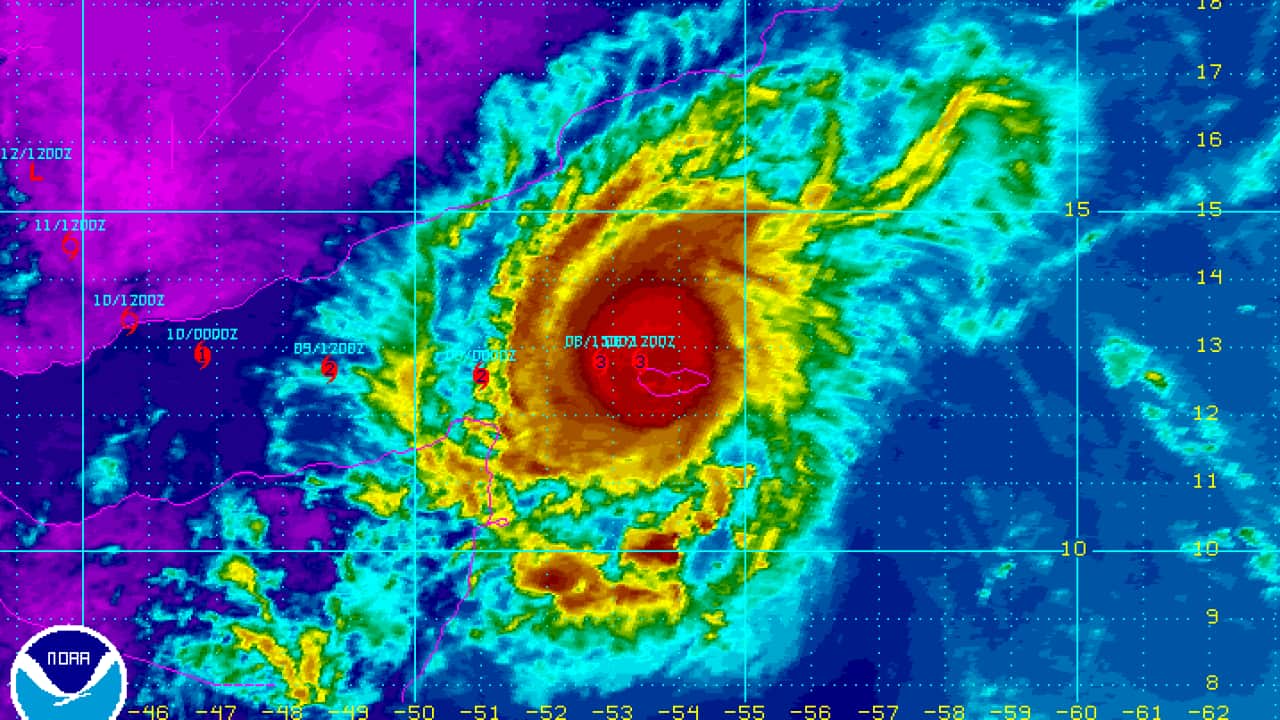
A second extremely rare and powerful cyclone in two weeks has battered the Yemeni island of Socotra with hurricane-force winds, killing a woman and causing around 5000 people to flee their homes, a local official says.
The new storm, called Megh, comes less than a week after Cyclone Chapala killed 11 Yemenis on Socotra and the mainland, dumping nearly a decade of average annual rainfall on the impoverished and war-torn country in just two days.
"A woman in her forties died when her home collapsed on her, and four others were injured ... Cyclone Megh is several times worse than Chapala because it is passing directly over Socotra," said Mohammed Alarqbi of the Socotra Environment Office by telephone from the island's stricken provincial capital, Hadibu.
"The material damage is also worse than before, as a larger number of homes have been destroyed and 5000 more displaced people have fled the northern shores of the island to schools, universities and hospitals," he added.
Aid efforts in Yemen are hampered by a seven-month war between a Shi'ite militia based in the capital Sanaa and forces loyal to the exiled government backed by Gulf Arab states.
News that makes sense
Your trusted source for staying up-to-date with the world around you. Get free daily news updates and analysis, straight to your inbox.
Planes bearing food and tents from Oman, Kuwait, the United Arab Emirates and Saudi Arabia have arrived on the island in recent days.
The freak back-to-back storms are caused by the "Indian Ocean dipole", a weather phenomenon similar to a regional El Nino, caused when surface sea temperatures are higher than normal.
The US Navy's Pearl Harbor-based Joint Typhoon Warning Centre said the storm had reached maximum gusts of 232km/h.
The centre projected that the storm would dissipate as it approaches cooler waters toward the horn of Africa then veers northward onto Yemen's coast and highlands.







