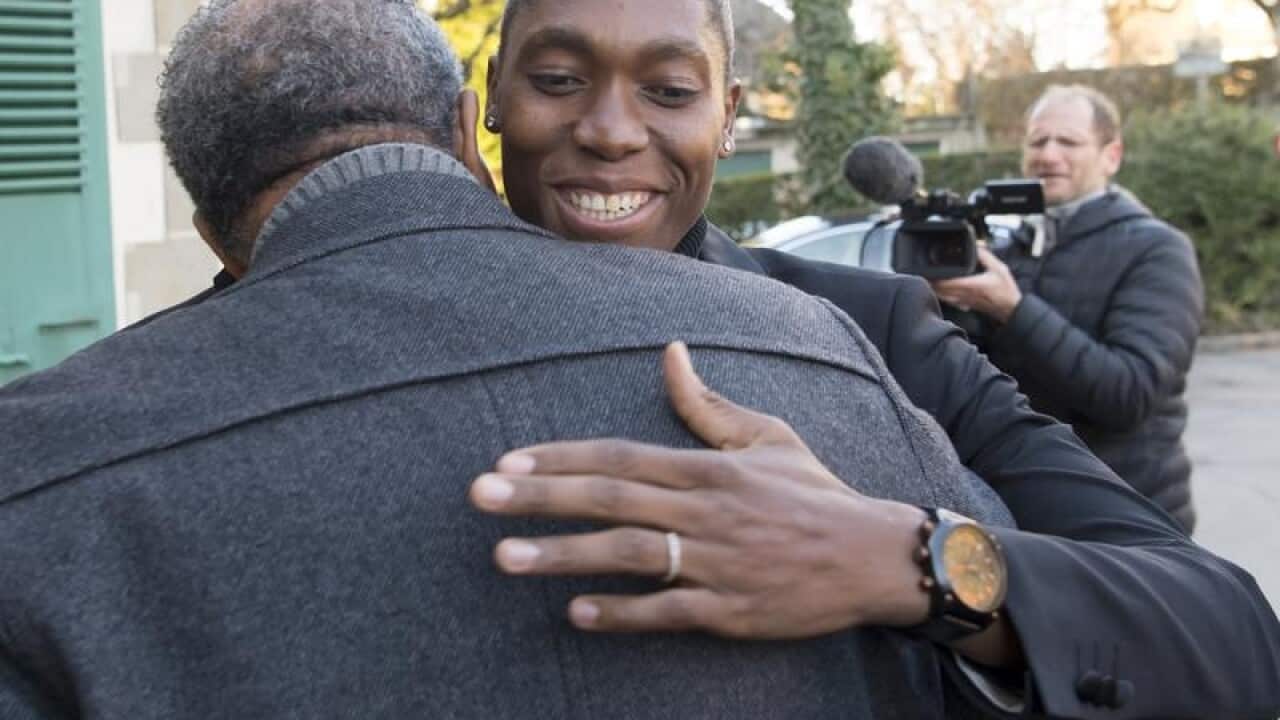
Caster Semenya has been given "the last word" when a week-long hearing at sport's highest court ended on Friday, and her decade-long battle with track and field's ruling body neared a conclusion.
The two-time Olympic 800-metre champion from South Africa appealed to the Court of Arbitration for Sport against the International Association of Athletics Federations' (IAAF) proposed hormone regulations, which would require Semenya and other female athletes with naturally high levels of testosterone to lower them through medication to compete at world-class events.
The regulations would apply to events from 400 metres to 1500m, the range of distances Semenya competes in.
The Swiss-based CAS said the verdict, in what it called one of the most "pivotal" cases it has heard, will be announced by March 26.
The decision, which will be made by three CAS judges, has repercussions for sport and how athletes with what the case refers to "as differences of sexual development (DSD)" are treated.
News that makes sense
Your trusted source for staying up-to-date with the world around you. Get free daily news updates and analysis, straight to your inbox.
Semenya is not the only female athlete with high natural levels of testosterone but has become the sometimes unwilling face of the issue.
The verdict could have an immediate impact on Semenya's career: the world championships in Qatar, where she is due to defend her 800 title, open in September.
If the IAAF wins the case, she must start taking medication immediately or switch to sprints or long-distance events.
Semenya's lawyers said at the outset of the hearing that the regulations discriminate against her and her "genetic gift".
The IAAF argued that regulations were needed to ensure fairness in the sport because the South African runner and other DSD athletes have testosterone levels in the male range, giving them an unfair advantage.
The case will likely hinge on whether the IAAF can prove with scientific data that testosterone gives the DSD runners a significant advantage.
IAAF president Sebastian Coe spoke at the hearing, which CAS said "was conducted in a cordial and respectful atmosphere throughout the entire week" despite a tense build-up.