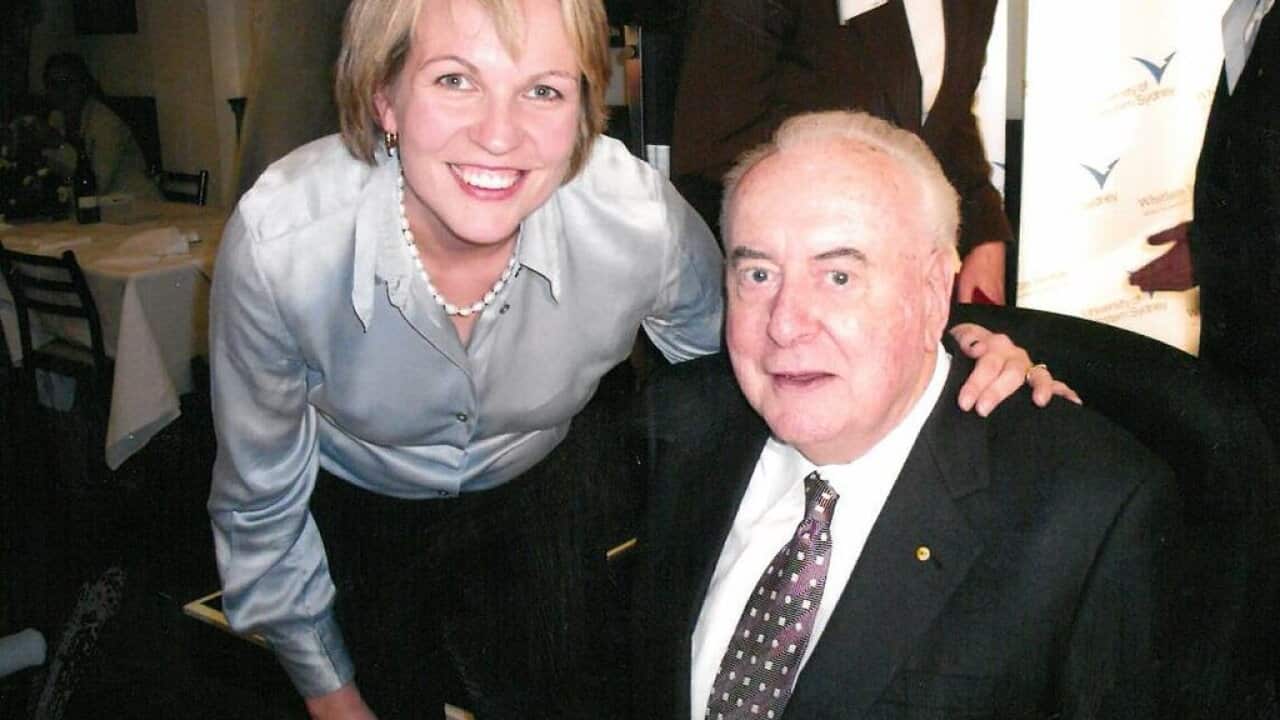
The upper house on Wednesday backed a Labor motion to acknowledge the Whitlam government's significant contribution to Australia and "inspiring and transforming" the nation.
The government didn't oppose the move which also called for the release of correspondence between Sir John and the Queen over the dismissal.
On November 11, 1975, Australia’s Governor-General, Sir John Kerr, used his power as the Queen’s representative to dismiss the Whitlam government.
That afternoon, David Smith, the Official Secretary to Sir Kerr, read out the proclamation of the dissolution of Parliament, and he did it on the steps of what we now call Old Parliament House.
News that makes sense
Your trusted source for staying up-to-date with the world around you. Get free daily news updates and analysis, straight to your inbox.
Gough Whitlam stood next to him; a crowd of supporters shout his name, and what followed were the words from a defiant man. On reflection they are perhaps the most famous words ever uttered in modern Australian political history:
"Well, may we say God Save the Queen because nothing will save the Governor-General," Gough Whitlam said.
The rest, as they say, is history.
Gough Whitlam’s sacking remains raw for Labor, even 40-years later. His faithful see it as an inappropriate and abrupt end to the prime ministerial career of one of their greatest leaders.
“We think he would have achieved even more if he’d had a little bit longer in the job.”
“Almost every time I was with Gough someone would stop him on the street and say things like, ‘Thank you, Mr Whitlam. I went to university because of you," Deputy Labor Leader Tanya Plibersek said.
Ms Plibersek became a close friend of Gough and Margaret Whitlam, despite the fact Mr Whitlam voted against her when she sought pre-selection for the seat of Sydney in the '90s.
“Margaret did vote for me, so I always think it’s a little bit funny that the only split we know of in the Whitlam household is the split over my pre-selection,” Ms Plibersek said.
“We think he would have achieved even more if he’d had a little bit longer in the job.”
Coming to power Gough Whitlam redrew Labor Party history. But his was a government rocked by scandals and in 1975, after less than three years in office, the Opposition tried to force his hand.
Under the leadership of Malcolm Fraser, the Liberal Party controlled the Senate, voted down the budget and threatened to block supply bills - bills which allow the government of the day to spend money - unless the prime minister called an election of the House of Representatives, or Sir John Kerr dismissed him.
Mr Whitlam refused, believing he had the confidence of the Governor-General. He didn’t and was sacked on Remembrance Day.
"It caused a convulsion. I believe it was done inappropriately," Opposition leader Bill Shorten said.
Prime Minister Malcolm Turnbull said his view has remained consistent with what he wrote when he was a journalist in his 20s.
"For what it’s worth I believed then and I still do that Sir John should have given Whitlam notice of his intentions," he said.
Labor has used the 40th anniversary of the Dismissal to continue the push for Australia to become a republic.
“I think it’s long overdue and now we have a republican as prime minister, a republican as leader of the Opposition.
“I’m certainly keen and look forward to working with Malcolm Turnbull to provide much needed momentum,” Bill Shorten said.
Australia is playing host to the future King of England this week, and the Prime Minister chose his words carefully.
“If Charles becomes the King of the United Kingdom, as I’ve got no doubt he will be unless our constitution has been changed, he will become the King of Australia,” Mr Turnbull said.
-With AAP







