
In Brief
- A controversial court ruling around transgender exclusion has led to political pledges of legislative change.
- The Opposition has vowed to amend the Sex Discrimination Act to define "biological sex".
Advocates of trans rights are alarmed over pledges from the Opposition and conservative parties to tighten sex discrimination laws, saying such a move could remove key legal protections for the minority group.
Last week, the Federal Court upheld a 2024 decision that it was discriminatory to exclude a transgender user from a women-only app.
The court had been considering an appeal from Giggle for Girls app founder Sall Grover over the 2024 finding that she discriminated against Roxanne Tickle by blocking her from using the app and refusing to reinstate her.
Grover and Giggle argued the decision to exclude Tickle was exempt from being classed as discrimination because the app aimed to achieve "substantial equality" and create a safe space for women.
News that makes sense
Your trusted source for staying up-to-date with the world around you. Get free daily news updates and analysis, straight to your inbox.
On Friday, the Federal Court upheld its decision that the exemption did not apply, meaning similar arguments made in defence of single-sex spaces would likely also fail.
On Saturday, Opposition leader Angus Taylor said in a statement on social media that the finding confirmed "the Australian law does not properly protect single sex spaces for women and girls".
He vowed on social media to amend the Sex Discrimination Act if the Coalition won government, "to ensure that women and girls (and men and boys) have protections based on biological sex".
"We are not removing a single protection from anyone," he said.
"But we are recognising something that should never have been in doubt: biological sex is real, it matters, and women and girls deserve spaces where it is respected."
Taylor said a move to "define biological sex in the Act" as "the sex you are born" would be a first-term priority.
"This is not radical. It is common sense," Taylor said.
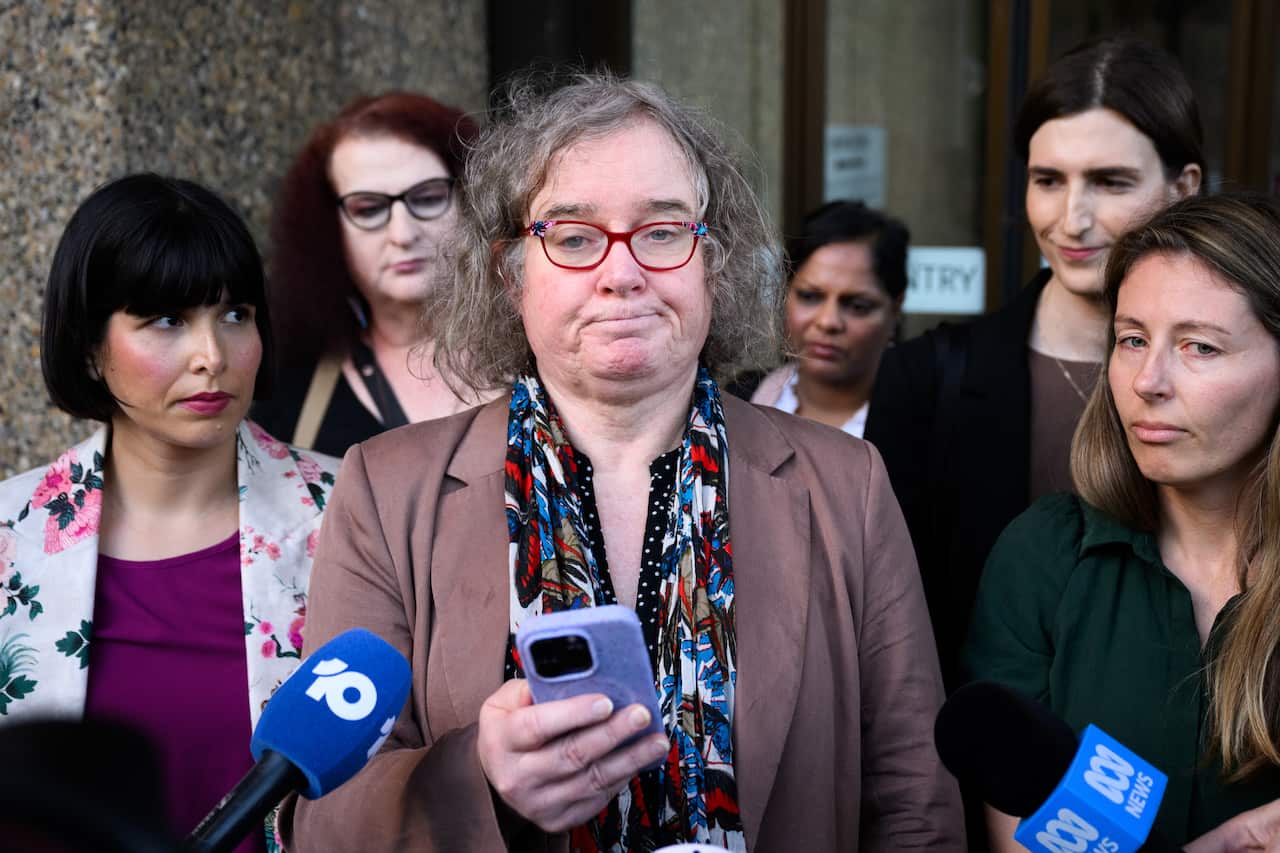
The Liberals' junior Coalition partner, the Nationals, echoed the sentiment, and One Nation leader Pauline Hanson was also sharply critical of the decision and pledged to back Grover in parliament.
Laws 'protect vulnerable communities'
LGBTIQ+ Health Australia's CEO Nicky Bath told SBS News that the Sex Discrimination Act makes a difference in trans and gender diverse people's lives.
Bath said the current legislation plays a role in protecting vulnerable people from discrimination and promoting equality.
"Changes to legislation in response to a single case do not represent due process."
Provisions against discrimination based on gender identity were introduced to the Sex Discrimination Act in 2013 by the Gillard government.
In March, the Australian Human Rights Commission found that trans and gender diverse people are discriminated against in education, healthcare, workplaces, housing, and the justice system.
More than 30 per cent of trans and gender diverse people have faced job discrimination, while over 56 per cent have been discriminated against in healthcare.
"Trans and gender diverse people experience significant health and wellbeing disparities compared to the general population," Bath said.
"The Sex Discrimination Act serves to ensure meaningful inclusion, which is key to protecting health and wellbeing outcomes."
'Damaging and cynical politics'
Trans Justice Project is Australia's first national trans-lead campaigning body. Its director, Jackie Turner, told SBS News that trans and gender diverse people deserve to be "protected from discrimination and to have the freedom to be ourselves just like everyone else".
Turner said that if the Coalition went ahead with its planned laws if it wins government, it would have "far-reaching impacts on our community, our ability to access essential services, and could strip away key legal protections".
"This kind of damaging and cynical politics aims to stoke fear about who we are, rather than actually improving people's lives."
"If the Opposition were serious about gender equality they would be working to address gender-based violence, protecting access to abortion and the funding of services."
Last year, the United Kingdom's highest court ruled that according to its Equality Act, the definition of a woman applies only to biological females, excluding trans women.
"The unanimous decision of this court is that the terms 'women' and 'sex' in the Equality Act 2010 refer to a biological woman and biological sex," the court's deputy president Patrick Hodge said overnight.
"But we counsel against reading this judgment as a triumph for one or more groups in our society at the expense of another — it is not."
Transgender activists expressed concern the ruling may result in discrimination.
— with additional reporting by Australian Associated Press
For the latest from SBS News, download our app and subscribe to our newsletter.







