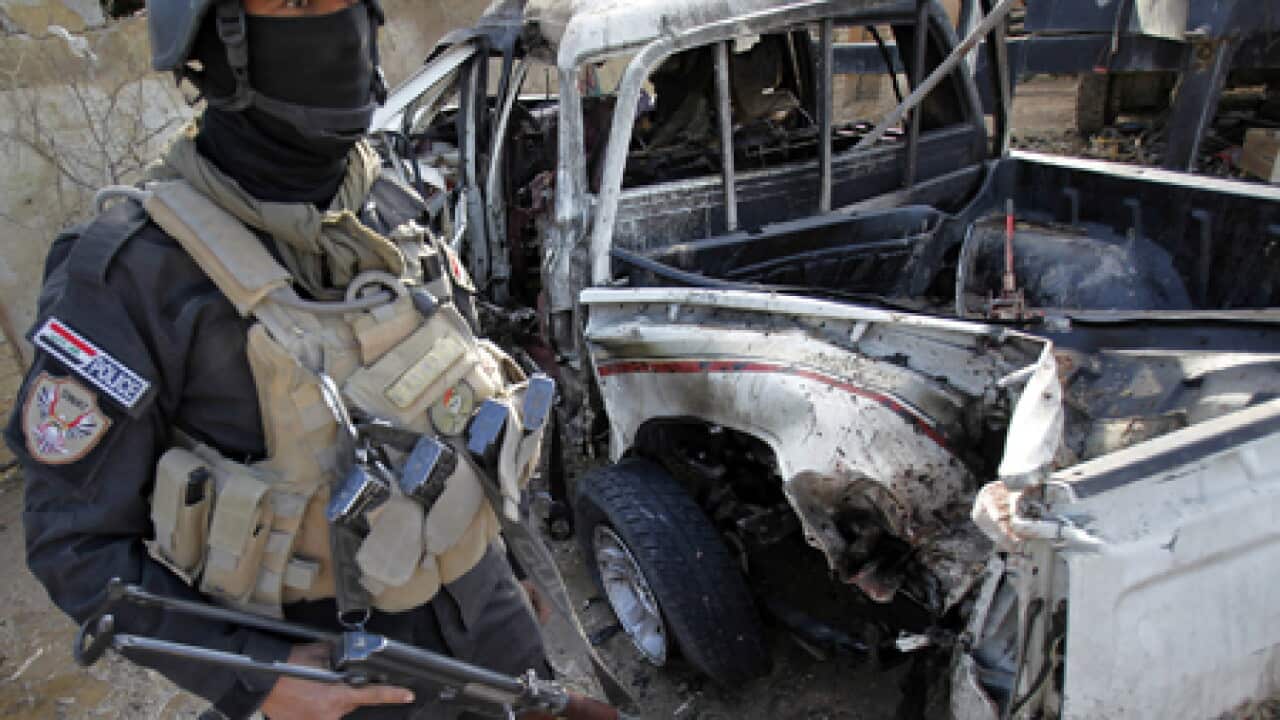
Suspected Sunni militants bombed a bus carrying Shi'ite worshippers and two hours later attacked a hospital treating the victims, killing 25 people and wounding 100 in a strike on Pakistan's largest city.
Shi'ites were also targeted in the Iraqi holy city of Karbala, where a similar tactic was used, killing 41 people.
In Karachi, the blasts on Friday were the latest sign of the instability tearing at the nuclear-armed nation, which the US regards as key to its hopes of defeating a related Taliban insurgency across the border in Afghanistan.
Prime Minister Yousuf Raza Gilani appealed for calm in the city, which is the country's commercial heart.
It has a history of religious violence between Shi'ite and Sunni Muslims, and has been tense in recent weeks due to clashes between rival political parties that have left dozens dead.
News that makes sense
Your trusted source for staying up-to-date with the world around you. Get free daily news updates and analysis, straight to your inbox.
No group claimed responsibility, but Pakistan is home to many al-Qaeda-linked Sunni extremist groups with a history of attacking Shi'ites.
Shiite pilgrims targeted in Iraq
Meanwhile, a car bomb ripped through a crowd of Shi'ite pilgrims outside the holy city of Karbala, sending many fleeing into the path of a suicide attacker who detonated a second
bomb in co-ordinated blasts that killed at least 41 people and wounded 150.
The twin bombing came on the final day of an annual Shi'ite religious observance, which has been the target of three arge-scale attacks in Iraq this week.
The bloodshed in Iraq is likely to further stoke tensions between the Shi'ite-led government and Sunnis over the push to ban some candidates from March 7 parliamentary elections. The US is concerned the ban could destabilise Iraq, crippling efforts to reconcile majority Shi'ites and Sunnis who dominated Iraq until Saddam Hussein's ouster in 2003.
There was no immediate claim of responsibility for Friday's blasts, but Prime Minister Nouri al-Maliki blamed al-Qaeda and Saddam loyalists, saying in a statement the two groups failed to ignite sectarian strife and destabilise the country with the attacks on pilgrims.
Recent trend of attacks in Pakistan
In late December, extremists in the city detonated a bomb that killed 44 Shi'ites attending a procession to mark Ashura, the anniversary of the death of revered Shi'ite figure Imam Hussein, sparking the city's worst riots in recent years.
Friday's blasts coincided with Arbaeen, the final day of the annual 40-day mourning period for Hussein.
Police officers in Karachi gave conflicting accounts whether one or both of the bombs there were suicide blasts.
Both were apparently attached to motorbikes and were packed with nuts and bolts, an investigator said.
The first bomb targeted a bus carrying worshippers, most of them women and children, killing 12 and wounding 49, officials said.
The bomb was attached to a motorcycle and detonated as the bus drove to an Arbaeen procession, witnesses said.
The second bomb exploded outside the entrance to the emergency ward at Jinnah Hospital, which was packed with victims and relatives of those killed and wounded in the earlier attack.
It was either hidden on a motorbike or close to an ambulance, a witness and a government official said.
Provincial health minister Dr Sagheer Ahmad said 13 people were killed in that blast and 50 wounded.
The blast triggered chaos at a hospital already overrun with casualties.
A man held up a child bleeding from his face above his head in a bid to pass through the crowd and get treatment inside.
Another victim with a chest wound lay on a stretcher crying for help.
Bomb disposal squad official Munir Sheikh said a third bomb was later defused in the parking lot of the hospital.
The bombings brought fresh tales of grief in a country where such attacks have almost become routine.
Ashfaq Ali survived the bus attack, but lost two sons. He sat on the floor near a pool of blood.
"I will keep sitting here because it is my sons' blood," he said, half wailing.
"I want the terrorists to kill me as well."
Friday's attack could exacerbate political tensions in the city of 16 million people.
Pakistan's Sunnis and minority Shi'ites generally live in peace, but attacks, mostly on Shi'ites, have often occurred over the last 20 years.
Al-Qaeda, the Taliban and other Sunni extremist groups despise Shi'ites, believing them to be infidels.







