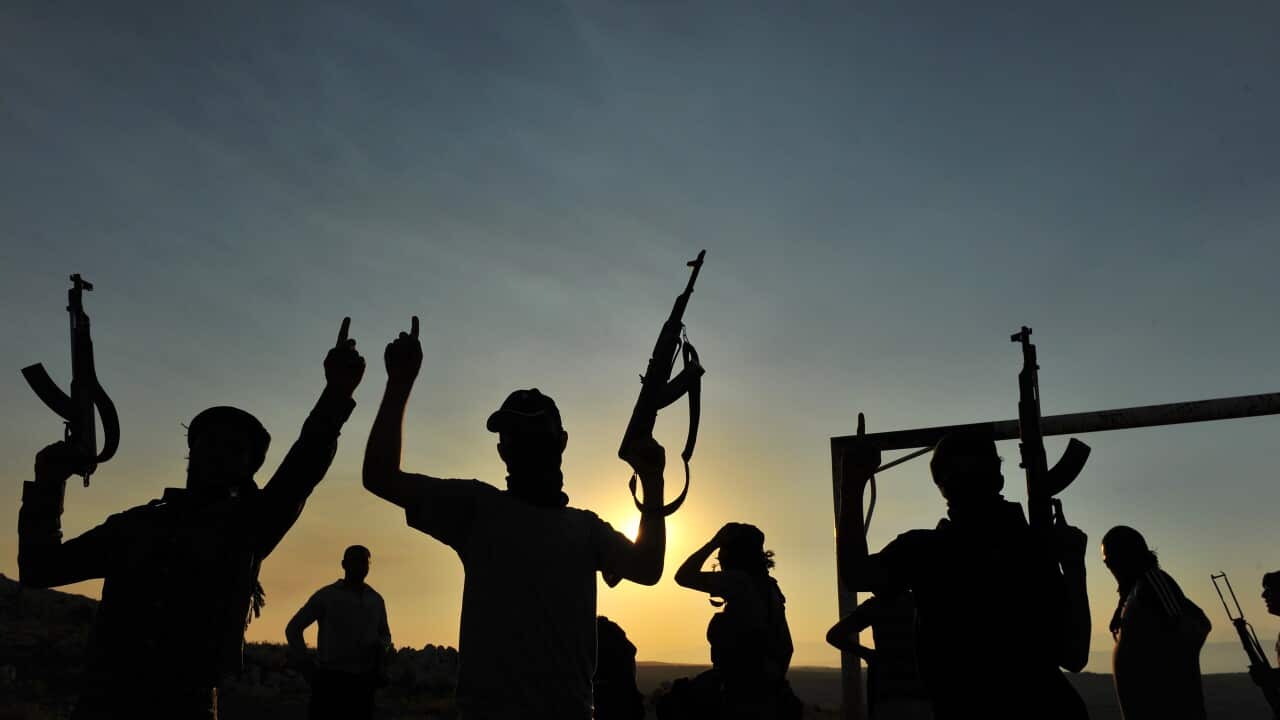
A pioneering program in Denmark is offering support to young people returning from war zones in the Middle East and with Australians among those joining the Syrian and Iraqi conflicts, there are questions about whether such a program could work in Australia.
The aim of the rehabilitative program out of Denmark’s second largest city, Aarhus, is to help young people returning from Middle Eastern conflict zones re-enter the lives they left behind.
Initially designed to combat home-grown terrorism, the number of young Danes drawn to the Syrian war prompted authorities to expand the 2007 initiative to include returnees.
Steffen Nielsen, a crime prevention advisor with the East Jutland police, told SBS the program was voluntary and offered counselling, guidance, support for physical or psychological trauma, help in navigating the medical system, as well as in finding employment and resuming education.
“If you try to marginalise them further from society you will only create terrorists instead of preventing terrorism,” he told SBS. “So we're trying to rehabilitate them; make them contributing members of society, thereby dissolving their picture of society as an enemy.”
Steffen Nielsen said the program currently engaged between 10 and 15 people who had spent time in Syria since the start of the civil war.
"It's a good time now to seriously consider what lessons can be learned from the idea of using those who have come back from those war zones, have become disillusioned, disappointed and totally at odds with the promises that were made."
He said prosecuting people who may have committed war crimes is a parallel issue, and Danish security services dealt with those who posed an immediate security threat.
“Many of the Syrian volunteers … are not actually fighting, they were doing humanitarian work,” he said.
The Director of the Centre for Cultural Diversity and Wellbeing at Victoria University in Melbourne, Professor Michele Grossman, sees immense value in the Danish approach.
"It recognises that there will be trauma and that young people returning from foreign fighter zones are likely to be very vulnerable… It recognises that the involvement of families and the community as absolutely critical to the rehabilitation process," she said.
“Their attack is to say, ‘Look, you're entitled to your beliefs. You can believe whatever you like. Nobody is asking you to sacrifice your political ideals.’ What they are saying instead is there are better and worse ways to pursue those ideals and there are better and worse ways to pursue the kinds of outcomes that you would like to see.”
The Australian government has foreshadowed legislative changes to the Foreign Incursions and Recruitment Act in response to Australians' involvement in the Middle East.
The Department of Foreign Affairs has already cancelled the passports of a number of citizens suspected of having links to designated terror groups overseas.
Prime Minister Tony Abbott personally warned any Australians contemplating joining the self-proclaimed Islamic State that they risked breaking Australian law, and would be targeted by Australian bombs in military action against the armed group.
The founder of the Arabic council of Australia, Joseph Wakim, said the Muslim community had long been warning about the appeal of foreign conflicts to some of its young people, and although the government's actions were welcome, they might be too late.
Mr Wakim said they could even be having some undesirable effects.
"There is some evidence that says that such ideologies thrive on the notion of victimhood, thrive on the notion that "the West is out to get us, they're oppressing us" and so forth. And therefore any notion that they are clamping down hard on the "real" Muslims in inverted commas only adds a string to the bow, only fuels the ammunition that "we really are victims and we need to stick together and resist", he told SBS.
Joseph Wakim believed there was potential to use returnees to help discourage others from heading to conflict zones.
"It's a good time now to seriously consider what lessons can be learned from the idea of using those who have come back from those war zones, have become disillusioned, disappointed and totally at odds with the promises that were made," he said, "and use those people in a very positive way, harness and channel their energies to … deter others from following that dead end street."
Share


