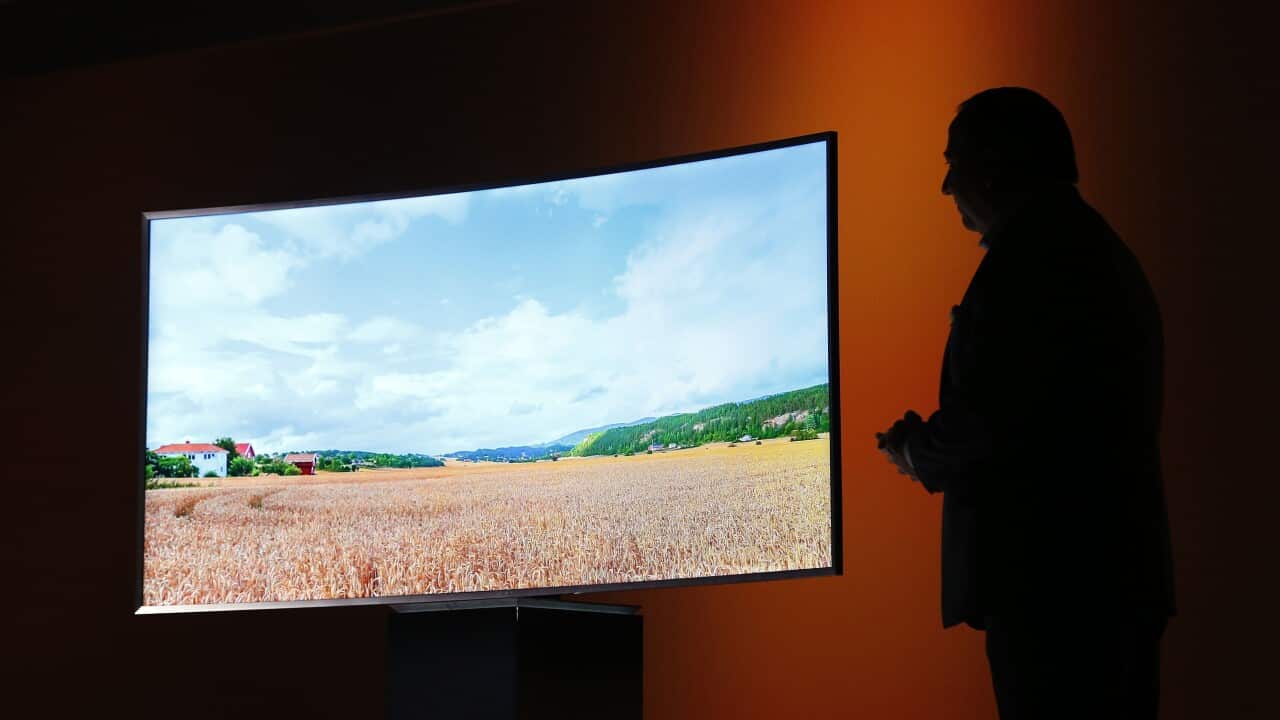
A privacy policy for Samsung’s voice-activated "smart" televisions has warned customers that conversations will be "among the data captured and transmitted to a third party".
The policy triggered a strong backlash from privacy campaigners, with comparisons being drawn to George Orwell’s novel, Nineteen Eighty-Four.
A caption from Nineteen Eighty-Four alongside Samsung's privacy policy:
News that makes sense
Your trusted source for staying up-to-date with the world around you. Get free daily news updates and analysis, straight to your inbox.
But technology commentator Trevor Long said Samsung’s smart TVs were not the only household devices listening in.
"I think people would be surprised to find that there are a lot of devices in our lives today that are listening regularly, whether it’s your smart phone, smart watch, even your games console," he said. "Because they use voice commands to control, instead of a device like a remote control."
He said privacy concerns were valid and people needed to be more proactive in ensuring their information was protected.
"I think that people who are worried about their privacy should be aware that things in your life - technology in your life - is listening and watching more than it ever has been before.
"So if those things worry you, you have to be able to learn to turn them off, how to disable them or how to unsubscribe from them.
"I think people would be surprised to find that there are a lot of devices in our lives today that are listening regularly"
"The onus is on you, when you buy a device, to look at what it can do and what you need to deactivate, because it will be on by default.
"These features are created to make life better, theoretically, and enhance the features of the devices. You need to go and find out how to turn it off and disable it in the settings.
Samsung's policy reportedly stated: "Please be aware that if your spoken words include personal or other sensitive information, that information will be among the data captured and transmitted to a third party through your use of voice recognition.
"While Samsung will not collect your spoken word, Samsung may still collect associated texts and other usage data so that we can evaluate the performance of the feature and improve it."
A spokesperson for the company said in a statement that the company took customer privacy very seriously and had been transparent about the technology.
"Voice recognition, which allows the user to control the TV using voice commands, is a Samsung Smart TV feature, which can be activated or deactivated by the user," the spokesperson said.
They also noted that "Users can easily recognise if the voice recognition feature is activated because a microphone icon appears on the screen."
Trevor Long agreed that the company had been transparent.
"In this case Samsung has been very explicit about what they're using the information for and the fact that it may go to a third party,” he said. "And because the company that's helping them make that technology work isn't Samsung itself, they have to say that, legally."
"Users can easily recognise if the voice recognition feature is activated because a microphone icon appears on the screen."
He said that while stories like today's sparked concern among privacy advocates, he doubted anything would change.
"I think companies will continue to use voice recognition and I think companies will continue to use third parties to help them with that," he said. "I think all that will do is raise awareness about this type of technology."
But for those who do want to make a change, is a life without eavesdropping devices possible?
"It's absolutely possible that you could live a life with technology that doesn't listen to your voice and doesn't recognise anything," Mr Long said. "But you have to make the decision to turn all those things off and you’re also forgoing all the simplicity that feature can add to technology today."
He said there was no telling what implications such technology would have in the future.
"If you want to think five to ten years down the track there's no reason why these devices won't know a little bit more about you by what you say," he said.
"They might know what companies you talk about, what things you talk about and they may serve up advertising that is suited to you because of that. Those are the things we can't rule out because we don’t really now.
"But it's absolutely possible."