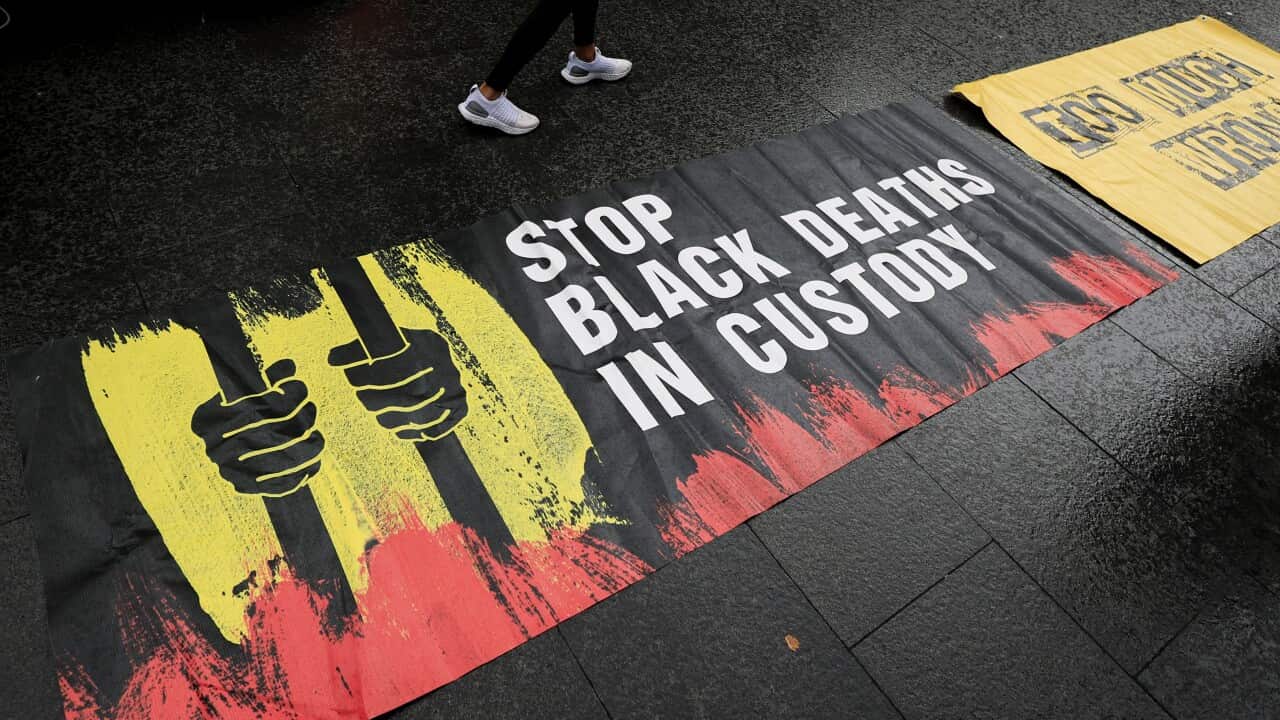
It's been 35 years since a landmark report on Aboriginal deaths in custody, yet Indigenous Australians remain among the world's most incarcerated people.
A royal commission in 1991 set out 339 recommendations to address death-in-custody causes and over-representation of First Nations people in the criminal justice system.
It concluded Indigenous Australians had a higher chance of dying in custody simply because they had a higher chance of being put in custody to begin with.
Named for its founding commissioner, Justice James Muirhead QC, the inquiry identified systemic discrimination as the key driver of over-incarceration and recommended alternatives to imprisonment.
But since the release of its final report, more than 630 Aboriginal and Torres Strait Islander people have died in the custody of police or corrective services.
News that makes sense
Your trusted source for staying up-to-date with the world around you. Get free daily news updates and analysis, straight to your inbox.
Official figures show 33 Indigenous deaths in custody across the nation in 2024/25, the highest number since 1979/80.
William Tilmouth, co-chair of Indigenous child advocacy group Children's Ground, says it should be one of Australia's greatest shames in terms of how it treats First Nations people.
"There's nothing to celebrate even though it is the 35th anniversary," he told AAP.
"When they talk about empowerment of Aboriginal people and giving them agency in their lives, that was never achieved."
State and territory governments have been passing tough criminal laws that largely impact First Nations people, particularly children and youths. They include stricter bail restrictions and lowering of the age of criminal responsibility to 10.
Tilmouth says the federal government has a moral obligation to override "racist and demeaning" state and territory legislation that targets Aboriginal people.
"A child at the age of 10 is condemned to be a criminal or have criminal tendencies," he says.
"That child hasn't even defined who they are."
All inquiries into Aboriginal deaths in custody should be carried out independently, not by police, Tilmouth says.
That echoes a widespread call after the death of young Aboriginal man Kumanjayi White, 24, forcibly restrained by plain-clothes police officers in an Alice Springs supermarket in May 2025.
Northern Territory Police rejected calls for an independent inquiry and it is yet to be decided if charges will be laid against the officers.
Lack of 'political will' blamed
First Nations not-for-profit Children's Ground says it was considered a crisis 35 years ago when 14 per cent of the prison population were found to be First Nations people.
Now the figure is 35 per cent.
On top of that young Indigenous people represent 95 per cent of children in detention in places like the Northern Territory.
Lack of access to housing, health care, education and essential services increase the risk of entering custody, according to Children's Ground co-chair Evelyn Schaber.
She says the same issues were evident in 1991.
"The situation is dire. People are expected to live without basic human rights and then are held accountable when those conditions lead to actions that are criminalised."
Outspoken independent senator Lidia Thorpe claims Prime Minister Anthony Albanese refuses to meet families of those who died in custody to discuss the lack of progress since the royal commission.
"Nearly half the people dying in custody haven't even been sentenced," she says.
"They are being locked up on remand under increasingly harsh tough-on-crime laws and this too often becomes a death sentence."
The Albanese government had the power to legislate national minimum standards and force change on states and territories that introduced such penalties, Thorpe said.
"What's missing is the political will to stop our people being killed."
The Prime Minister's office has been contacted by AAP for comment.
Amnesty International condemns what it calls the persistent failure of governments to act amid entrenched cycles of harm, abuse and injustice faced by First Nations people in custody.
"These cycles of abuse reflect the racism embedded in systems that continue to take the lives of First Nations peoples," the rights group says.
It has asked why, did governments across Australia block United Nations rights agency inspections of detention facilities if they had nothing to hide,
Amnesty urges governments to implement the 339 recommendations and raise the age of criminal responsibility to 14.
It also wants an end to solitary confinement, the use of spit hoods and holding children in adult jails.
Minister for Indigenous Australians Malarndirri McCarthy says too many First Nations families have experienced the grief of a loved one's death in custody, including her own.
All governments have committed to reduce Indigenous incarceration rates as part of the National Agreement on Closing the Gap, she told AAP.
The Albanese government is working with states and territories that hold the levers for change to the justice system.
"At the same time, our government is focused on community-led solutions to stop people coming into contact with the justice system, with record funding for justice reinvestment," McCarthy says.
"As minister, I will continue to hold states and territories accountable for their Closing the Gap commitments."
For the latest from SBS News, download our app and subscribe to our newsletter.







