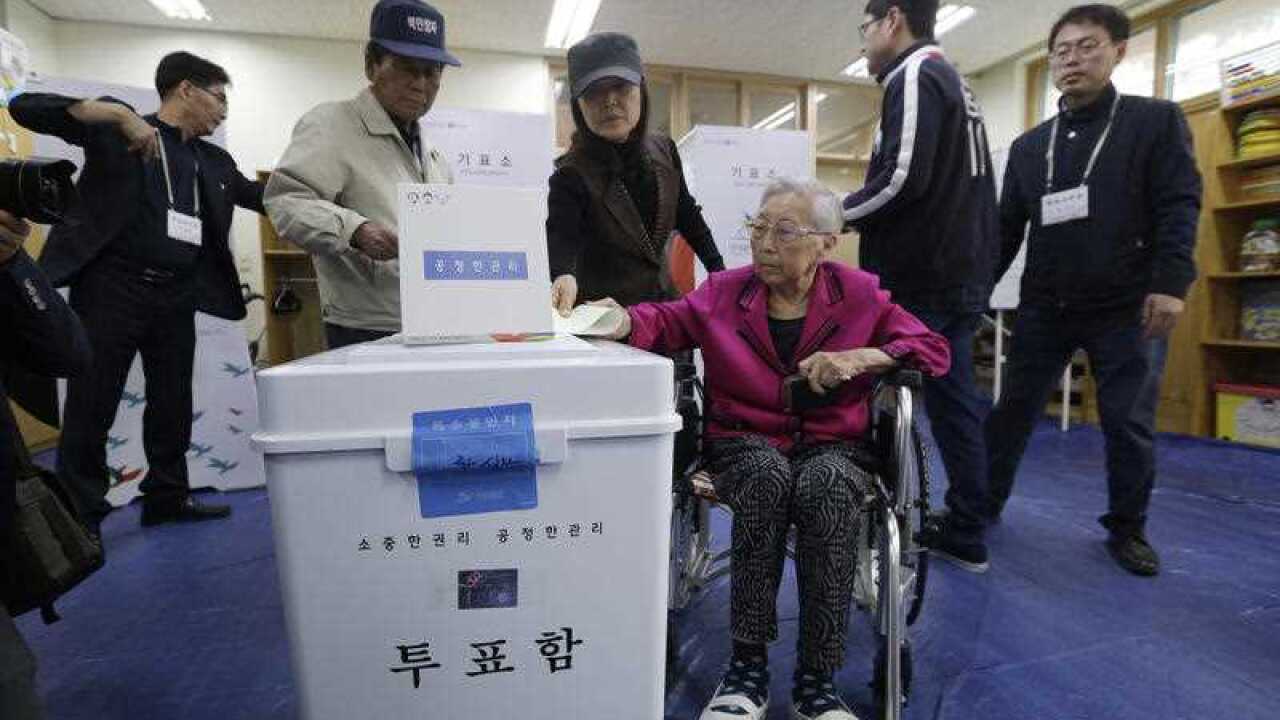
South Korea's ruling conservative party have failed to regain a majority in parliament in an election, dealing a stinging blow to President Park Geun-hye and denting prospects for the party's success in a 2017 presidential vote.
The failure to secure a majority by Park's ruling Saenuri Party will also likely mean her government will face more deadlock in the National Assembly as she tries to push through legislation to boost a sluggish economy and create jobs.
The Saenuri Party had been expected to win a majority in the 300-seat, single-chamber parliament but was likely to end up with about 125, KBS television projected at 0100 AEST on Wednesday with about 70 per cent of the votes counted, citing National Election Commission preliminary results.
The main opposition Minjoo Party was expected to win 119 seats. The People's Party, an opposition splinter party, was expected to win 39 seats.
The rest of the seats were expected to go to independents and a minority leftist party.
News that makes sense
Your trusted source for staying up-to-date with the world around you. Get free daily news updates and analysis, straight to your inbox.
Other networks and Yonhap news agency also projected Saenuri would fall short of securing a majority.
"Saenuri Party humbly accepts the result of the election," the party said in a statement. "We failed to read the people's mind when the people were full of disappointment and rebuke."
The country has a strong presidential system with a national leader who is limited to a single term by constitution but has control over domestic and foreign policies.
Control of parliament would have provided the Saenuri Party with a solid platform to launch its efforts to field a winning candidate in a presidential election late next year to find Park's successor at the end of her single, five-year term.
Turnout was higher than in two previous elections, defying expectations of analysts and politicians who thought discontent over a sluggish economy, and political squabbling that resulted in a four-year legislative term considered one of the least productive ever, would keep voters away.







