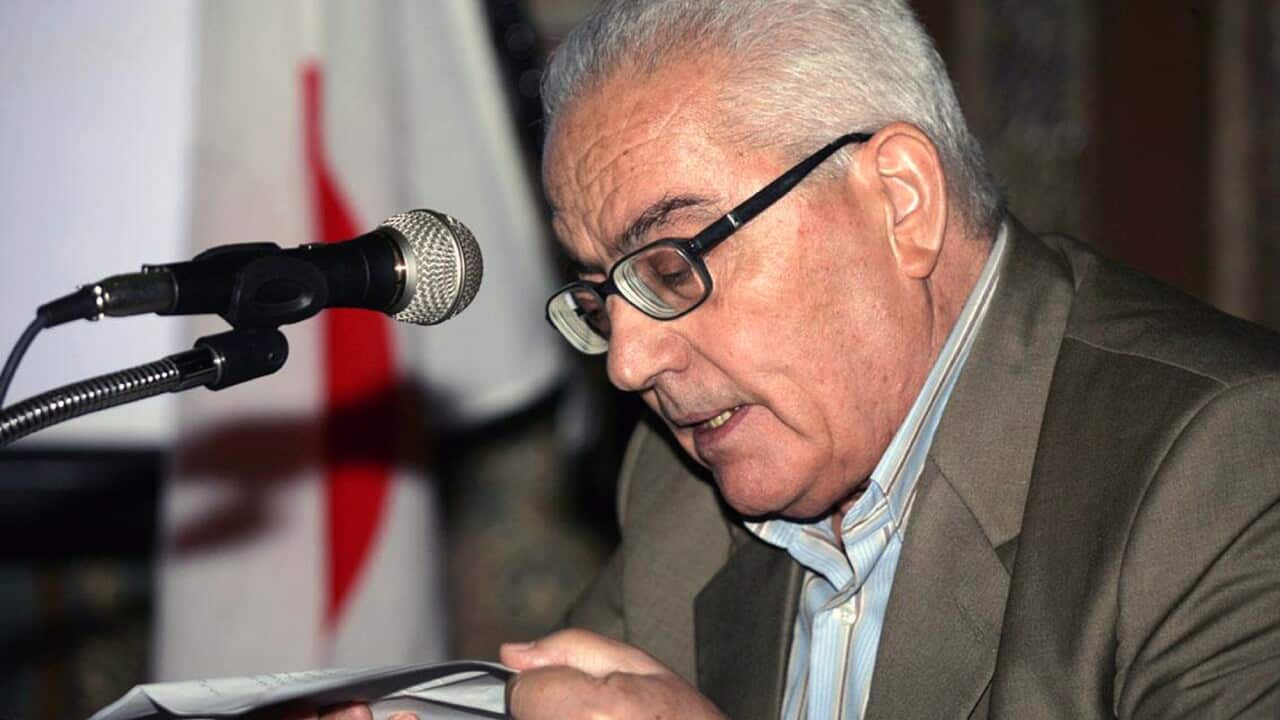
Dubbed the 'caretaker' of ancient ruins in the Syrian city of Palmyra, Khalid al-Asaad was beheaded by IS militants and his body hung among the ancient columns he helped restore years earlier, according to Syrian government officials.
An archaeologist who dedicated his life to restoring the site for local and international guests, he continued his work many years after his post as Palmyra Antiquities Director came to an end.
“He spoke the ancient language of Palmyra, he was a scholar with significant impact,” said Maamoun Abdulkarim, Director of Syrian Antiquities and Museums.
“We consider him one of the pillars of archaeology in the country.”

The militants had taken him hostage one month ago, interrogating him repeatedly. They reportedly killed him because he refused to disclose the location of hidden artefacts.
Australia’s former Ambassador to Syria and Lebanon, Ross Burns, met Khalid Asaad while in the region.
“On the couple of times I saw him, one would have to dash out and try to catch him at a tomb or a section of Byzantine wall that he was excavating at the time.”
“He really enshrined the heritage of Palmyra over a good part of the 20th and early 21st century.”
Mr Burns said since the UNESCO World Heritage site was seized from government forces in May, IS has used it to its advantage.
“How do you try to the ISIS presence in the central Syrian desert, without risking damage to the monuments in the process.”
UNESCO’s Director-General Irina Bokova has also condemned the horrific act.
“I am both saddened and outraged to learn of the brutal murder of Khaled Asaad,” said the Director-General.
“The killed him because he would not betray his deep commitment to Palmyra. Here is where he dedicated his life, revealing Palmyra’s precious history and interpreting it so that we could learn from this great city that was a crossroads of the ancient world.”
Like the ancient ruins they've already damaged, IS showed no sign of treating Palmyra differently, reportedly looting and selling artefacts.
The militant group has even used the ancient amphitheatre for public executions.
Knowing IS was closing in on Palmyra, authorities had moved the majority of historically valuable items to Damascus.
And though many locals had fled too, Khalid Asaad stayed.
“I think his decision to remain, whichever way you look at it, does underline the commitment that a lot of people have in Syria to preserving their heritage in the face of extreme danger,” said Burns.
And man who devoted his work to the ancient town - even naming his daughter Zenobia after its ancient queen - would ultimate give his life for it.
Share


