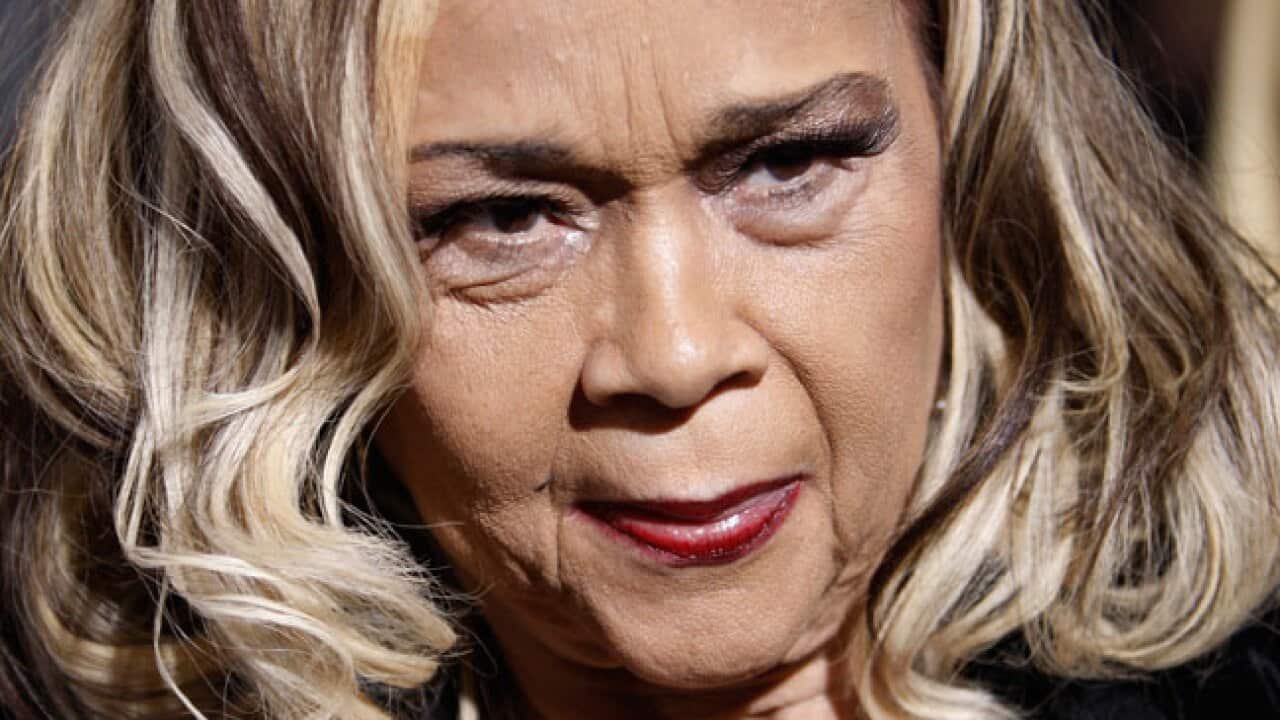
Pioneering US blues singer Etta James, who flitted effortlessly from jazz, pop standards and love ballads to feisty R&B and who plunged into drug addiction before resurrecting her career to win six Grammys, has died.
James, who would have turned 74 later this month, died Friday after a battle with leukemia, her manager Lupe De Leon said. Doctors last month said her cancer was inoperable.
James sang about love, lust, loss and redemption, notably in her best known songs such as "At Last" and "I'd Rather Go Blind," and often lived the part in a drama-drenched personal life that saw her grow up with little parental guidance, enter into perilous romantic relationships, head in and out of rehab, and suffer legal problems tied to her drug abuse.
News that makes sense
Your trusted source for staying up-to-date with the world around you. Get free daily news updates and analysis, straight to your inbox.
From the late 1950s she shook up the American song book with her silky but fiery voice, which ranged from a soft coo to a ferocious raspy howl.
Widely considered among the most influential of US singers, she inspired divas like Diana Ross, Beyonce, Amy Winehouse and Adele.
"Etta is the matriarch of R&B (rhythm & blues) music," Billy Wilson of the Motown Alumni Association told AFP.
"She set the tone for all of the genre of music that is considered soul music."
Three dozen albums
Of her three dozen albums, James released her last in November at age 73, nearly 60 years after first finding success as a young teenager with a doo-wop group, The Peaches.
Her landmark 1960 album "At Last!" and 1968's "Tell Mama" highlighted her voice's split personality, morphing from a tender sweetness to a feral growl in merely a syllable.
Her voice was "an instrument of overwhelming power," wrote David Ritz, who helped pen the singer's autobiography "Rage to Survive" in 1995.
"Her word pictures exploded with violence, sex, and above all, music."
Jamesetta Hawkins was born on January 25, 1938 in Los Angeles at the end of the Great Depression. Her mother, described by some as a prostitute, got pregnant at 14.
The identity of the singer's father had always been a mystery, but James said she was told by her mother and others that her father was the great American pool shark Minnesota Fats.
Like the pool player, James struggled with her weight throughout her life, and in later years the "big round mound of sound," as some called her, needed help to get on stage to perform.
At age 14, Jamesetta met the bandleader and promoter Johnny Otis, who flipped her world upside down -- and her name, to Etta James -- by taking her and The Peaches on the road. Otis died on Tuesday at age 90.
In 1955 her Peaches song "The Wallflower (Dance with Me, Henry)" reached number one on the R&B charts, and by 1960 she had recorded "At Last," which would become her signature tune, which Beyonce sang to President Barack Obama and First Lady Michelle at the inaugural ball in 2009.
Beyonce herself saluted James in 2008 as "a force of nature, music's original bad girl, with your platinum hair, wildcat eyes, your Fellini-esque sexuality and dangerous voice."
Bad girl
There was much more of a bad girl in Etta James than her early ventures in pop standards would allow. This was the 50s and early 60s, after all, and popular music was often wrapped in sweeping strings arrangements and cloying sentimentality.
But the bawdy and bold James ripped that shrink wrap off in concert in unparalleled romps through the blues. Her instinct could be perfect; on stage in 1963, in a show that has been immortalized on the concert album "Etta James Rocks the House," she brought music to its primal, guttural core.
As R&B gained in popularity in the 1960s James had a substantial black following but largely remained out of the broader limelight, although her no-holds barred singing style made fans out of white rock stars like Janis Joplin and Keith Richards.
Life on the road was rough for James, and like many of the male blues and rock legends with whom she toured and collaborated, she caved in to the ravages of drugs.
She described herself as a "junkie in the Sixties," with heroin nearly killing her, she wrote, and she came perilously close to trading sex for drugs before finally entering the first of many rehabilitation centers.
By the late 1980s she had managed a comeback, with the raw power that made her early music so transformative inflecting her later jazz, R&B and blues rock albums.
Accolades flowed
Winner of 17 Blues Music Awards, James was inducted into the Rock & Roll Hall of Fame in 1993, and accolades flowed which confirmed her as one of the pioneers of American music.
In 1994, nearly four decades after her debut hit, she won her first Grammy, for "Mystery Lady," a jazz album of Billie Holiday songs. She won a Grammy for best contemporary blues album as well, and in 2003 earned the Grammy Lifetime Achievement Award.
But that same year, she issued a stark reminder that life's challenges, and not its rewards, provided her soundtrack.
"If trouble were money, I'd have more money that any man should," she sang on her album "Let's Roll."
"I'm open for business in your neighborhood. The blues is my business, and business is good."







