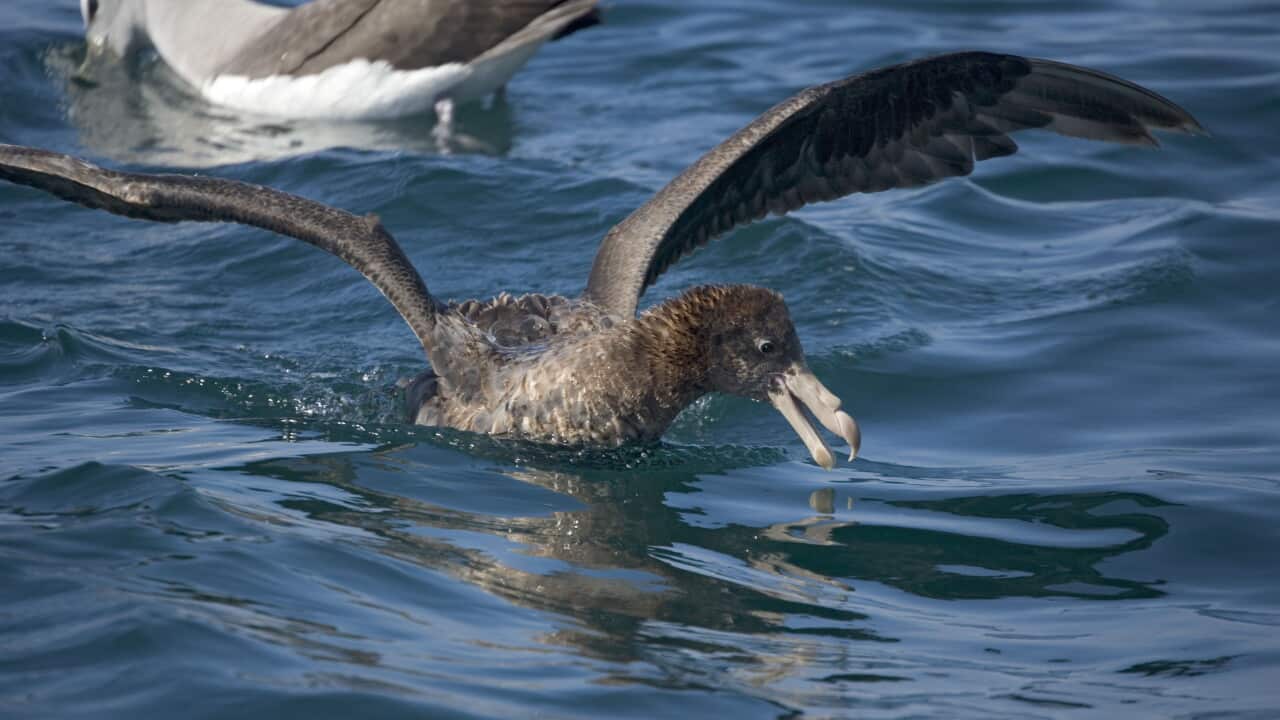
South Australia has confirmed its first case of H5 bird flu.
A migratory seabird on a beach on the Fleurieu Peninsula was found by a wildlife welfare organisation on 14 June and taken into care, South Australian authorities revealed on Wednesday.
The bird, a southern giant petrel, was found at Knights Beach in Port Elliot, and tested by CSIRO's Australian Centre for Disease Preparedness.
It returned a positive result for the H5 strain of the virus on Wednesday, the South Australian government confirmed. The bird was found alongside another giant petrel, which tested negative.
This is the first time this strain has been detected in South Australia, after two cases of H5N1 were confirmed in migratory seabirds in Western Australia over the weekend. Australia had previously been one of the only regions of the world free from the virus.
News that makes sense
Your trusted source for staying up-to-date with the world around you. Get free daily news updates and analysis, straight to your inbox.
"I know this news will be concerning for many people, particularly our poultry producers, wildlife carers and communities across our State, but I want to reassure South Australians that we are well prepared and responding swiftly," South Australian Premier Peter Malinauskas said in a statement.
"South Australia has invested significantly in surveillance, workforce capability and response planning to prepare for the possible arrival of H5 bird flu."
The state government said it is treating the detection as an isolated incident, and there have been no detections in poultry anywhere in Australia at this time.
Seven hundred and seventy-four samples from birds have been tested in South Australia since the start of the year.
Australia on high alert
Australia is on high alert over fears that the deadly H5N1 strain of avian influenza could be spreading in remote areas of the country.
Avian flu has driven a global animal pandemic, causing catastrophic loss in more than 500 bird and 60 mammal species. Millions of animals have been killed, while poultry populations have been devastated through infection and culling measures.
Experts warn that unique Australian species like the black swan, the Australian sea lion, and the Tasmanian devil are highly vulnerable and could be significantly impacted by the virus.
Federal Agricultural Minister Julie Collins has said the government's emergency biosecurity response has been enacted and that her department is working closely with state and territory counterparts to monitor the spread of the disease.
A hotline — 1800 675 888 — and a website for members of the public to report sick or dead birds has been established, and Collins has encouraged people to continue to call in suspicious cases.
"If you see sick or dead birds or other animals, do not touch them, avoid contact, and report at the government site," she said on Wednesday.
Papua New Guinea lifts Australian import ban
Papua New Guinea has lifted a pause on imports of Australian poultry and eggs it imposed after the first mainland cases of the bird flu strain were confirmed.
The Pacific island's national agriculture and quarantine inspection authority advised the suspension, but Collins said Australia has worked with the department to lift the ban.
"My department has just received advice from PNG that the suspension of poultry meat and poultry products has been lifted, with some exceptions," Collins said.
"We will continue to work with them on this. We appreciate PNG's willingness to work cooperatively and to remove some of these restrictions."
Australian chicken meat exports reached a record $133 million in 2023/24, nearly half of which was purchased by PNG.
No evidence of wider outbreak
Australia's chief veterinary officer, Dr Beth Cookson, has said that there is no indication that the two birds found near Esperance, WA, have spread the disease.
She said genomic sequencing indicates that the virus infecting the initial bird, a brown skua, is related to an outbreak on the sub-Antarctic Heard and McDonald Islands.
There has been no evidence of mass animal mortalities following the discovery of the sick birds, Collins said on Wednesday.
She added that while the detection of another case in another state is "obviously concerning," it is "not unexpected" given the global spread of the disease.
Despite the reassurance, major poultry group Inghams announced on Tuesday that it would mitigate against potential risks across all WA sites by locking down its farms and processing operations.
A low-pressure system below Australia is forecast this weekend, which experts are warning could blow more seabirds onto the southern coastline.
For the latest from SBS News, download our app and subscribe to our newsletter.







