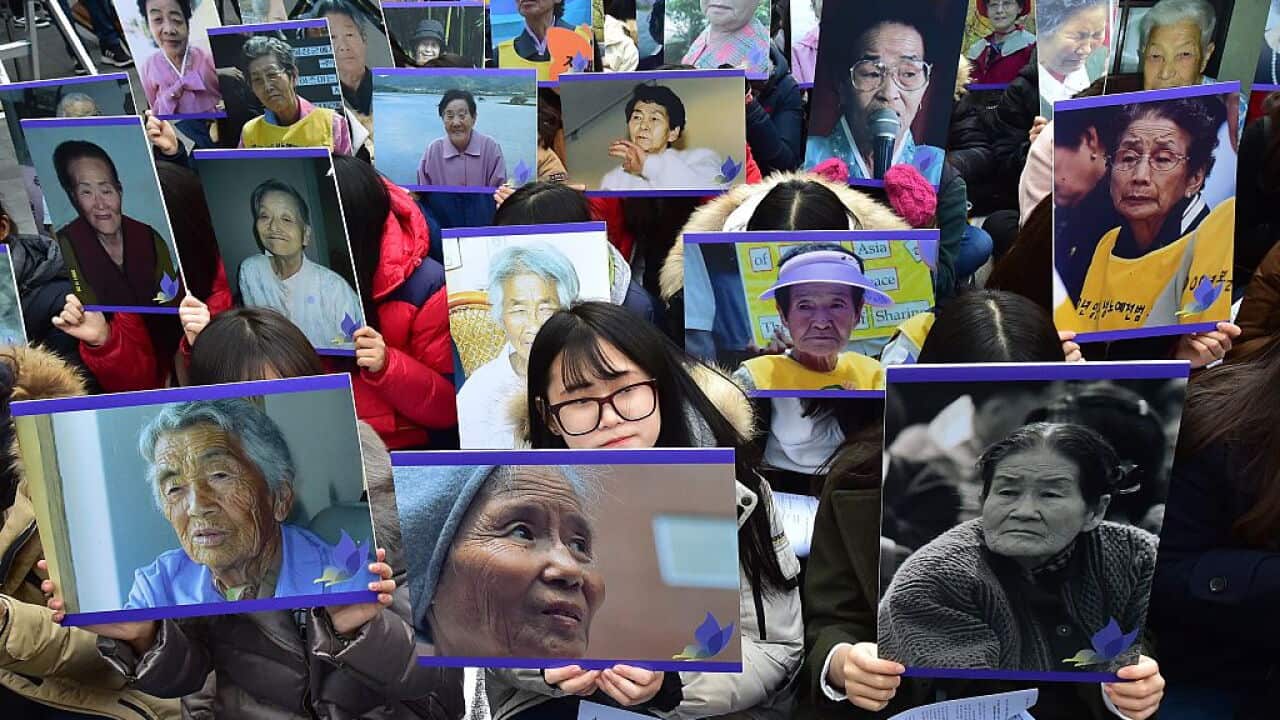
Two aged South Korean women, victims of the Imperial Japan's sex enslavement during World War II, joined the rally in a cold winter day, shouting for the still unresolved war crimes and weeping at the atrocities they had suffered under the 1910-45 Japanese colonial rule of theKorean peninsula.
Foreign ministers of South Korea and Japan met in Seoul on Monday, reaching a final and irreversible agreement on the comfort women issue, a euphemism for women forcibly recruited to serve in Japan's military brothels during the devastating war.
Japan promised to offer $A11.4 million (1 billion yen) from its government coffer to help South Korea set up an assistance fund for the comfort women victims. The Japanese delegation conveyed Japanese Prime Minister Shinzo Abe's message of apology and remorse "from his heart" to the wartime sex slavery victims.
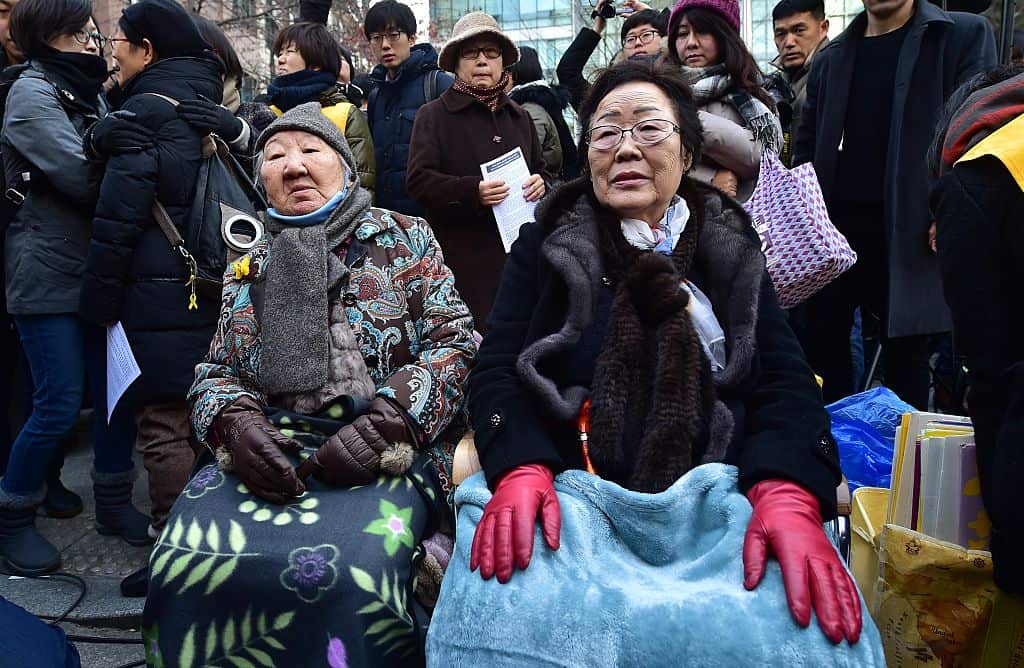
In return for those action and word, South Korea pledged a final and irreversible agreement on the war crime and promised no to criticize Japan in the international society any more.
News that makes sense
Your trusted source for staying up-to-date with the world around you. Get free daily news updates and analysis, straight to your inbox.
Despite the inter-governmental agreement, the victims and civic groups called for a complete resolution on the issue with an unequivocal apology and legal reparations from Japan.
The agreement was criticized in South Korea for failing to extract Japan's acknowledge of "legal" responsibility for the war crime and the absence of Abe's unequivocal apology for the "forced" recruitment.
"The most important opinion of the wartime sex slavery victims is to get compensation on legal ground. But it was not included in the South Korea-Japan agreement," said Lee Si-hun, a demonstrator.
"The imperialist action of the Japanese government has totally ignored its responsibility for the war. The South Korean government reached the humiliating agreement with Japan, which can not be accepted by any ordinary South Korean," said Park Han-sol, another demonstrator.
The rally lasted about two hours. Police estimated that around 700 people participated in the 1,211th round of the rally, which has been held every Wednesday since Jan. 8, 1992 in front of Japan's embassy in South Korea.







