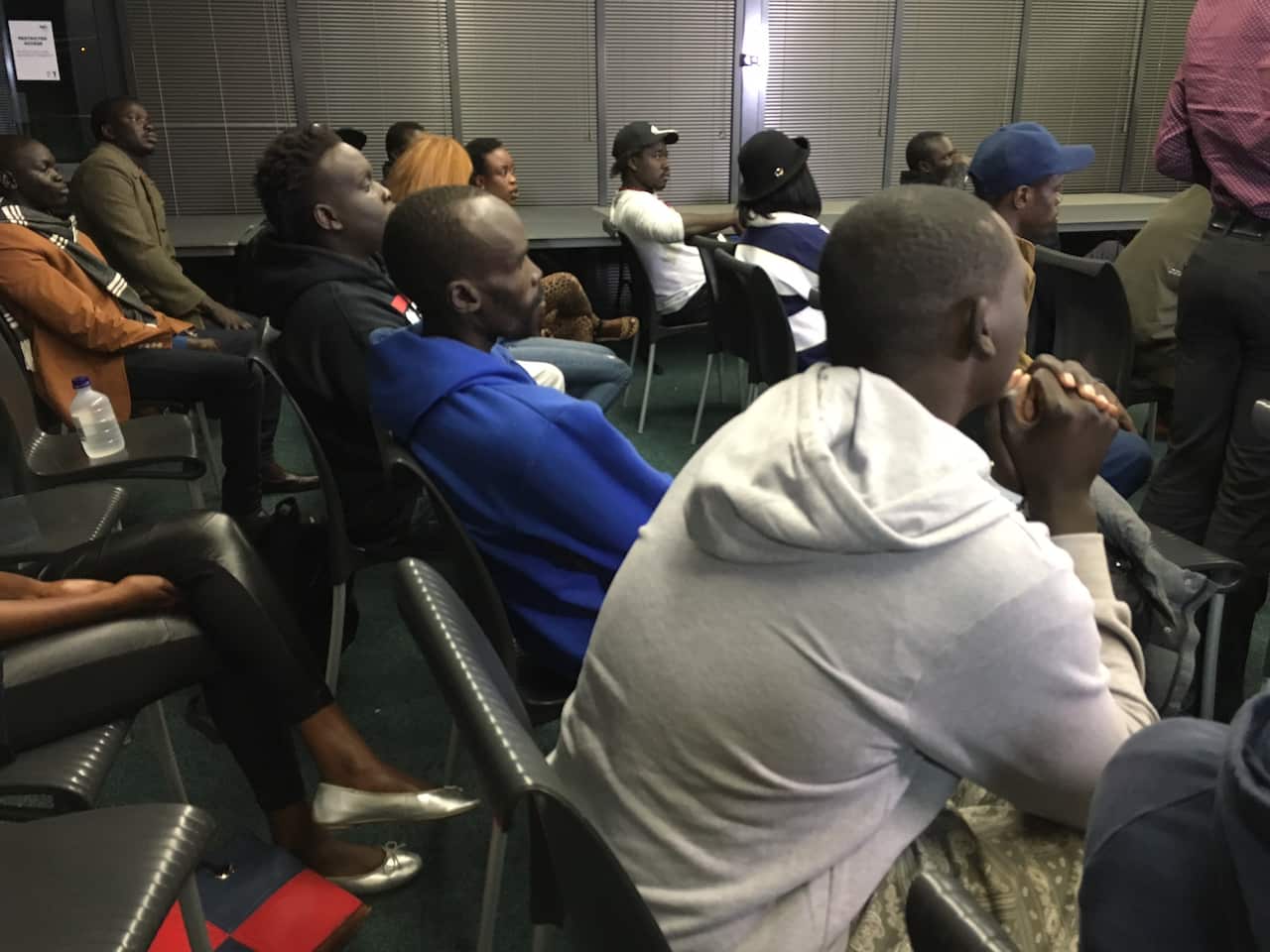
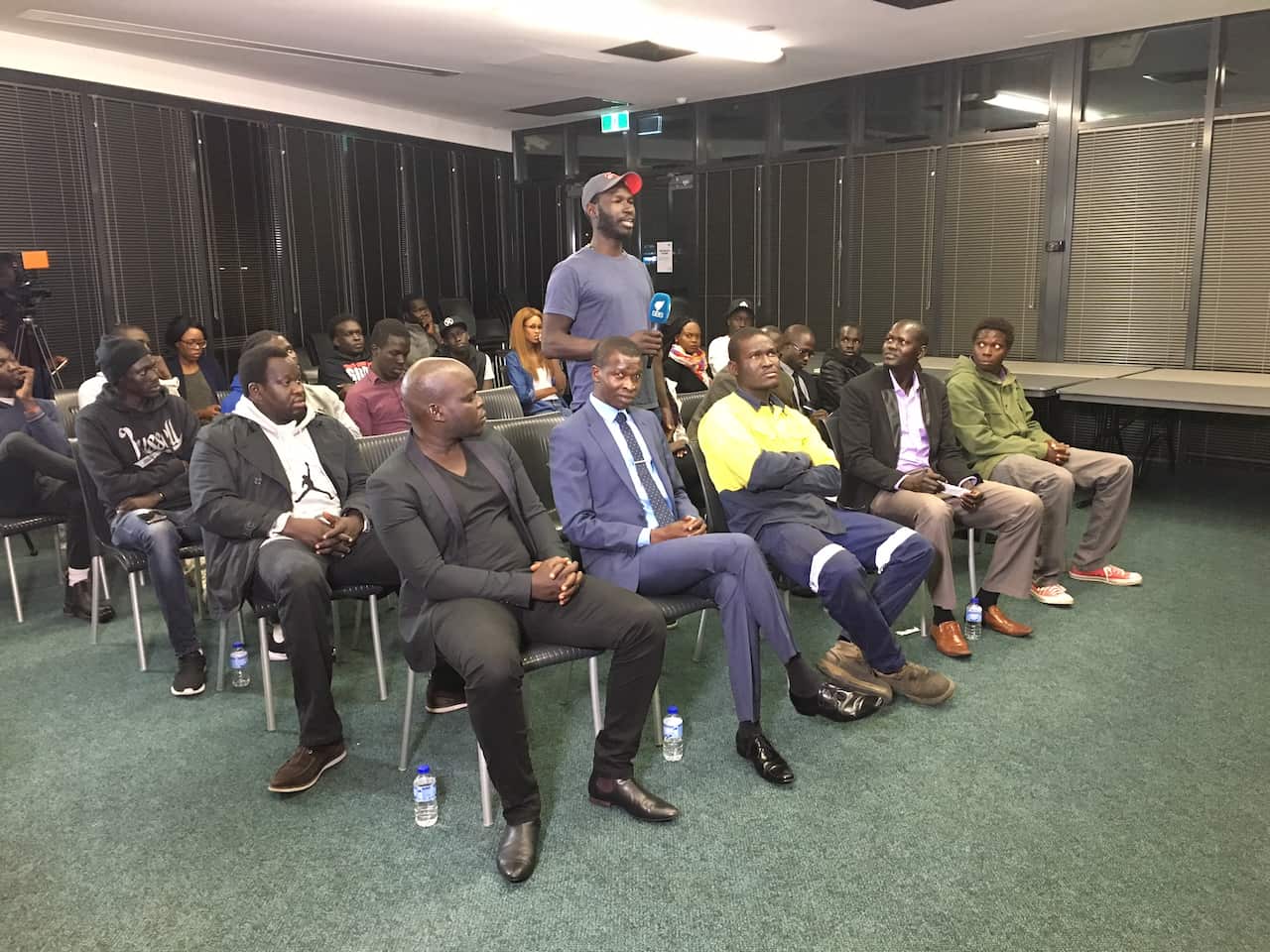
About 60 community members gathered in a rented room at a suburban aquatic centre in Melbourne.
An elder had chipped into fund the hastily arranged get-together as the community has no formal meeting place.
According to businessman and youth worker Wilson Busari, that is a serious issue in itself.
"In our community we lack that we do not have a house to call our community centre," he said.
Among those attending the session were business people, youth workers and concerned citizens keen to participate in a discussion about their troubled community.
News that makes sense
Your trusted source for staying up-to-date with the world around you. Get free daily news updates and analysis, straight to your inbox.
Ez Eldin, now a successful filmmaker, explained how rejection and barriers to employment had serious implications for him after completing Year 12.
"After one year of depression, I started drinking and I started finding group[s] of young people in the street and started hanging out with them in the train station," he said.
"[But] because I kept myself together and also because I want to make my Mum proud and my community proud, I went to university and studied community culture development."
Crime
The gathering was also designed for people discuss the recent CBD affray and crime-spree attributed to South Sudanese youth, often linked to the so-called 'Apex Gang', and the implications on the community.
Richard Lominded spoke of an inexplicable divide between the teenagers and their elders, some themselves only in their mid 20s.
"There's a massive gap in terms of supporting each other," he said. "We don't understand them and they don't understand us.
"We see what they are doing as useless and at the same time we can't tell them, 'Hey don't do x-y-z, do a-b-c'".
Some raised allegations of racial taunts from police on the night of Moomba, saying it inflamed the situation.
Many people criticised subsequent media reporting, describing it as inaccurate and a glorification of crime.
“The commentary and the image that we are talking about South Sudanese youth and then in the fighting, I'm not even seeing someone as dark as a South Sudanese involved in it but that's the name that's getting dropped," hip-hop artist Buom Kuoth said.
Another common view was that education system failed to cater for many South Sudanese children whose English was not up to the standard of their Australian counterparts.
Some come from refugee camps and others simply do not have exposure to English at home.
"You just start to learn English, you're not really good at reading and they put you with other people who were born in Australia and know English better than you," Nyatabo Hothnyang said.
Suggestions were tabled at the meeting, with many tied to the idea of a community centre which would enable the community to take ownership of programs providing extra tuition, sport, counselling and culturally appropriate activities.