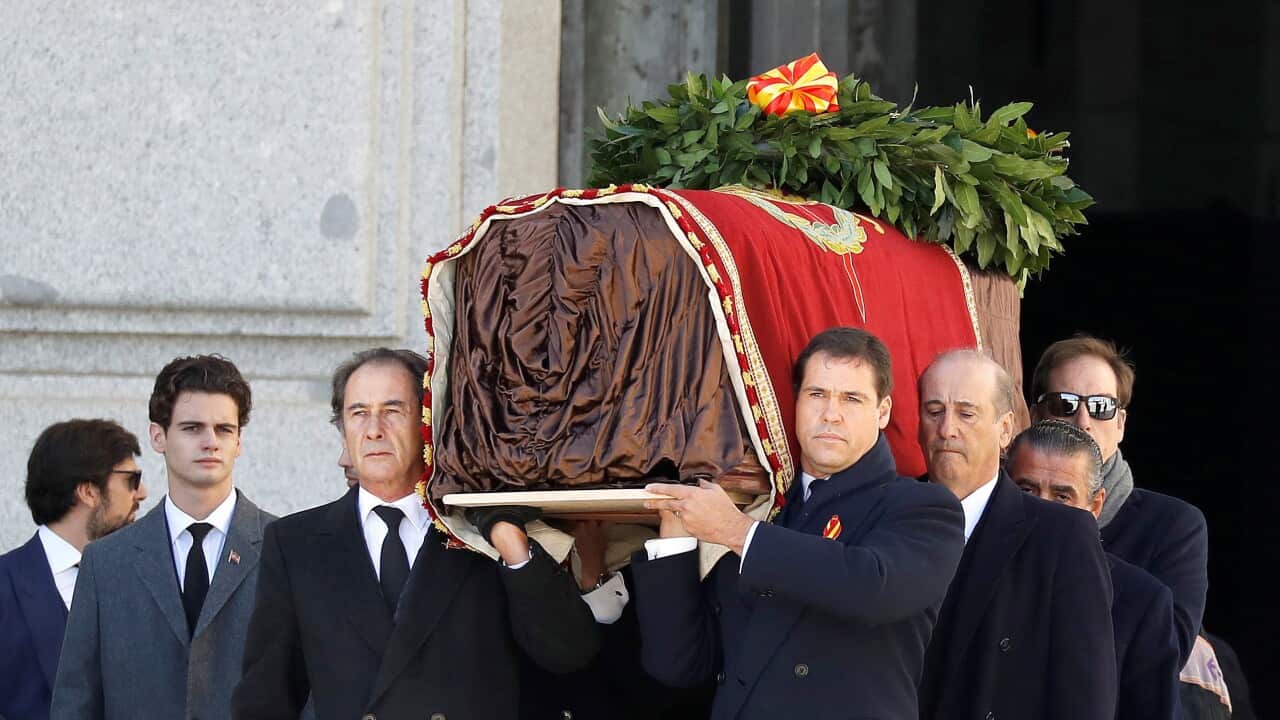
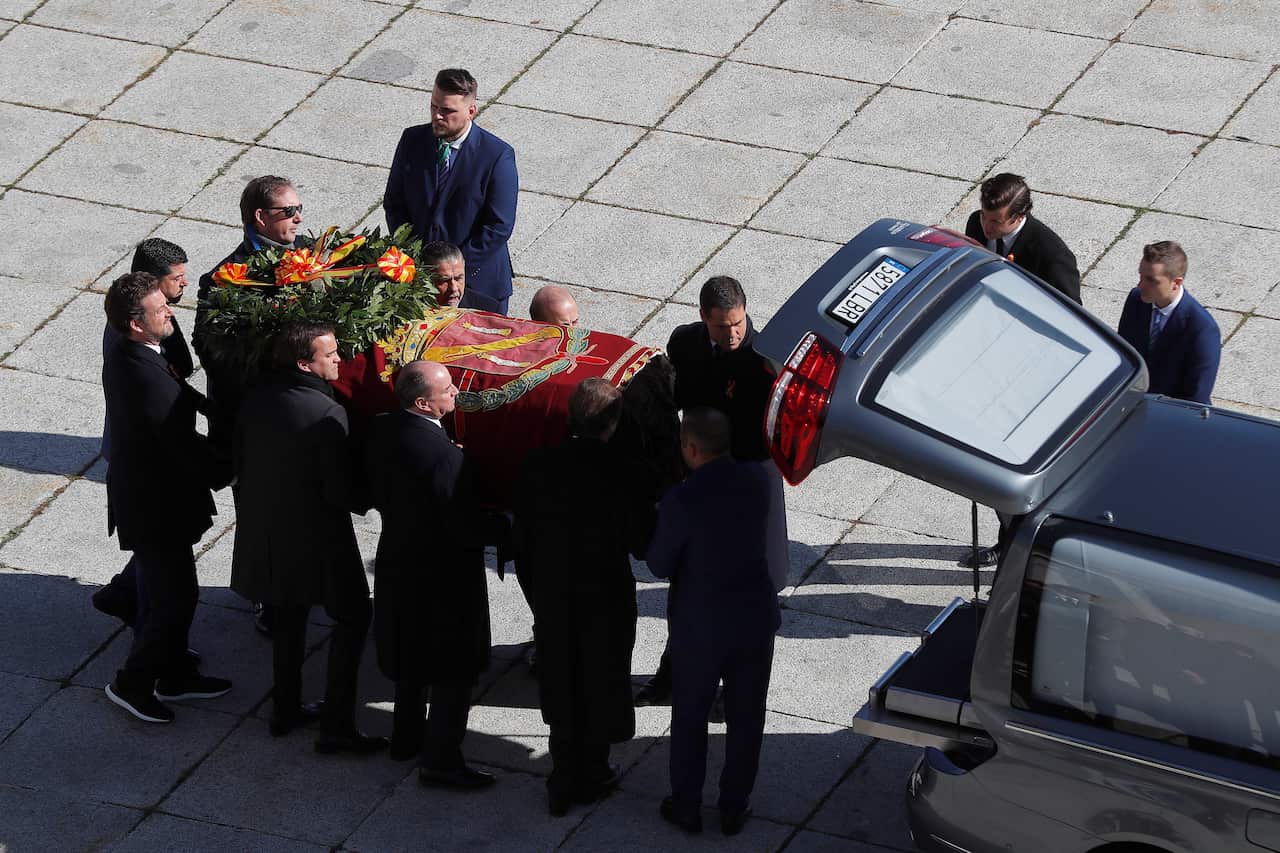
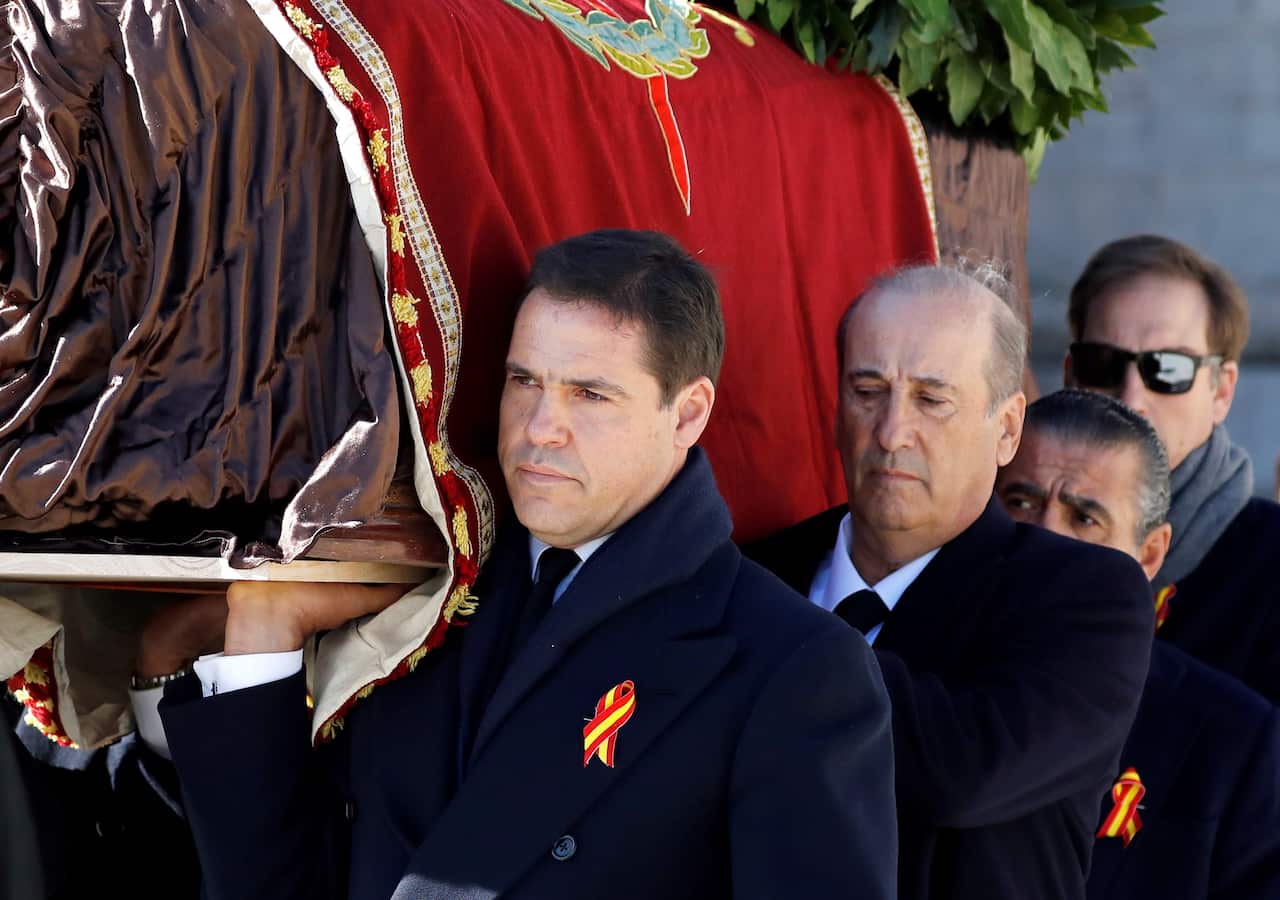
Cries of "long live Franco!" accompanied the laurel wreath-draped coffin of former dictator General Francisco Franco as Spain removed his remains from the state mausoleum where he was buried in 1975.
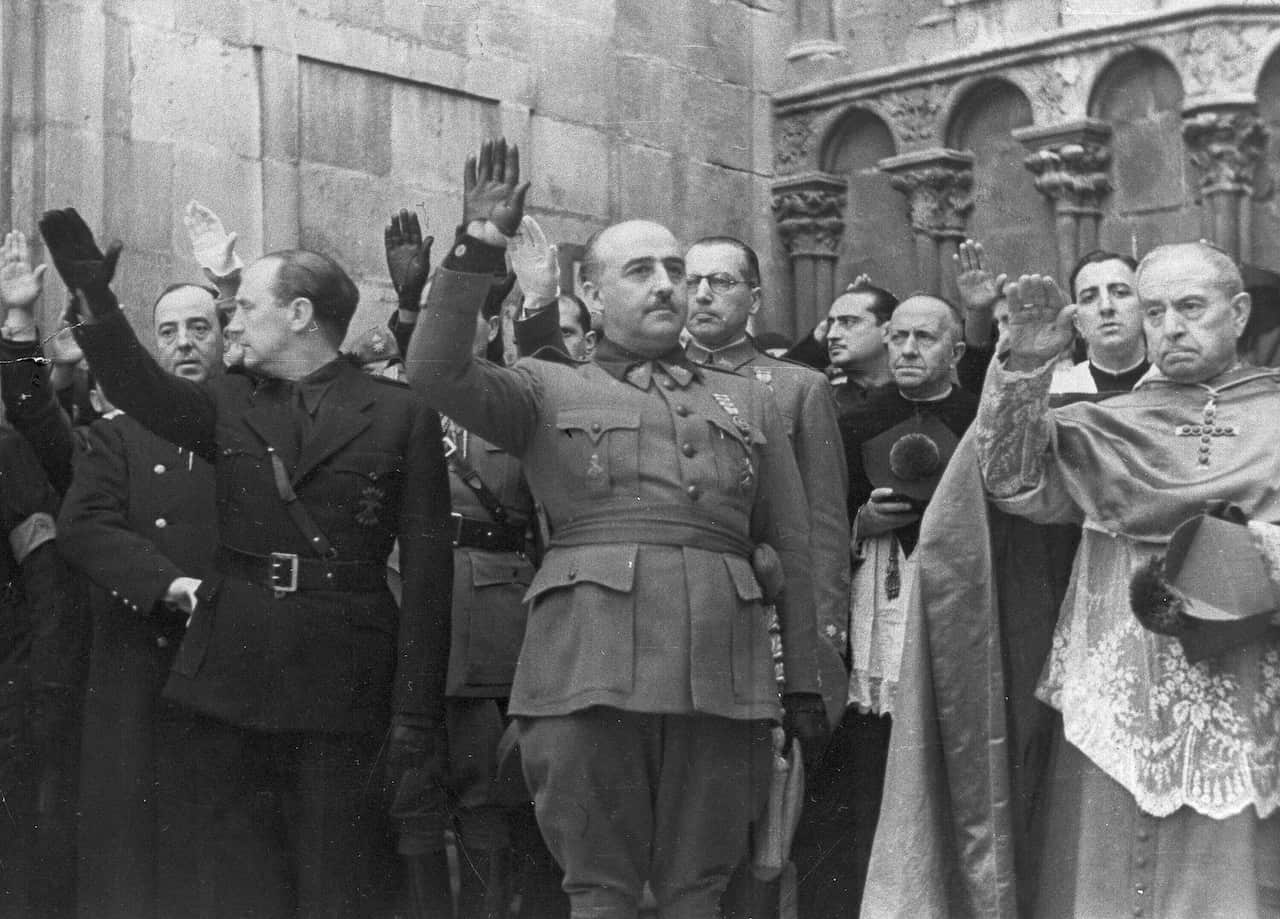
The exhumation and reburial was Spanish authorities' most significant move in years to lay to rest the ghost of the general, whose legacy still divides the country he ruled as an autocrat for nearly four decades.
Acting Prime Minister Pedro Sanchez said the unearthing of the coffin and its reburial in a private grave - a transfer that Franco's family had sought to block through the courts - would strengthen Spain's democratic credentials.
News that makes sense
Your trusted source for staying up-to-date with the world around you. Get free daily news updates and analysis, straight to your inbox.
"It is a great victory for dignity, memory, justice and reparation - and thus for Spanish democracy," Mr Sanchez said of the historic moment, which comes just over a fortnight before a general election.
Since his death 44 years ago, Mr Franco's body has reposed inside a vast, imposing basilica in the Valley of the Fallen, some 50km northwest of Madrid, which has long attracted both tourists and right-wing sympathisers.
Ahead of the operation, 22 members of the late dictator's family arrived at the site carrying wreaths to witness the exhumation, which began shortly before 11am.
Justice Minister Dolores Delgado was also on hand to represent the government, but no journalists were allowed in.
Mr Franco's remains were taken into the family vault for reburial next to his wife in a second private ceremony.
Initially scheduled for June 2018, the operation was delayed by more than a year due to a string of legal challenges filed by Franco's descendants.
Critics on both the left and the right have accused Mr Sanchez of electioneering, with Pablo Iglesias who heads the radical left-wing Podemos saying the Socialist premier was unearthing "Franco's mummy" to win votes.
Spaniards are divided over the exhumation, with 43 per cent in favour of the move, 32.5 per cent against and the rest undecided, according to a poll published this month in El Mundo daily.
Franco's 'glorious crusade'
Ordered by Mr Franco in 1940 to celebrate his "glorious (Catholic) crusade" against the "godless" Republicans, construction of the Valley of the Fallen lasted for almost 20 years.
Partly built by the forced labour of political prisoners, the site is one of Europe's largest mass graves, housing the remains of over 30,000 dead from both sides of a civil war that was triggered by Mr Franco's rebellion against an elected Republican government.
Most had fought for Mr Franco but the monument also contains the bones of many Republican opponents who were moved there from cemeteries and mass graves across the country without their families being informed.
A 150m cross towers over the site which Mr Franco dedicated to "all the fallen" of the conflict in what he called a gesture of reconciliation.
Since Mr Franco was buried there after his death in 1975, flowers have been placed daily on his tomb.
Mr Franco's descendants have battled to stop the exhumation or failing that, to have his remains moved to a crypt at the Almudena cathedral in central Madrid where his daughter is buried.
The Francisco Franco Foundation, which defends the dictator's memory, had called for supporters to protest outside the El Pardo cemetery on Thursday, but the demonstration was banned by the local authorities.
'Desecration'
In 2017, the parliament approved a non-binding motion calling for Mr Franco's remains to be removed from the Valley of the Fallen, but it was ignored by the former conservative government of Mariano Rajoy.
Conservatives repeatedly accuse the left of opening wounds from the past with a so-called historical memory law, approved by a previous Socialist government in 2007.
That law ordered the removal of all symbols of the Franco regime and called for the identification of those bodies dumped into mass graves during the civil war.
Mr Rajoy, who governed from 2011 until 2018, proudly said his government never gave any money to apply this law.
Earlier this week, an editorial in the conservative daily ABC called the planned exhumation a "desecration" of a grave.







