This week the leading national papers have described Australia in bold print as a bad, dangerous and untrustworthy neighbor, and as a country that has taken it too far.
After reports that Australian embassies in Asia are part of a US-led spy network, the latest documents leaked by whistleblower Edward Snowden also reveal that Australia was explicitly tapping the personal mobile phones of the Indonesian President Susilo Bambang Yudhoyono, First Lady Kristiani Herawati, and numerous other political elite.
As the editor of The Jakarta Post Meidyatama Suryodiningrat put it, now it is personal.
A slide presentation from Australia’s spy agency the Defence Signals Directorate from November 2009, published by Guardian Australia and the Australian Broadcasting Corporation, displays a list of Indonesian “leadership targets” and mobile phone models used by each target.
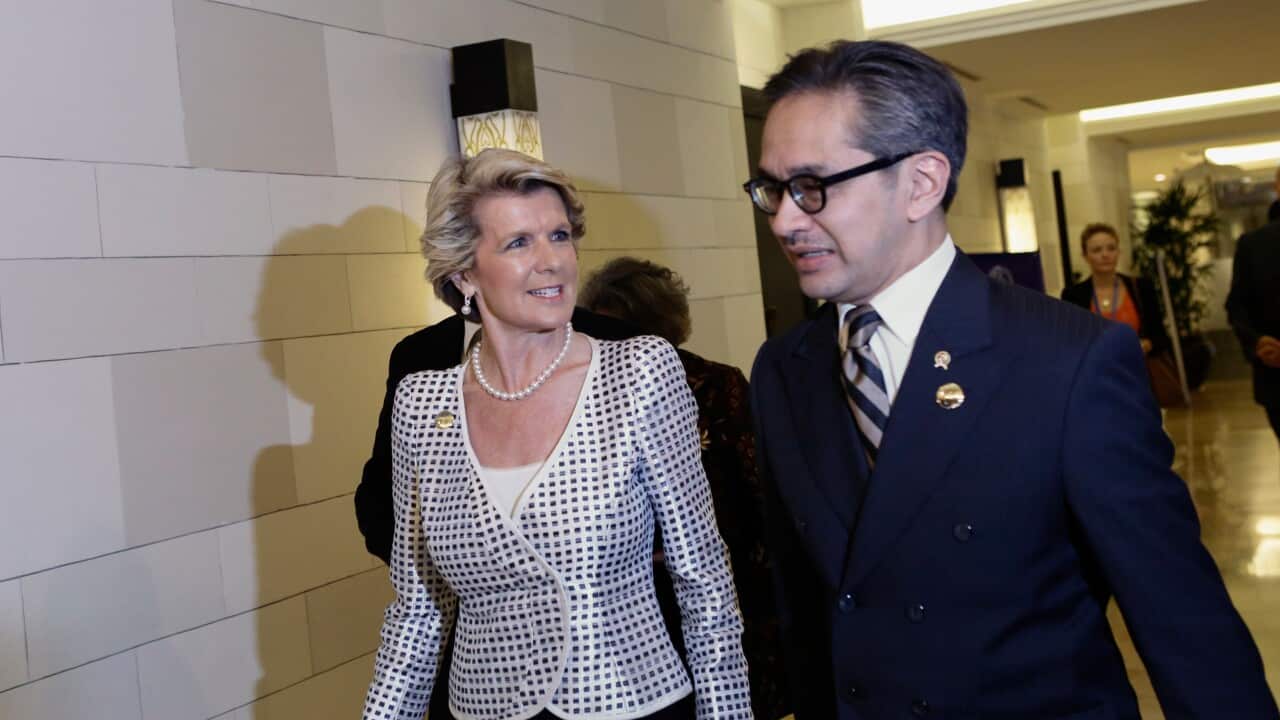
After announcing the Indonesian Ambassador to Australia Nadjib Riphat Kesoema, would be temporarily recalled, Foreign Minister Marty Natalegawa said he was ‘flabbergasted’ and lashed out at the personal nature of Australia’s targeted surveillance.
News that makes sense
Your trusted source for staying up-to-date with the world around you. Get free daily news updates and analysis, straight to your inbox.
“I need quite desperately an explanation [on] how a private conversation involving the President of the Republic of Indonesia, involving the First Lady of the Republic of Indonesia, how they can even have a hint, even a hint of relevance impacting on the security of Australia,” he said.
Hikmahanto Juwana, a professor of law at the University of Indonesia, says it is the personal nature of the latest revelations that saw the ambassador recalled.
“If they had wanted to recall the ambassador they had reason to do it earlier but it wasn’t until the president and Ibu Ani were named that they reacted,” he said.
The First Lady, also known as Ibu Ani, is seen as an influential figure in Indonesian politics and is notoriously sensitive about guarding her family’s honour, recently lambasting several of her followers on Instagram for a perceived insult of her son.
President Yudhoyono is also tetchy about personal insults. After protestors paraded a water buffalo with the president’s name spray painted on its body in 2010, he banned the use of animals at political rallies. And when US cables leaked by Wikileaks in 2011 claimed the First Lady was corrupt, he refused to take a telephone call from President Obama to apologise.
The president also expressed his anger on social media on Tuesday, saying Prime Minister Tony Abbott was ‘belittling’ Australia’s involvement in the wiretapping and damaging the strategic partnership between the two countries.
Despite Abbott’s pledge that his government will not issue an apology, the Australian government is under growing pressure to repair the diplomatic schism.
Foreign Minister Natalegawa has said that all intelligence sharing agreements will be reviewed, including on people smuggling, and Djoko Suyanto, Indonesia's Co-ordinating Minister for Politics, Law and Security, has demanded a public explanation from Abbott within two days.
The local press has also backed the calls, lauding the move to recall the ambassador and arguing that it is now up to Australia to patch the souring relations and apologise.
The Indonesian press and public are now viewing Australia’s declarations of friendship as empty and hypocritical.
“Australia is our close neighbor but now there is a growing momentum where the public can hate on Australia,” says Professor Hikmhanto.
“An open acknowledgement, even if short of an apology, is required,” wrote the Post’s editor Suryodiningrat, “It is not only the President who has been insulted but, by and large, the entire Indonesian nation.”







