
UN war crimes investigators say that intensified Coalition air strikes have killed at least 300 civilians in the Syrian northern city of Raqqa since March.
The Syrian Democratic Forces (SDF), a group of Kurdish and Arab militias, supported by the U.S.-led Coalition, began an assault on Raqqa a week ago to re-take the city from IS.
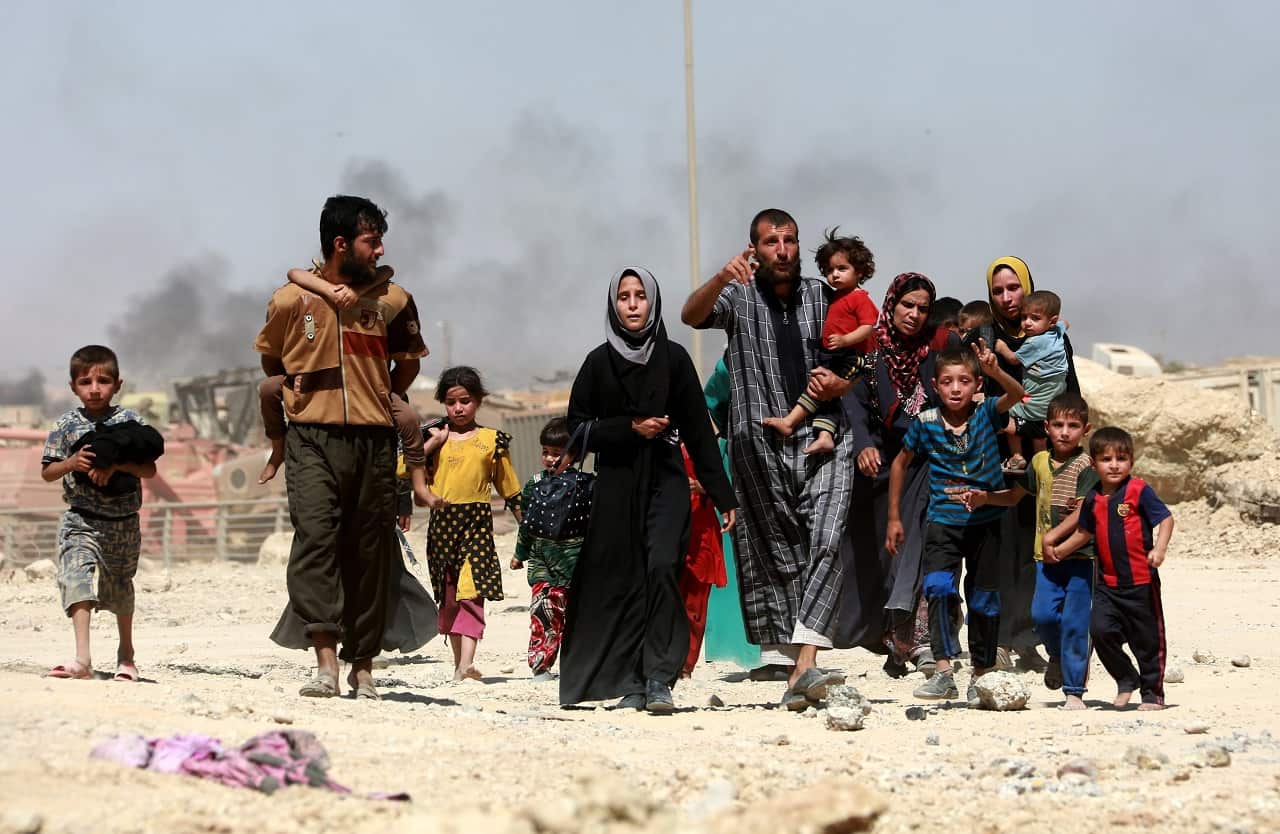
Paulo Pinheiro, the UN Commission of Inquiry for Syria's Chairman, told the 47 member Human Rights Council: "We note in particular that the intensification of air strikes which have paved the ground for an SDF advance in Raqqa has resulted not only in a staggering loss of civilian life but has also led to 160,000 civilians fleeing their homes and becoming internally displaced".
Karen Abuzayd, a Commissioner on the independent panel, said they had documented 300 deaths caused by Coalition air strikes since March 21.
News that makes sense
Your trusted source for staying up-to-date with the world around you. Get free daily news updates and analysis, straight to your inbox.
"We have documented the deaths just caused by the Coalition air strikes only, and we have about 300 deaths - 200 in one place, in al-Mansoura, one village, so those are the figures that we have been able to record."
The UN investigators do not have access to Syria.
Instead, their data was collected by interviewing survivors and witnesses in neighboring countries or by Skype with those still in Syria.
The London-based monitoring group, Airwars, says the figure of 300 deaths is nearly twice as high as the deadliest strike in Mosul which the Coalition has admitted to.
Densely populated areas
Sahr Muhammedally is the Middle East and North Africa Director for the Washington based Centre for Civilians in Conflict.
She told SBS News that she is concerned the Coalition is conducting operations in densely populated areas in both Iraq and Syria.
"The numbers that the Coalition has put out is a little bit over 400 since 2014 - both in Iraq and Syria, which I think is incredibly low, given the amount of munitions and bombs that have been dropped and especially since the campaign intensified in October of 2016. Other external organisations are reporting much higher numbers of civilian harm attributed. I think Airwars has reported around 3,000 or so."
Airwars recently reported that data from the Coalition's Operation 'Inherent Resolve' showed a 34 per cent jump in munitions dropped by Coalition forces in May alone - mostly said to be around Raqqa.
And data released by Australia's Operation Okra shows the ADF dropped a record 119 munitions on IS in the month of May - all in Iraq.
Accelerated campaign
It comes as US Defence Secretary James Mattis recently announced an accelerated Coalition strategy.
"The bottom line is we are going to move in an accelerated and reinforced manner, throw them on their back foot" he said.
"We have already shifted from attrition tactics, where we shove them from one position to another, in Iraq and Syria, to annihilation tactics where we surround them. The intention is the foreign fighters to not survive the fight."
But Sahr Muhammedally says "sometimes it's not really the numbers. It's about what the Coalition is doing when these numbers are being reported, to assess, to see how they can change their tactics."
"And as the campaign is being undertaken in very densely populated areas where the civilians are not being allowed to move, the likelihood of civilian casualties is just almost a given. So they really need to slow down and assess how slowly, block by block they are going to be engaging ISIS and trying to allow civilians to move to safer areas."
-With Reuters







