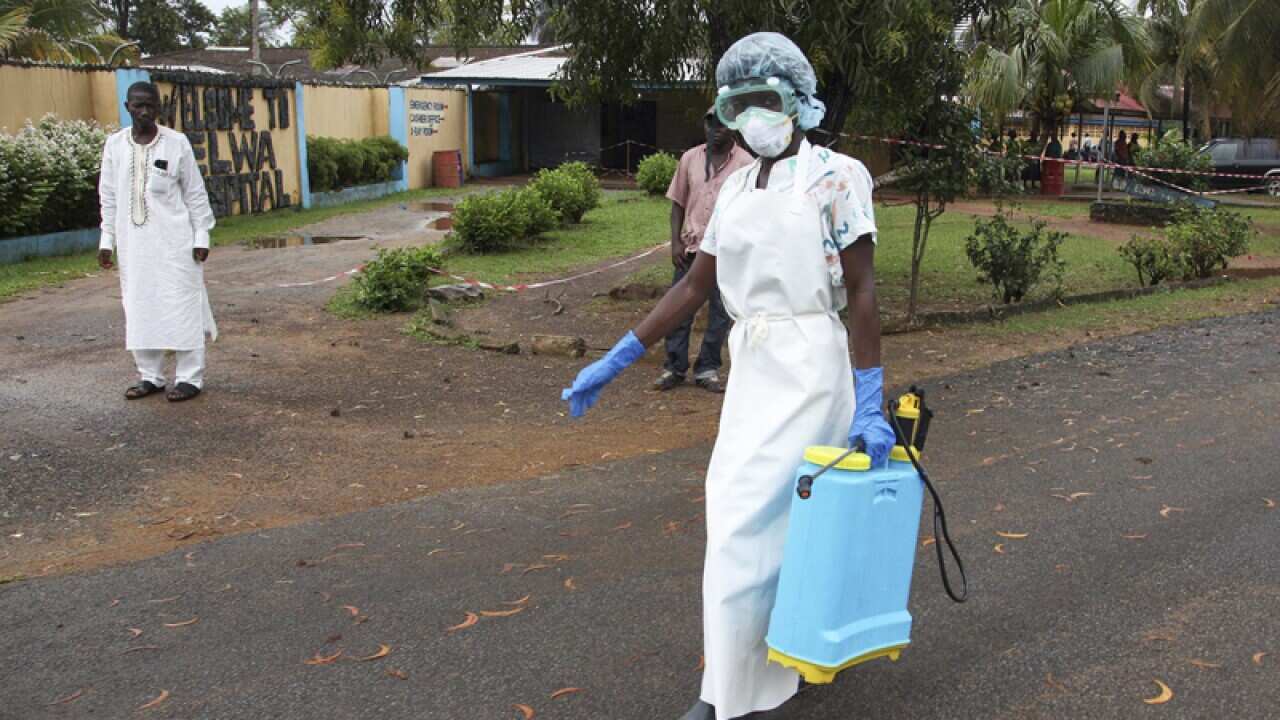
Australians travelling to West African nations reeling from an Ebola virus outbreak are being warned there's little the federal government can do if they run into trouble.
Nearly 700 people have died in Guinea, Sierra Leone and Liberia since March from the deadly virus, which has a 90 per cent fatality rate and no known cure or vaccine.
The number of cases in those three nations is climbing, with a death this week hundreds of kilometres away in Nigeria sparking fears the virus is spreading further.
The outbreak has prompted Australian embassy staff to defer travel plans to Guinea, Liberia and Sierra Leone.
"We recommend Australian travellers do the same," the Department of Foreign Affairs and Trade says in its latest updated advice.
There's a real risk that Australians travelling in the region could become stranded if the outbreak worsens.
Liberia has already closed the majority of its borders to try to combat the disease, and entry points that remain open are being used as Ebola prevention and screening centres.
DFAT warns that borders in the region could close and travel restrictions be imposed with "little or no warning".
Australians who ignore the government's advice are being urged to check their travel insurance as medical evacuations for any Ebola patient would be "extremely difficult to conduct".
"The Australian government may have limited options in providing consular assistance in these circumstances," DFAT says.
Those in the region should closely monitor local health advice and know the symptoms of the virus, which are severe and include high fever and weakness followed by external and internal bleeding.
Any traveller to the region showing these signs before or after visiting should seek medical attention.
Victims of the virus, or those suffering symptoms, should be avoided at all costs as the disease is highly contagious.
The outbreak began in March in forested areas of southeastern Guinea, and has since become the worst recorded.
Share


