The Abbott government is determined to wrap up nearly 10 years of negotiations for a free trade deal with China before President Xi Jinping arrives in Australia next week for the G20 summit.
Foreign Minister Julie Bishop and Trade Minister Andrew Robb have been dispatched to Beijing before next week's APEC conference to speak with their counterparts to try to overcome the sticking points.
Prime Minister Tony Abbott made an election pledge to sign free-trade deals with Australia's three-biggest export markets - China, Japan and South Korea - by the end of this year.
He's clinched the latter two but China remains elusive, with hopes the two leaders could put pen to paper when Xi visits Canberra the week after next.
"I think that would be a fitting tribute to the relationship between Australia and China which is strong and comprehensive and collaborative," Ms Bishop told reporters in Beijing.
News that makes sense
Your trusted source for staying up-to-date with the world around you. Get free daily news updates and analysis, straight to your inbox.
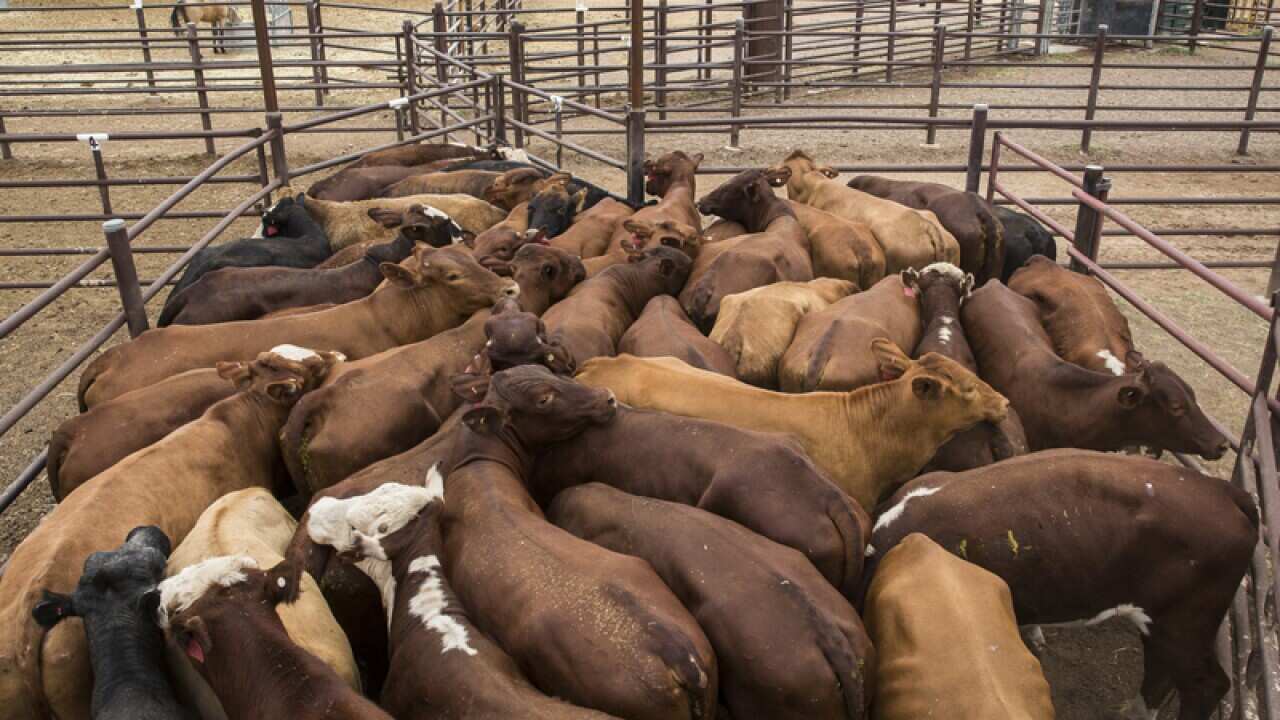
It comes amid news Australia has all but signed a billion-dollar deal to sell live cattle to China, a major growth market with a huge demand for beef.
The deal has struck a raw nerve for some opposed to the live export trade, with independent MP Andrew Wilkie blasting the government as "sadists" and an "evil death cult".
Opposition Leader Bill Shorten accused the government of dribbling out positive stories about the negotiations to soften up voters before bad news.
"This is the classic Abbott government magic show," he told reporters in Brisbane.
"They never actually tell you what's really going on behind the curtain."
But China also raised another issue with Australia besides the ongoing free-trade talks - its Asian Investment Infrastructure Bank.
This $54 billion body - which has the support of 20 other nations - will address a multi-billion-dollar funding gap for dams, ports, roads and other capital works across Asia.
Australia, the US, Japan and Korea declined to be among the founders because of concerns the bank lacks the same levels of governance and accountability as bodies such as the World Bank.
Chinese foreign minister Wang Yi told Ms Bishop he hoped Australia could join the bank, while she outlined the matters the government wanted clarified before it considered coming on board.
"It was certainly not an issue of tension at all in any sense," she said of her talks with Mr Yi.
Ms Bishop dismissed suggestions Australia could miss out on investment opportunities by not joining the bank.
China is Australia's largest-trading partner, with two-way trade exceeding $150 billion last year.







