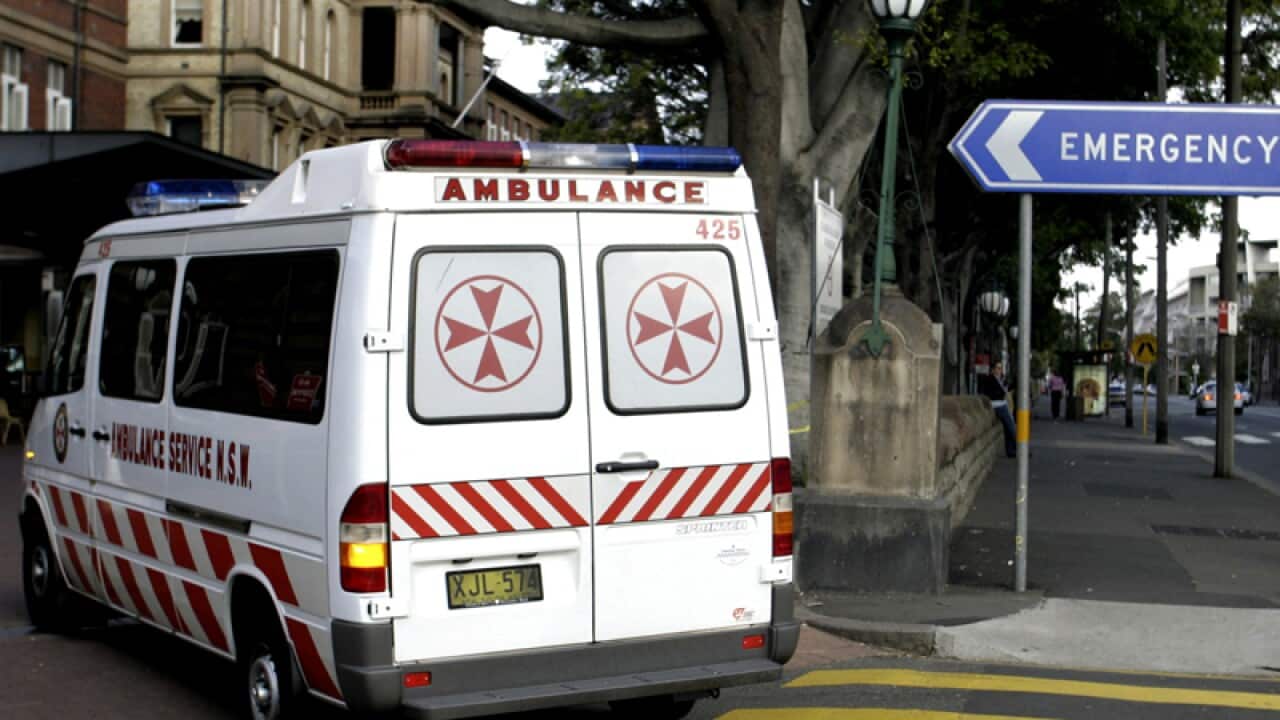
NSW health authorities are assuring the public that the variant of mad cow disease that's left a Sydney man clinging to life is not contagious.
Frank Burton, 63, is in isolation at the Royal Prince Alfred Hospital after being diagnosed with sporadic Creutzfeldt-Jakob disease (CJD), which belongs to a group of diseases that also includes mad cow's disease.
Sporadic CJD affects one in a million people worldwide and is not caused by eating animals, Dr Jeremy McAnulty, the Director of Health Protection at NSW Health said on Wednesday.
Mr Burton was diagnosed with the rare, degenerative disease when he presented at RPA after collapsing on a footpath five weeks ago. His condition was made public on Tuesday.
Friend Peter Kogoy has said doctors had no idea how Mr Burton, the former financial officer of the Sydney Swans, contracted the disease.
Dr McAnulty stressed sporadic CJD was a very different disease to so-called mad cow disease, which was first identified in the 1990s.
"CJD and the name of the variant disease that people get from eating the cows is called variant Creutzfeldt-Jakob Disease," he told AAP.
"It's confusing because the name is very similar and the process is very similar but it's a different disease.
"They are completely different strains."
There are about 20 or 30 cases of CJD in Australia each year, and most of those would involve sporadic CJD.
However, sporadic CJD is not directly transmissible between people.
"It poses no risk to other people," Dr McAnulty said.
Meanwhile, there has never been a case of variant CJD in Australia, in either humans or animals.
Variant CJD is caused by eating cattle infected with bovine spongiform encephalopathy (BSE) and broke out in the UK more than 20 years ago.
According to the National Institute of Neurological Disorders and Stroke, the disease is a rare fatal brain disorder that affects one person in every one million a year.
Symptoms include failing memory, lack of co-ordination and 90 per cent of patients die within one year.
Creutzfeldt-Jakob disease cannot be transmitted through the air or by touching people but can be spread through "exposure to brain tissue and spinal cord fluid", the institute states.
A spokesperson for Sydney Local Health District today confirmed to SBS that there was a patient diagnosed with sporadic Creutzfeldt-Jakob Disease (CJD) who was being treated at Royal Prince Alfred Hospital
“The patient’s condition poses no risk of infection,” the spokesperson said.
"The patient’s family have confirmed that the patient is in a serious condition and have asked for their privacy to be respected."
Share


