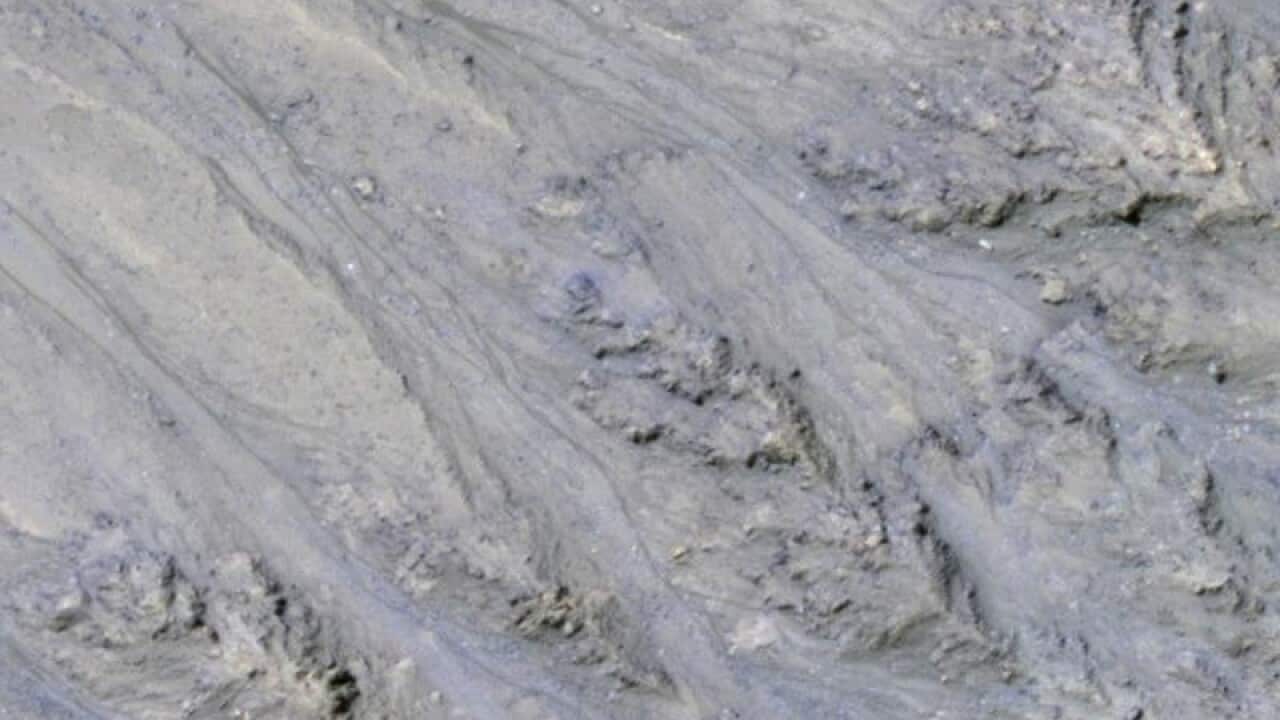
Dark streaks on Mars represent flowing sand, not water, a study suggests.
The news contradicts 2015 research that indicated lines on some Martian slopes were signs of water on the planet.
Instead, Arizona scientists report in Nature Geoscience the lines appear more like dry, steep flows of sand, rather than water trickling downhill, at or near the surface.
If water is present, they say, it is likely a small amount and not conducive to life.
NASA, though, says the jury is still out.
News that makes sense
Your trusted source for staying up-to-date with the world around you. Get free daily news updates and analysis, straight to your inbox.
The lead scientist for NASA's Mars exploration program, Michael Meyer, points out the latest study does not rule out the presence of water but acknowledges "it just may not be as exciting as the idea of rivers going down the sides of cliffs".
NASA's Mars Reconnaissance Orbiter provided the images of these so-called recurring slope lineae, or RSL.
Thousands have been spotted on Mars, from the equator midway to each pole.
The team led by the US Geological Survey's Colin Dundas measured 151 of the dark lines at 10 sites.
Most of them end with slopes between 28 degrees and 35 degrees, a match for active sand dunes on Mars and Earth.
A thin layer of dust on top that shifts and sometimes brightens the surface might help explain why these streaks seem to occur in the Martian summer and then disappear, only to reappear the next year.







