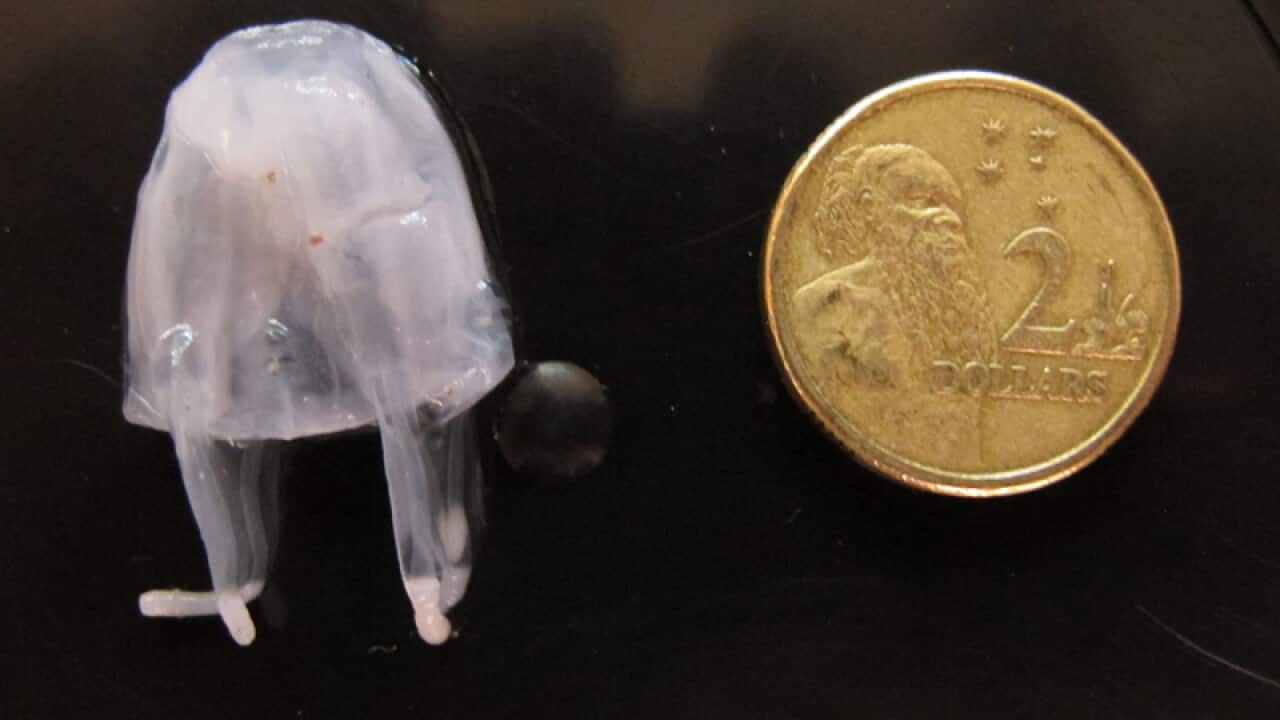
Swimmers could be warned a week in advance of the arrival of deadly Irukandji stingers after researchers found a way to pinpoint when the jellyfish would arrive at a certain spot.
Queensland CSIRO scientists studied wind and water current patterns for the past 30 years to create a forecasting system to predict the arrival of the stingers.
This week they successfully tested the method at Palm Cove, north of Cairns, where Irukandji stingers were discovered in the 1940s.
CSIRO Wealth from Oceans research scientist Lisa Gershwin says if tests in other areas are successful the method could be used to warn swimmers against going in the water.
"Hopefully this will ultimately lead to a reduction in the number of stings and keep people safe," the marine biologist, who has studied jellyfish for the past 20 years, told AAP on Thursday.
News that makes sense
Your trusted source for staying up-to-date with the world around you. Get free daily news updates and analysis, straight to your inbox.
"It's similar to weather forecasting ... but we're still in the research and development stage."
The method will be particularly useful in areas where there are no lifeguards, she says.
At present, lifeguards conduct tests and close beaches if jellyfish are found in the water, a method Dr Gershwin says is not reliable.
"There is a lot of luck involved in this method, and it's also about the skill of the lifeguard to recognise the jellyfish in different growth stages."
Irukandji jellyfish are found in the tropical waters off north Queensland, the Northern Territory and Western Australia.
Their stings can cause severe muscular pain, anxious behaviour, headaches and vomiting.
Queensland Health says the sting from some species can cause very high blood pressure or affect the heart, potentially resulting in death.







