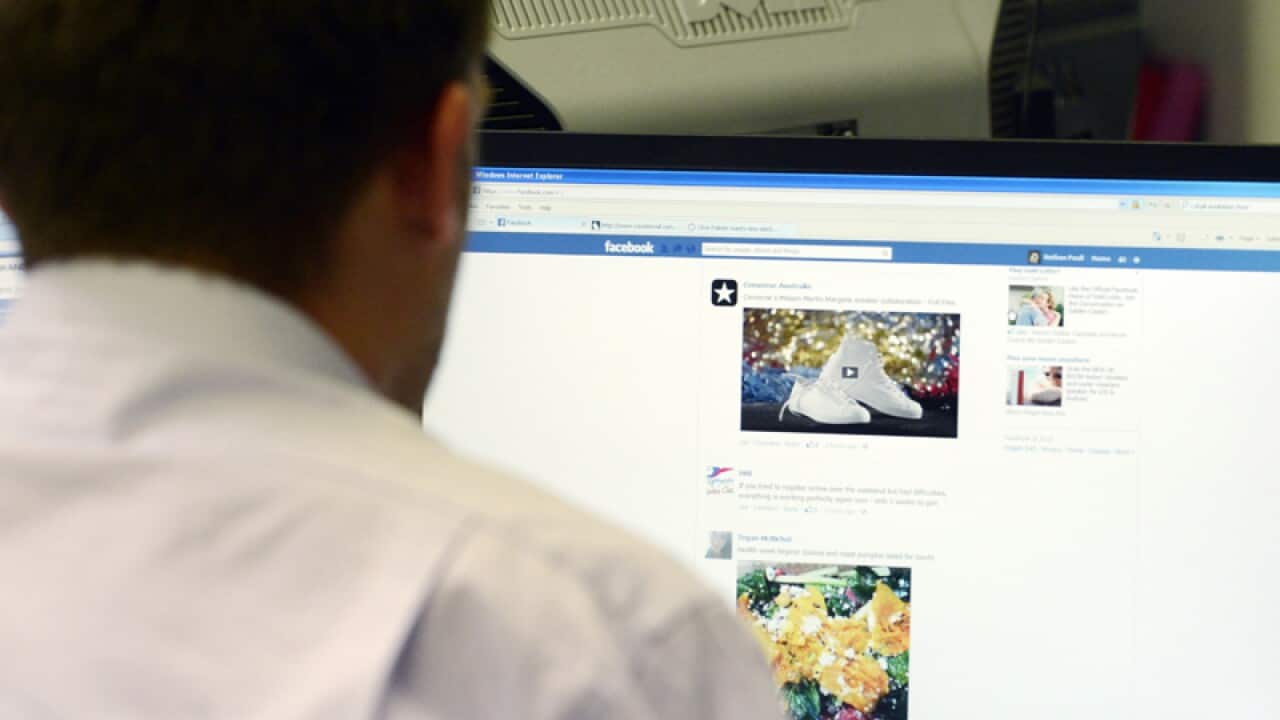
If you catch yourself using Facebook to check up on every burnout from high school when you’re down, know this: You’re not alone.
A new study from Ohio State University suggests that when people aren’t feeling their best, they tend to be more interested in social media profiles of those they consider less attractive, successful, or just generally well-off. In other words, a study finally corroborates what we all know to be true: Looking at a friend’s engagement photos while on a Friday night date with Netflix and Ben & Jerry’s is just not appealing.
The study involved 168 college students. First, the subjects were put in either a good mood or a bad mood. Then they all were given a new, supposedly unrelated task: to browse what they were told was a new social networking site called SocialLink. The site contained previews of eight similar user profiles, with different levels of “career success” and “hotness”: Some were made to appear successful and physically attractive, others unsuccessful and unattractive. Profiles were either all male or all female to make them more similar. All of the subjects’ browsing was automatically logged.
Participants spent more time on highly ranked profiles. But those in a negative mood spent significantly more time on the lower-ranked profiles—presumably in service to their damaged egos.
This finding jibes with previous research that the study cites, which suggested that viewing the profile of someone who is not as well-off can raise your self-esteem and lighten your mood. (Also an artificial ego boost viewing your own profile.)
This research joins a growing number of studies on the intersection of psychology, communication, and social networks. These studies show us how the Internet can affect our state of mind, and can also act as an unflattering mirror that shows us how flawed we really can be.
As we spend more time online and move more of our social interactions onto social networking sites, these studies will, presumably, only become more important. But for now, at least, we can preoccupy ourselves with wondering whether our old friends are viewing our profiles because they miss us or because … Well, you know.
© Slate 2014
Share


