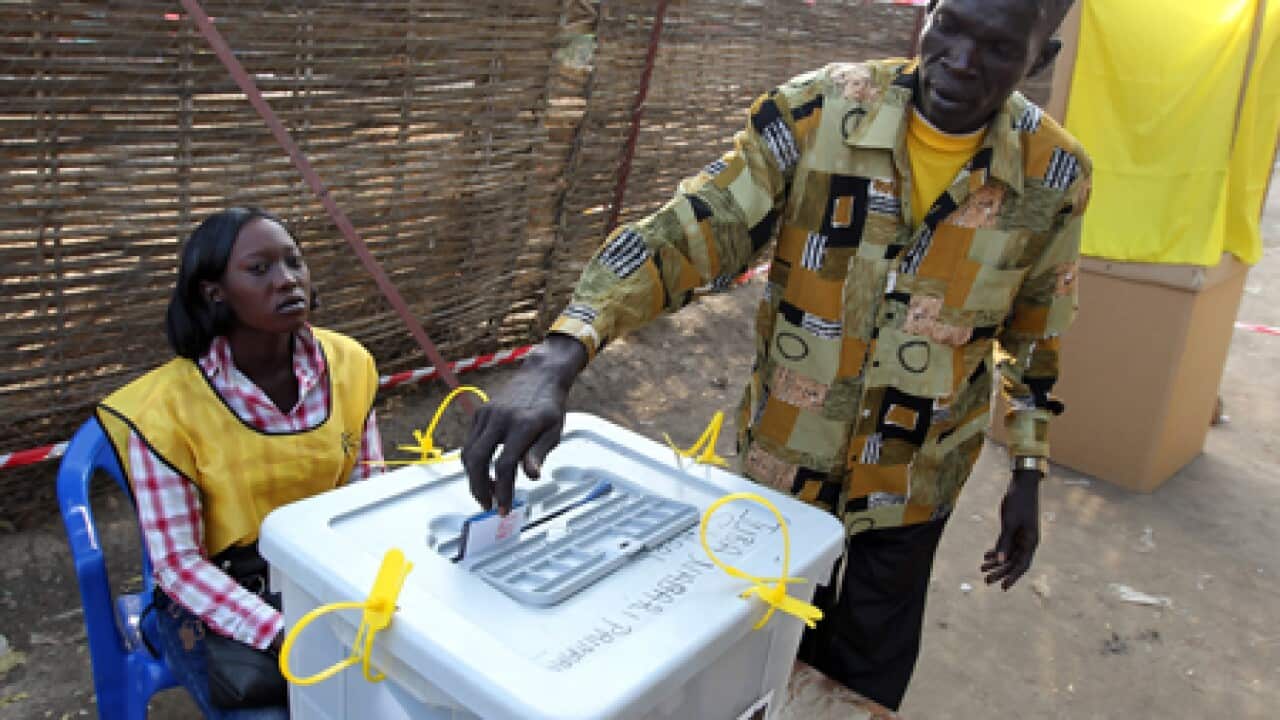
Sudanese Vice-President Ali Osman Taha said on Monday that Khartoum accepted the landslide vote for southern independence, in the first official reaction from the north after preliminary results were announced.
"We announce that we accept the outcome of the referendum and we agree on the results," Taha told a news conference in the Sudanese capital, emphasising the intention of government "to pursue a policy of good neighbourly relations with the south".
Nearly 99 per cent of southern Sudanese chose to split from the north in the landmark January 9-15 referendum, according to full preliminary results announced on Sunday at a ceremony attended by President Salva Kiir in Juba.
News that makes sense
Your trusted source for staying up-to-date with the world around you. Get free daily news updates and analysis, straight to your inbox.
Taha also pledged on Monday to push the joint committees to resolve all outstanding issues being negotiated by Khartoum and Juba before the south secedes in July, particularly the disputed border region of Abyei.
More than 37 people died in clashes in Abyei earlier this month, amid a deadlock over a planned simultaneous plebiscite on whether the region stays with the north or joins the south.
At the African Union summit in Addis Ababa on Monday, Kiir reiterated his Sudan People's Liberation Movement's stand that the contested region of Abyei should hold a referendum to determine its future or be handed to the south by a presidential decree.
Separately, Sudan's joint defence council agreed in Juba to deploy special integrated troops in the flashpoint region to guarantee security, facilitate the free movement of nomadic herders, and protect those people voluntarily returning to the south, the semi-official Sudanese Media Centre reported.
The referendum was a key plank of the 2005 peace agreement that ended a devastating 22-year war between the black Christian-dominated south and the mainly Arab Muslim and Muslim north, in which about two million people died.
Sudanese President Omar al-Bashir, who spearheaded the north's efforts to quash the southern rebels during much of the civil war, has already recognised the prospect of partition.







