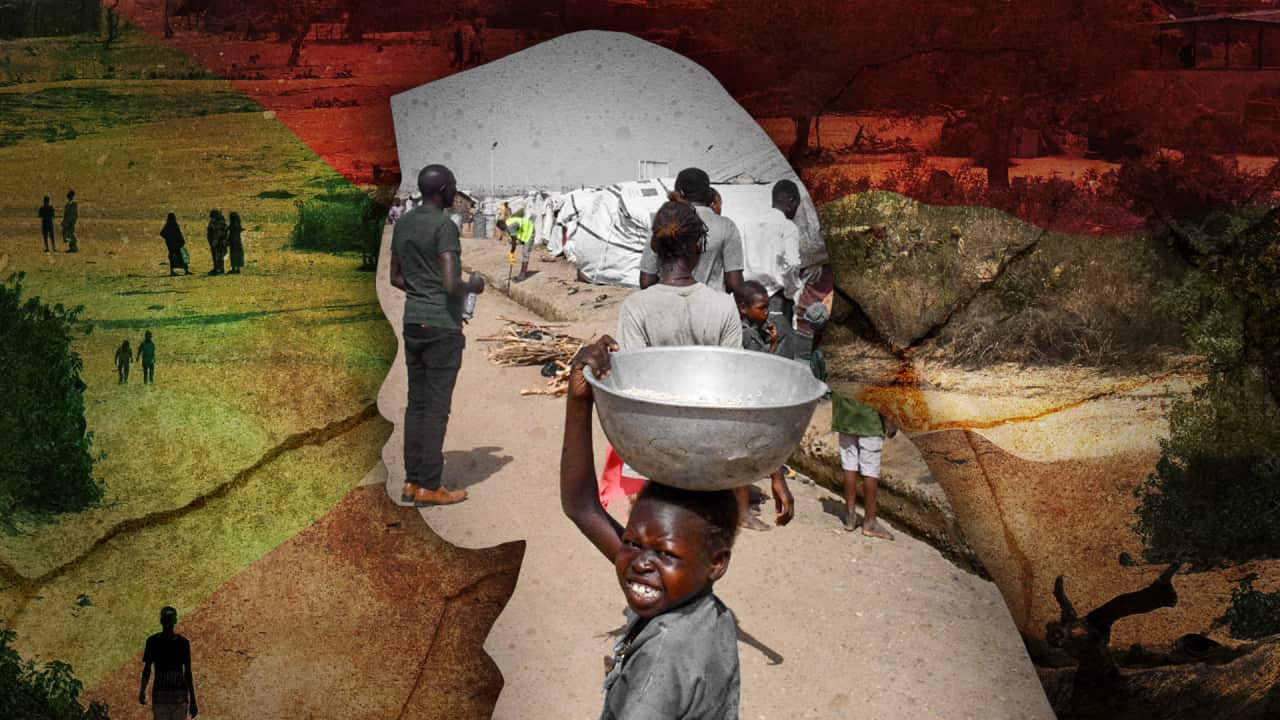
In brief
- The ongoing conflict has resulted in the world's "largest humanitarian crisis", international aid organisations say.
- The United Nations estimates that around 14 million people in Sudan have fled their homes in the past three years.
Three years of brutal fighting, alleged crimes against humanity, and cuts to foreign aid have caused Sudan to "disintegrate", a former government minister says, as the country enters its fourth year of civil war.
Two aggressive and rivalrous factions, the Egyptian-backed Sudanese Armed Forces (SAF) and the Rapid Support Forces (RSF), supported by some Arab states, show no signs of backing down from their goals of governing the country.
The ongoing conflict has resulted in the world's "largest humanitarian and displacement crisis", international agencies and aid organisations say, as funding shortfalls leave millions in refugee camps without food and water.
The United Nations estimates that, in the years since April 2023, around 400,000 people have been killed in Sudan, 14 million more displaced, and 20 million are facing famine conditions.
Even if peace is achieved in the region, observers say the country will never be the same as it was before the war, as political divisions carve the country in half.
News that makes sense
Your trusted source for staying up-to-date with the world around you. Get free daily news updates and analysis, straight to your inbox.
What's happening in Sudan?
Sudan plunged into a civil war in April 2023 after a vicious struggle for power broke out between the SAF and the RSF, once allies who jointly ousted long-serving president Omar al-Bashir in 2019.
After his removal, Sudan was governed by a joint military-civilian administration intended to guide the country towards democracy.
However, this fragile arrangement collapsed in October 2021 due to a coup led by Abdel Fattah al-Burhan, head of the SAF and de facto president, with the support of his deputy, Mohamed Hamdan Dagalo — widely known as "Hemedti" — the commander of the RSF.
The coup removed the civilian administration leader, Abdalla Hamdok, and dashed hopes for a peaceful transition to democratic rule.
Initially, al-Burhan and Hemedti appeared aligned in their efforts to consolidate military control, but tensions soon emerged between them. A key source of friction was the plan to integrate the RSF into the regular army and the question of which group would lead, which led to the outbreak of war on 15 April 2023.
A UN Human Rights Council report in 2025 alleged both the SAF and the RSF were responsible not only for direct and large-scale attacks against civilians, but also for the extensive destruction of essential infrastructure for survival, including medical centres, markets, food and water systems, and displacement camps.
And in February, the UN Independent International Fact-Finding mission for the Sudan found there were "hallmarks of genocide" in the RSF's siege and capture of Al-Fasher in the west of the country.
The RSF has not directly addressed the finding but has previously rejected allegations of abuses — saying the accounts have been manufactured by its enemies and making counter-accusations against them.
The SAF has also previously denied accusations of targeting civilians.
Division and mass displacement
The ongoing war has divided the country into two broad areas, with the RSF controlling the west and the SAF controlling the east, a division that experts say will be impossible to repair.
Atem Yaak Atem, a South Sudanese journalist and former government minister, told SBS News the war has "changed the shape" of the country forever.
"So many people have been killed or have left, and many will not return. The Sudan we knew before the war is gone, it has disintegrated," he said.
The UN estimates that around 14 million people in Sudan have fled their homes in the past three years.
The International Rescue Committee approximates that around four million of those displaced have moved across borders, mainly to Egypt, South Sudan and Chad.
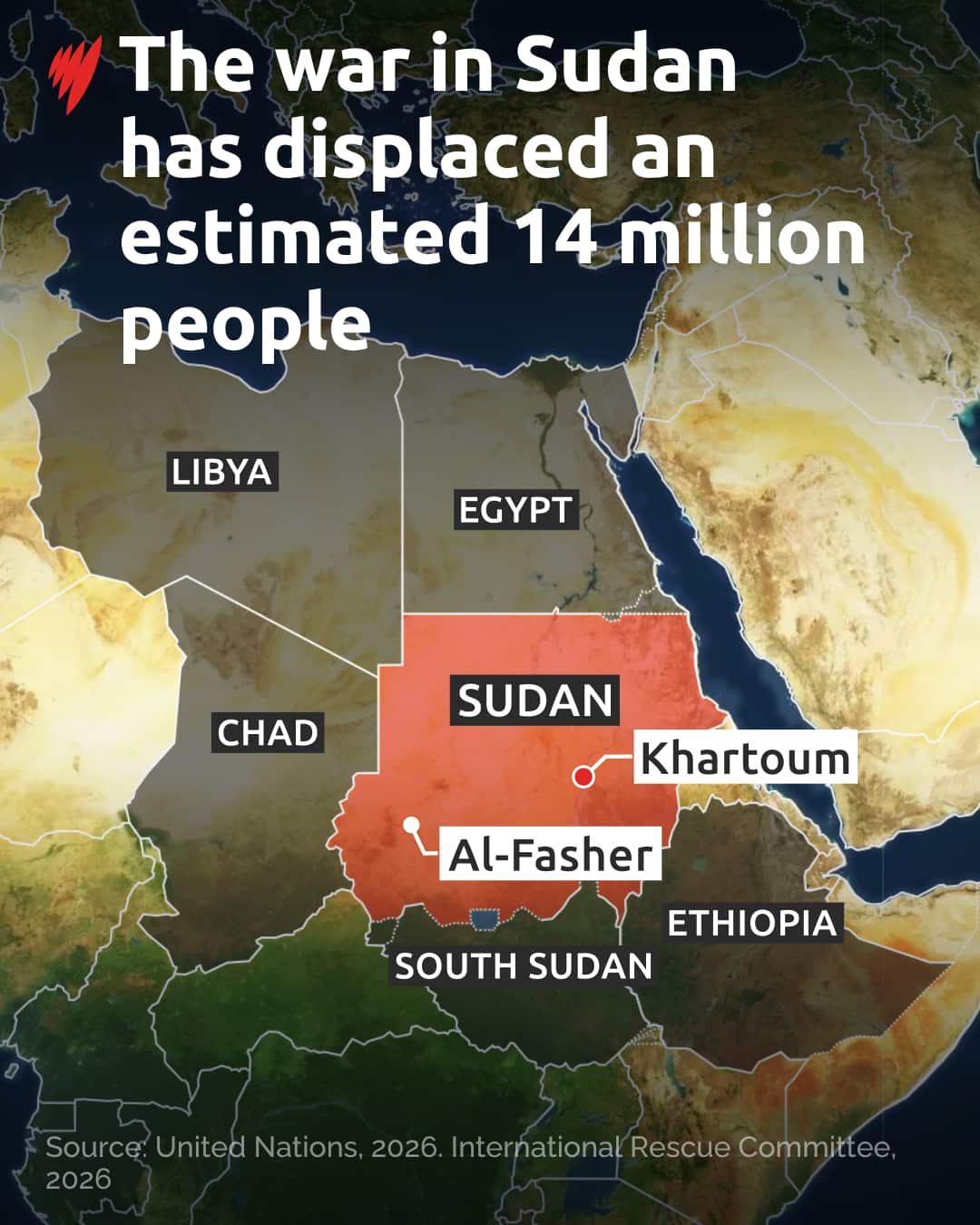
The UN estimates that people in areas under RSF control to the west, namely the Darfur region, are facing the most severe needs.
Maps from the organisation estimate that the central Kordofan region — territory contested by the RSF and SAF — is seeing less severe but still worrying levels of resource scarcity.
The war has weighed heaviest on Al-Fasher and surrounding areas in the west, according to Atem, due to what he described as brutal and "genocidal" tactics used by the RSF.
In the north and east, where the SAF has maintained greater control, areas appear to have been less affected, Atem said.
He said the SAF, while aggressive, appears to have targeted civilians and infrastructure comparatively less.
People who have been displaced in the west have largely moved to South Sudan and Chad, he added, and are unlikely to return.
Those who have fled SAF-controlled land in other areas have largely gone to Egypt and Libya, and, in Atem's view, are more likely to resettle in Sudan should the war end.
"Even if a peace happens, Sudan is no longer what it used to be; the country is split," he said.
Funding shortfalls
Aid agencies in Chad, which support more than 1.3 million of these refugees, have said they are facing cuts in life-saving aid such as food and water as international donations fall, as reported by Reuters.
The World Food Programme (WFP) and the UN refugee agency envisage further cuts in the coming months unless a US$428 million ($665 million) shortfall can be met, they said in a joint statement.
"With less than half the resources we require, we cannot deliver sufficient food to the people who need it most," WFP Chad country director Sarah Gordon-Gibson said.
"This will force them into devastating coping strategies and put lives at risk."
World Vision Australia CEO Grant Bayldon said Sudan is enduring the world’s biggest humanitarian emergency.
The group, which provides food, water and other essential services to millions of Sudanese people, is facing a funding crisis, with only 16 per cent of its UN funding goal reached.
"Australia and other donors with the means to act still have a window to prevent mass death from hunger and preventable disease, but that window is closing fast," Bayldon said in a statement.
"10.5 million Sudanese children have not set foot in a classroom in three years. 800,000 are so severely wasted that without specialist therapeutic feeding, they will not survive. Famine is no longer a distant warning. It is confirmed, on the ground, in Darfur and Kordofan."
The UN, World Vision, and others are seeking to raise US$2.9 billion ($4.1 billion) to improve support services for the crippled country.
For the latest from SBS News, download our app and subscribe to our newsletter.







