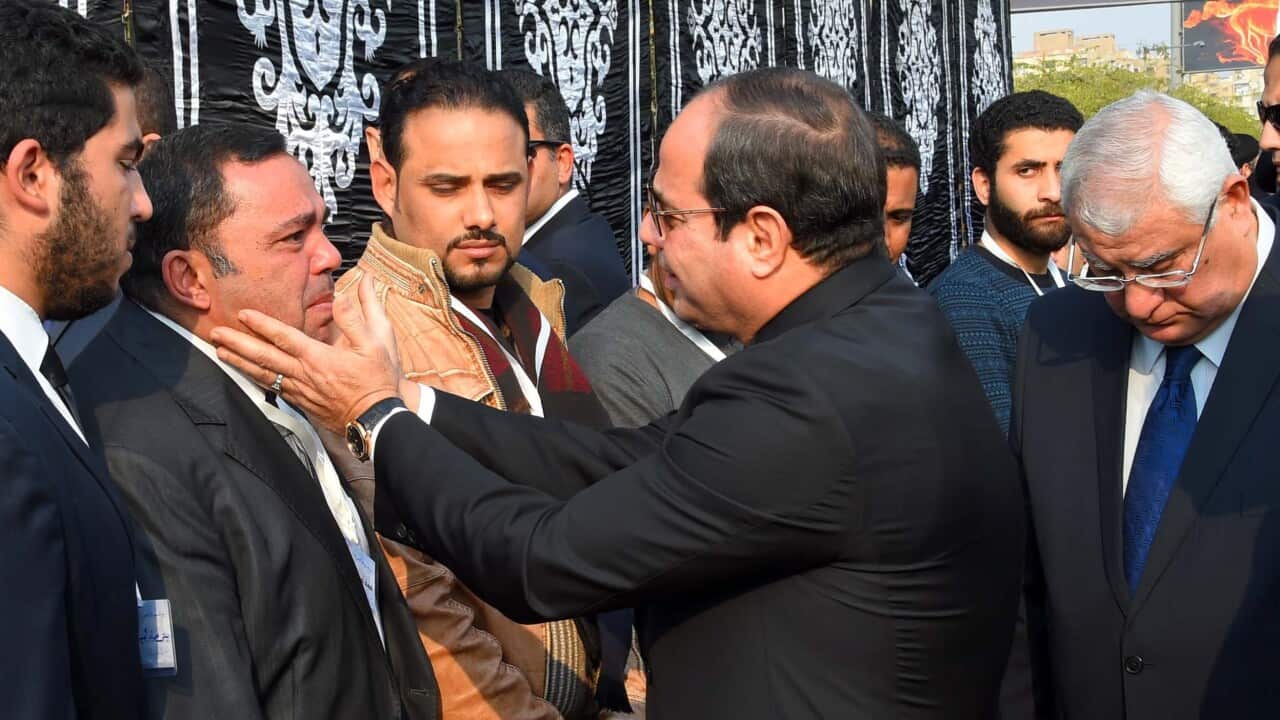
Egyptian President Abdel Fattah al-Sisi says a suicide bomber carried out the attack that killed 25 people at Cairo's Coptic cathedral, the deadliest on the Christian minority in years.
Speaking at a state funeral for the victims, Sisi said four people had been detained, including a woman, and security forces were seeking two more people believed to be involved.
The bomber was a man wearing a suicide vest, he added
At least 25 people were killed and 49 wounded when a bomb exploded in a chapel adjoining St Mark's Cathedral, Cairo's largest church and seat of the Coptic papacy, where security is normally tight.
Security sources said a bomb containing at least 12 kg of TNT exploded on a side of the church normally used by women.
News that makes sense
Your trusted source for staying up-to-date with the world around you. Get free daily news updates and analysis, straight to your inbox.
Sisi did not name the organisation the attackers were believed to belong to.
No group has claimed responsibility, but exiled Muslim Brotherhood officials and local militant groups have joined the international community in condemnation.
Only Islamic State supporters celebrated on social media.
The Interior Ministry released a picture of the bomber it identified as Mahmoud Shafik Mohamed Mostafa, 22, whose nom de guerre was Abu Dajjana al-Kanani. It also released an image of what it said was the battered head of the dead bomber, who hailed from the town of Fayyoum south of Cairo.
State news agency MENA reported that three of those arrested are also from Fayyoum while a fourth is from the Cairo suburb of Matariya. Both are areas typically associated with strong support for the Muslim Brotherhood.
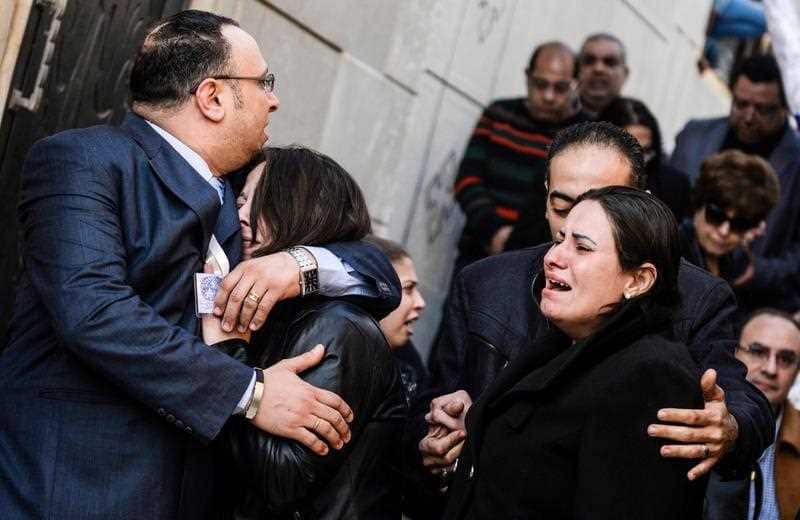
Though Christians traditionally support the government, the attack provoked anger among survivors and families of the dead, who said police had failed to protect them.
Five survivors at Dar al-Shefa hospital said police did not conduct the usual checks as the cathedral was particularly busy for Sunday's mass.
Orthodox Copts, who comprise about 10 per cent of Egypt's 90 million people, are the Middle East's largest Christian community.
They face regular attack by Muslim neighbours, who burn their homes and churches in poor rural areas, usually in anger over an inter-faith romance or church construction.







