The Syrian army command says it has regained most of the towns and villages in eastern Ghouta and is pressing its military operations in the last rebel bastion of Douma.
In a televised statement, the Syrian army spokesman said the weeks-long military campaign had now brought security to the Syrian capital, Damascus, and also secured its main links to other parts of the country, stretching north and all the way to the Iraqi border to the east.
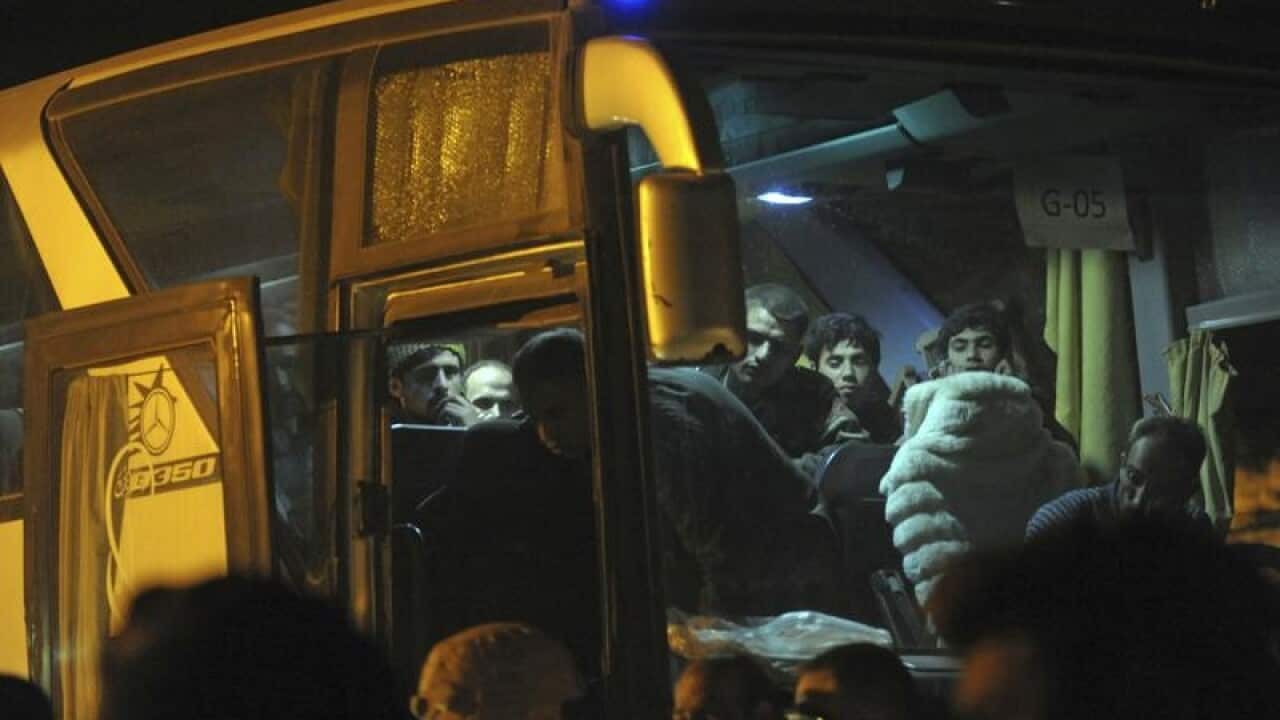
A last group of fighters and families had earlier left the main towns of Jobar, Zamalka, Arbeen and Ain Tarma after the fall of other towns, leaving only the city of Douma still in rebel hands.
Footage on state television showed top army commanders entering by the same route the rebel convoys had used to leave.
Tens of thousands of people have now evacuated once-bustling towns in the suburbs east of the capital, which had nearly two million people before the start of the conflict and were major commercial and industrial hubs.
News that makes sense
Your trusted source for staying up-to-date with the world around you. Get free daily news updates and analysis, straight to your inbox.
The army command said military operations were continuing in the outskirts of the city of Douma, controlled by the Jaish al-Islam rebel group, the last patch of eastern Ghouta still held by insurgents.
Douma's fall would seal the rebels' worst defeat since 2016, driving them from their last big stronghold near the capital, and would also carry potent symbolism. The town was the main centre of street protests in the Damascus suburbs against President Bashar al-Assad's rule that ignited the conflict seven years ago.
The army said hundreds of rebels had been killed in the ferocious offensive. The opposition says a relentless air campaign was waged in which the army used napalm, chlorine and incendiary bombs to demoralise rebels by targeting civilian areas.
The rebels say the indiscriminate bombing forced them to capitulate and agree to surrender deals that force them either to make peace or leave to rebel-held areas after weeks of bombing and sieges that prevented food from reaching the enclaves.
The Syrian army has repeatedly said regaining control over rebel-held suburbs would stop rocket attacks on the capital.
They deny that many civilians were killed in bombardments that rescuers and residents say reduced whole neighbourhoods to rubble in densely populated areas where at least 350,000 people lived.







