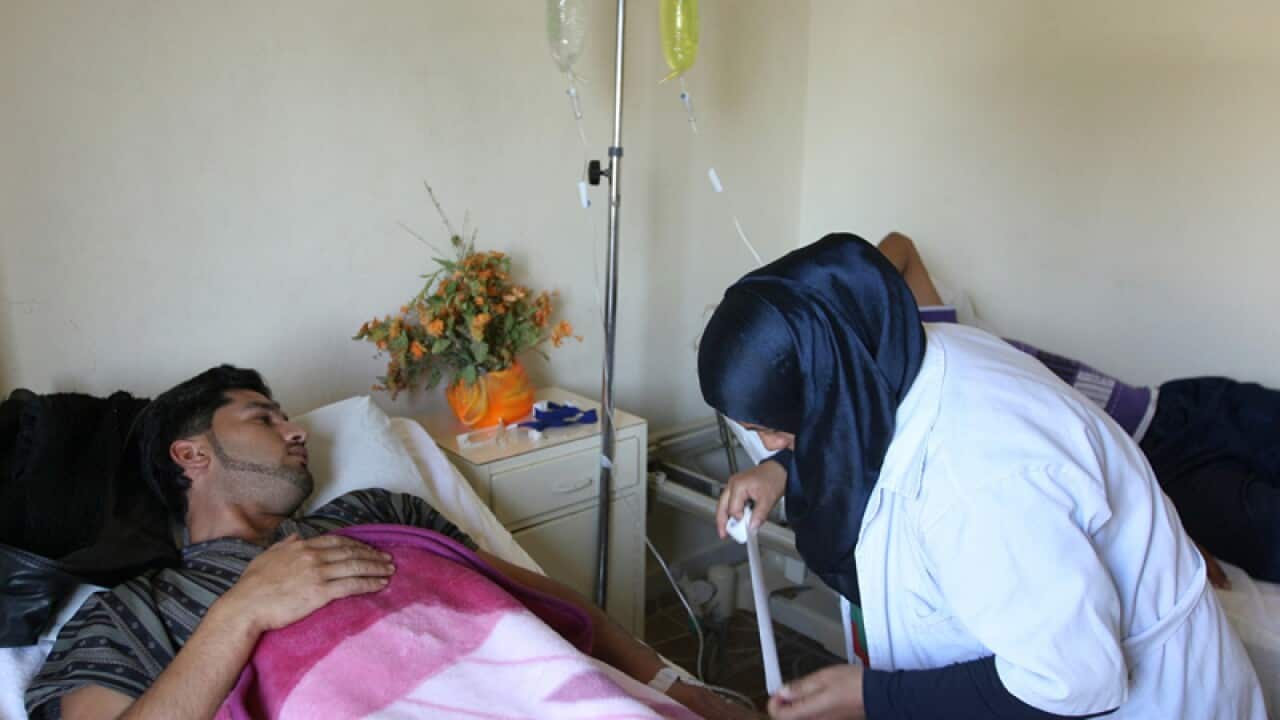
A lack of funds is forcing aid workers to deny Syrian war victims and other refugees with cancer the care they need.
With millions of Syrians driven from their homes by three years of conflict, and huge numbers having fled a decade of violence in Iraq, health systems in the region have been overwhelmed, the UN refugee agency's top medical expert warned on Monday.
"We can treat everyone with measles, but we can't treat everyone with cancer," said Paul Spiegel, UNHCR's medical chief.
Doctors are therefore having to make heart-rending decisions about who gets cancer care and who is left to fend for themselves.
"We have to turn away cancer patients with poor prognoses because caring for them is too expensive.
News that makes sense
Your trusted source for staying up-to-date with the world around you. Get free daily news updates and analysis, straight to your inbox.
"After losing everything at home, cancer patients face even greater suffering abroad - often at a huge emotional and financial cost to their families," Spiegel said.
In a new study published in the journal The Lancet Oncology, Spiegel documented hundreds of refugees in Jordan and Syria denied cancer treatment due to limited funds, and called for urgent new steps to tackle cancer in humanitarian crises.
The study looked at refugees in Jordan and Syria from 2009 to 2012 - therefore covering not only those fleeing the Syrian civil war that broke out in 2011, but exiles from older conflicts such as that in Iraq, which began with the US-led overthrow of dictator Saddam Hussein in 2003.
Breast cancer is most common amongst refugees, accounting for almost a quarter of all applications in Jordan to UNHCR's "Exceptional Care Committee", which decides whether to fund expensive treatments.
In Jordan, the committee could only approve 246 out of 511 refugee applications for cancer treatment between 2010 and 2012.
The main reason was poor prognosis, meaning a patient had little chance of recovery, leading the committee to decide that the limited amount of money was better spent on other patients.
But it is also having to reject patients with good prognoses, because their treatment is too expensive.
"We face a terrible decision over who to help," said UNHCR doctor Adam Musa Khalifa.
"Some patients have a good prognosis, but the cost of treating them is too high. These decisions affect all of us psychologically."







