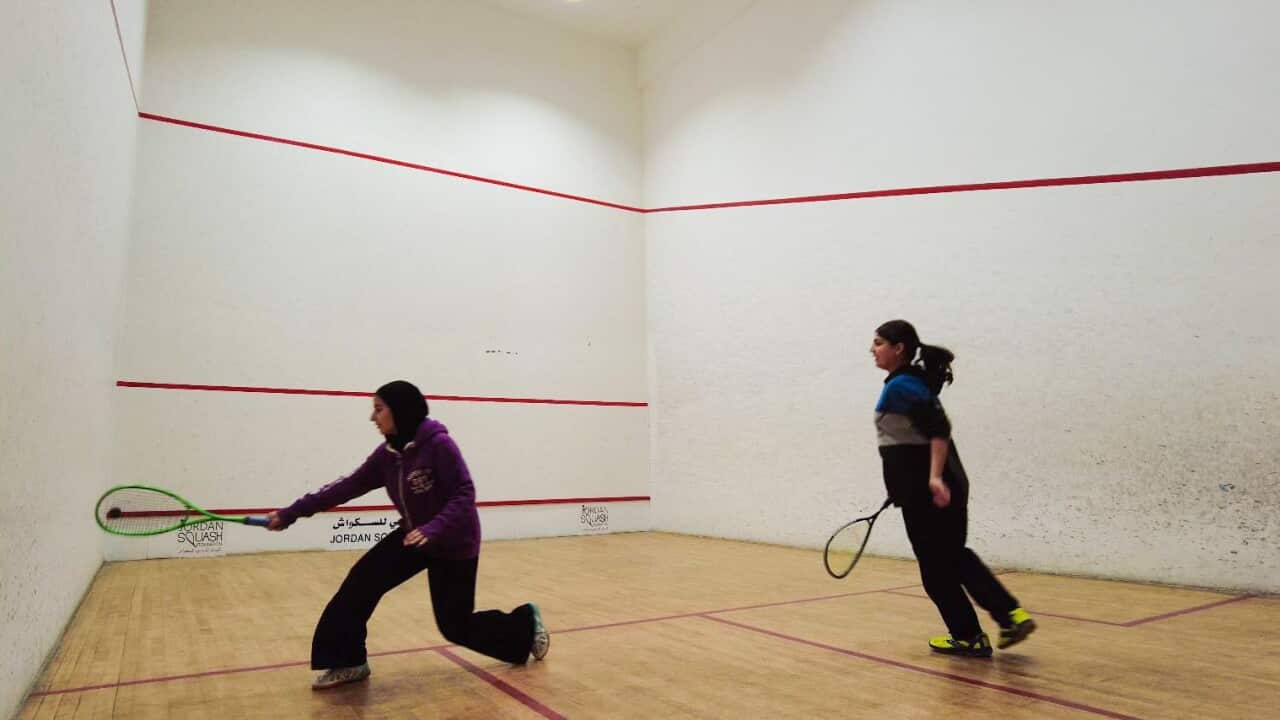
South of the Syrian border, in a gritty neighbourhood in Jordan, colourful murals show stories of struggle across ageing apartment blocks where refugees are seeking a better life.
While poverty, limited work and the fight to keep children in school are daily realities in this community, a sporting club called Squash Dreamers is providing a sanctuary for young girls.
"Through Squash Dreamers I found my fighting spirit," Fatima Al-Aboud told SBS News. Al-Aboud fled the Syrian civil war with her family at the age of four and joined the program six years ago.
News that makes sense
Your trusted source for staying up-to-date with the world around you. Get free daily news updates and analysis, straight to your inbox.
Squash Dreamers combines squash training for national and international tournaments with intensive academic and language support.
After excelling both on the court and in the classroom, Al-Aboud has made history by becoming the first Syrian girl to receive a scholarship to Westminster School in the United States.
"I am so happy, nervous, excited, everything. When my teacher found out, she started to cry. My mum started to cry. They all cried. And then we called my dad because he's in Syria and he was very, very happy," she said.
Without the scholarship, Al-Aboud said she would have been forced to return to Syria and lose access to education entirely.
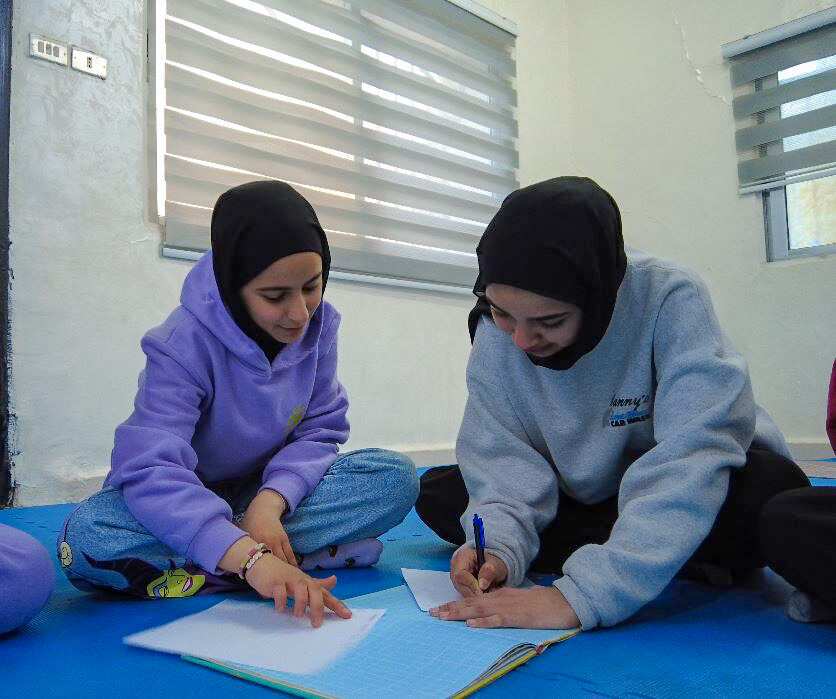
Now, she is pursuing her dream of becoming a psychologist — a fight she says is for all girls like her.
"I want to tell the younger girls that 'I was like you. You can do everything you want in the world. You can be whatever you want to be. Just be confident in yourself,'" she said.
"In some countries, women don't have their rights and they can't study. They can't play their sports. They just stay at home and get married at a young age. I want to advise them. I want to listen to them. I want to hear them. I want to talk with them, and I want to make them stronger."
Jordan is home to the world's second-highest per-capita refugee population in the world, with around 580,000 registered refugees as of June.
Over 90 per cent are from Syria, many having fled war and leaving their education behind.
While pathways to schooling exist in Jordan, countless refugee families struggle to get their children back into the classroom. According to UNICEF, more than 40 per cent of Syrian refugee children aged 12 to 15 years old in Jordan drop out of school, a statistic Squash Dreamers is working to change.
"What is so wonderful about this place is that the girls we have are staying in school until they're 18. They're not getting married. They're not dropping out. These girls are happy," said Squash Dreamers executive director Daisy Van Leeuwen-Hill.
"I would really put a lot of our success down to the fact that we really try so hard to listen to the community. We started slowly adding academics, fitness, wellbeing support, mental health and we even started providing meals at every single session because some kids were fainting from hunger," she said.
"Watching these young girls grow from people who believe their world is so small and then watching them bloom like beautiful flowers, it's amazing. And the biggest success we've had at Squash Dreamers is the fact that this incredibly warm community has been formed," she said.
That community also extends beyond the girls.
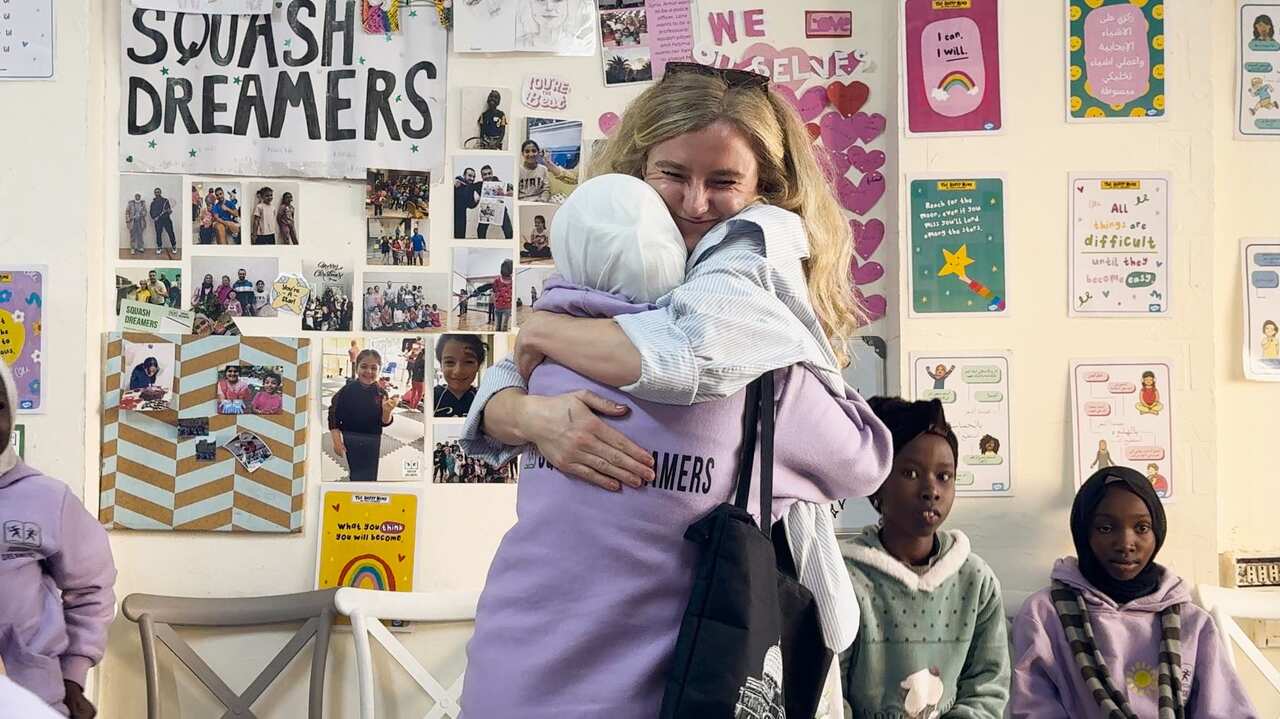
Syrian refugee Shadia Ammar works at Squash Dreamers, cooking for the 90 girls who are currently part of the program. She said she isn't just an employee but rather a vital support network.
"I feel like I'm their mum and they definitely feel like I'm their mum. I always feel like they are my daughters," she said.
"The Syrian people are strong. We were still here despite the war and the troubles. We have skills and we have not become weaker; we have become stronger," she said.
Since the fall of Bashar al-Assad, more than 50,000 Syrian refugees have already voluntarily returned to Syria from Jordan and more are considering the same journey.
For people like Ammar, Squash Dreamers is more than a program.
What is being learned in Jordan, she believes, will eventually travel back across the border, helping to shape the future of an entire country.
"When we return to Syria, everyone here will take something from this country, will take the customs and traditions and the sweet things from this country and surely Syria will be much, much better," she said.
For the latest from SBS News, download our app and subscribe to our newsletter.







